
Ingredients Categories
Finished Products
Finished Food Categories
- Bakery
- Beverages / Juices
- Cereal and grain products
- Confectionery
- Cooking Fats & Oils
- Dairy
- Egg products
- Fruits & Vegetables
- Infant & Baby food
- Meat, Poultry & Fish
- Nuts & Seeds products
- Other Finished Food Categories
- Pet Food
- Plant-based foods
- Prepared foods
- Sauces & Seasonings
- Sweet & Savoury Spreads
Specialised Finished Products
- Bee products
- Biotic products
- Dietary supplements
- Energy drinks
- Functional beverages
- Functional confectionery
- Functional food
- Functional powders
- Meal replacement products
- Nutricosmetics
- Other Specialised Finished Products
- Pet Dietary Supplements
- Pharma and OTC products
- Protein products
- Sugar replacers / Sweeteners
Health & Wellness Areas
Delivery Formats
Operations & Services
- 3D printing
- Analysis/ Testing
- Auditing & certifications
- Blending & mixing
- Bottling
- Certification
- Clinical trials
- Co-packing
- Coating
- Consulting
- Contract manufacturing
- Drying
- Electrospinning
- Encapsulating
- Enzymatic processing
- Extracting
- Extrusion
- Fat structuring
- Fermentation
- Filling
- Flavour development
- Freeze drying
- Granulating/ grinding/ milling / mixing
- High-pressure processing
- Labelling
- Other Operations & Services
- Packaging
- Packet filling
- Pasturising
- Quality assurance
- Saccharification
- Shear cell processing
- Spray drying
- Sterilisation
- Storage & Logistics
- Tabletting
- Toasting / roasting
- Ultra-high temperature processing
News
Pioneers of circular plastic packaging push for new policies
David Burrows, Freelance Journalist 18 Dec 2025Some of the world’s largest food and drink companies have grown frustrated at investing in circular packaging systems, as the majority “wait on the sidelines”.
One-fifth (20%) of the plastic packaging chain is represented in the global plastics commitment run by the Ellen MacArthur Foundation (EMF) think tank. The initiative was launched in 2018 to create a circular economy for plastics.
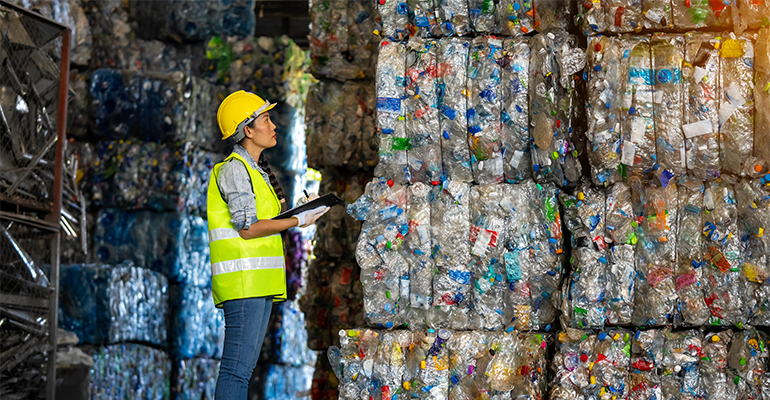
In the past six years, these companies have tripled their use of recycled plastic content and eliminated “tens of billions” of problematic plastic items, like expanded polystyrene and unnecessary packaging. Their use of virgin plastic has been cut by 6% since 2018.
However, this progress has been far slower than expected, with many companies likely to miss the targets they aimed to reach by the end of this year (the results for which will be published later in 2026).
The latest data shows Nestlé having reduced its virgin plastic use by 21%, against a target of 31%, while use of recycled plastic is up 15%, against a 30% target.
Coca-Cola, which has a plastic packaging footprint of just over 3.6 million tonnes annually, has increased its use of virgin plastic by 10%, against a reduction target of 20%.
Use of virgin plastic packaging at Mars has also increased, by 1%; its 2025 target was to reduce its plastic footprint by 25%.
Mondelez has met its target, though the goal was a 5% reduction in virgin plastic packaging, while its use of recycled plastic is just 2% higher than six years ago.
Food companies that use a lot of flexible packaging – for example, wrappers for confectionery – continue to struggle to incorporate recycled plastic due to lack of recycling infrastructure or processing technology for these materials. The rules on food contact materials are also a barrier in Europe.
Drinks companies paying premium for voluntary commitments
Drinks companies using the plastic polymer PET for their bottles tend to have higher recycled plastic rates due to the availability of the recycled material, rPET.
However, in recent months, the price of rPET has rocketed on the back of soaring energy and labour costs, as well as slowing supply in Europe. Indeed, plastic recycling plants are closing across the continent, with low-priced, unregulated imports also a factor, according to industry bodies.
Europe’s plastics recycling industry is entering its sharpest decline, with turnover down 5.5%, according to data published in November by Plastics Recyclers Europe (PRE).
With a total installed capacity of 13.5 million tonnes in 2024, plastics recycling in Europe remains well below the 6% annual growth required to achieve the EU packaging and packaging waste (PPWR) targets, said PRE, which represents the voice of European plastics recyclers. Polyolefin films and PET are most severely affected by the closures to date.
Nicholas Hodac, director general at Unesda Soft Drinks Europe, which represents major soft drinks companies in the region, told Ingredients Network that he and his members were “acutely aware” of the situation in the recycling sector, as well as the causes.
“We have continued to increase use of recycled content in our packaging,” he said, with an average of 51.7% in 2024. But this is not sustainable for much longer, he added, with companies paying premiums of 40% or 50% for rPET.
Jessika Roswall, the European Commissioner for Environment, Water Resilience and a Competitive Circular Economy, met representatives from across the plastic recycling sector in November “to discuss how we can reinforce Europe’s recycling ecosystem and accelerate its transition to competitive circularity”.
She added: “Europe’s recycling sector is under increasing pressure – from high energy costs and volatile markets to growing competition from low-cost imports. In some areas, such as recycled plastics, growth has stalled, and investment confidence is weakening.”
Hodac said his members remain committed to the voluntary targets they have set in relation to plastic packaging, though some companies have started to adjust these.
EMF’s global commitment is also starting a new phase of targets and activity, from 2025 to 2030. The targets will be more flexible, with signatories having three options – reuse, post-consumer recycled, and design for recycling – all of which contribute to the mandatory target of virgin plastic reduction.
Legislation needed to bring laggards into line
Publishing its 2030 plastics for business agenda in November, EMF called out the companies who have not made any commitments to dramatically reduce their use of virgin plastic, or publish data on their plastic footprints.
This includes the likes of AB InBev, JBS, and Tyson Foods, none of which have joined the global commitment run by EMF.
Around 80% of the supply chain remains “largely inactive”, EMF said in its report, waiting “on the sidelines”. Government policy is needed to mobilise these, the think tank explained.
Danone’s chief sustainability officer, Nathalie Alquier, said: “To achieve systems change, voluntary business action must be matched by robust infrastructure and policy.”
EMF executive lead for plastics Rob Opsomer said: “Companies who lean in will be well positioned to co-shape the future, stay ahead of regulation, and ensure continued market access, while those who don’t risk being disrupted.
“By working together, they’ll cut transition costs and build resilience in a fast-changing world. They can make what once seemed impossible not only possible but ultimately inevitable.”

Get more of our news on Google
Set Ingredients Network as a 'Preferred Source' to get quicker access to the news you value.
Related news

M&S launches own-brand pet food range
11 Sep 2026
UK retailer Marks & Spencer has launched its own-brand pet food line Paws & Pals – a well-timed and strategic move that will appeal to loyal shoppers, says a marketing expert.
Read more
Do the US dietary guidelines put UPFs under pressure?
10 Sep 2026
Will the US dietary guidelines change the way Americans eat, swapping ultra-processed foods for whole foods? We asked Dr Barry Popkin, renowned nutrition and obesity researcher.
Read more
Food fraud costs UK economy £2bn each year
9 Sep 2026
Food fraud is costing the UK economy up to £2 billion (€2.3 billion) every year although the food sector is more “resilient” than others, according to a recent study.
Read more
Health and wellness engagement matures across Middle East and Africa
4 Sep 2026
Many consumers in the Middle East and Africa are now proactively engaged in health and wellness, looking to integrate better habits and products into their daily lives, say experts.
Read more
Kellogg accelerates work to remove artificial colours from all US cereals
3 Sep 2026
WK Kellogg has announced an accelerated timeline to eliminate all artificial colours and the chemical preservative, BHT, across its full US portfolio of cereals and cereal packaging.
Read more
Skimpflation: An ‘unfair’ and risky approach to keeping prices low
2 Sep 2026
Consumers see skimpflation – reducing the quality of ingredients due to rising costs – as more unfair than shrinkflation, making it a risky strategy according to recent research.
Read more
Royal Canin launches ‘freshly-cooked’ therapeutic dog food
1 Sep 2026
Mars-owned Royal Canin has moved into the therapeutic diet sector with the launch of its Fresh Veterinary Diets range for dogs with health conditions. We asked a veterinary nutritionist for her opinion.
Read more
NielsenIQ’s EU barometer shows Britain leading in grocery inflation
31 Aug 2026
Britain was the only country to record grocery inflation above 2%, according to NielsenIQ data that compared Europe’s five biggest grocery markets from February to May 2026.
Read more
‘Urgent gaps’ in achieving 2030 food system goals
27 Aug 2026
Global food systems are failing to meet 2030 targets across indicators including health, environment, and resilience, according to a report co-authored by the Food and Agriculture Organisation (FAO).
Read more
Seven-Eleven uses microbial testing tech to extend katsudon shelf life
26 Aug 2026
Japanese retail company Seven-Eleven has improved its factory’s microbial environment to keep comfort-food staple, katsudon, fresher for longer.
Read more