
Ingredients Categories
Finished Products
Finished Food Categories
- Bakery
- Beverages / Juices
- Cereal and grain products
- Confectionery
- Cooking Fats & Oils
- Dairy
- Egg products
- Fruits & Vegetables
- Infant & Baby food
- Meat, Poultry & Fish
- Nuts & Seeds products
- Other Finished Food Categories
- Pet Food
- Plant-based foods
- Prepared foods
- Sauces & Seasonings
- Sweet & Savoury Spreads
Specialised Finished Products
- Bee products
- Biotic products
- Dietary supplements
- Energy drinks
- Functional beverages
- Functional confectionery
- Functional food
- Functional powders
- Meal replacement products
- Nutricosmetics
- Other Specialised Finished Products
- Pet Dietary Supplements
- Pharma and OTC products
- Protein products
- Sugar replacers / Sweeteners
Health & Wellness Areas
Delivery Formats
Operations & Services
- 3D printing
- Analysis/ Testing
- Auditing & certifications
- Blending & mixing
- Bottling
- Certification
- Clinical trials
- Co-packing
- Coating
- Consulting
- Contract manufacturing
- Drying
- Electrospinning
- Encapsulating
- Enzymatic processing
- Extracting
- Extrusion
- Fat structuring
- Fermentation
- Filling
- Flavour development
- Freeze drying
- Granulating/ grinding/ milling / mixing
- High-pressure processing
- Labelling
- Other Operations & Services
- Packaging
- Packet filling
- Pasturising
- Quality assurance
- Saccharification
- Shear cell processing
- Spray drying
- Sterilisation
- Storage & Logistics
- Tabletting
- Toasting / roasting
- Ultra-high temperature processing
News
Plant-based Cure Hydration raises $2.6 million, plans expansion
18 Dec 2020Functional hydration brand Cure Hydration announced it closed a $2.6 million seed funding round led by led by Lerer Hippeau with additional participation from M3 Ventures, Litani Ventures, Andy Roddick, Nas, Matthew Dellavedova, Philip Krim, co-founder & CEO of Casper and Nick Green, CEO of Thrive Market. The new capital will be used to scale the team, build customer awareness in the market, and develop new functions and flavors.
In addition to the expansion of this hydration brand, Cure Hydration is expanding to 4,200 retail stores nationwide as well as adding Ruby Riot Grapefruit and Laser Focus Matcha flavors to its lineup that already includes Wild Thing, Main Squeeze and Golden Hour. Each serving of the beverage comes in individual packets of powdered formulation that consumers mix with water.

Bottling health has become a popular approach for consumers looking to get more out of a drink than just quench their thirst. With startup brands like Oxigen, PepsiCo’s Driftwell and Keurig Dr Pepper’s Core Nutrition brand, Cure Hydration is competing in a crowded space and is looking to stand out with its plant-based formulations that have no added sugar and four times the electrolytes of leading sports drinks. Despite the intense competition, Cure Hydration is tapping into consumer demand for holistic wellness, personalization, functionality and experience, traits that Imbibe, a beverage development company, predicted would define beverages launched in 2020.
While only time will tell whether the company will gain traction in the market and be a top player, functional beverages are a good bet for larger food and beverage companies looking for bottom-line growth.
A Kerry study from 2019 showed that 65% of consumers seek functional benefits from their food and drink with ingredients like omega-3s, green tea, honey, coffee and probiotics being the most sought after. This continued demand for functional attributes in food and drinks will drive the global functional ingredients market from $64.9 million in 2018 to nearly $100 million by 2025, per Zion Market Research.
But Big Food is not the only party interested in functional beverages. VC firms are also eyeing the space and have been putting more money toward companies developing these solutions. In 2018, VCs put more than $170 million toward functional beverage companies, a significant increase from the $111 million they invested in 2017, according to Pitchbook data.
The funds acquired by Cure Hydration in this latest funding round are a vote of confidence from investors signaling that the company’s claims of being “proven to hydrate as effectively as an IV drip” and “provid[ing] your body with everything it needs for optimal hydration,” have some credence. Plus, having celebrities sign on to the funding round – particularly athletes like Andy Roddick – will offer some legitimacy and notoriety to the brand as it looks to take off in the functional beverage space.

Get more of our news on Google
Set Ingredients Network as a 'Preferred Source' to get quicker access to the news you value.
Related news

Skimpflation: An ‘unfair’ and risky approach to keeping prices low
2 Sep 2026
Consumers see skimpflation – reducing the quality of ingredients due to rising costs – as more unfair than shrinkflation, making it a risky strategy according to recent research.
Read more
NielsenIQ’s EU barometer shows Britain leading in grocery inflation
31 Aug 2026
Britain was the only country to record grocery inflation above 2%, according to NielsenIQ data that compared Europe’s five biggest grocery markets from February to May 2026.
Read more
‘Urgent gaps’ in achieving 2030 food system goals
27 Aug 2026
Global food systems are failing to meet 2030 targets across indicators including health, environment, and resilience, according to a report co-authored by the Food and Agriculture Organisation (FAO).
Read more
China beverages: Is herbal innovation the future?
20 Aug 2026
Herbal and botanical innovation in China's drinks market continues to grow, with ingredients like astragalus root, ginger, and ginseng in the spotlight – and focus shifting far beyond refreshment.
Read more
Popular barbecue staples experience sharp price increases
19 Aug 2026
The typical cost of US shoppers’ barbecue baskets has risen by 12% over the past year – the fastest annual rise in a decade, figures from The Economist show.
Read more
Beyond 'nice to have': A spotlight on US functional beverages
12 Aug 2026
Functional beverage interest in the US is gaining important ground as consumers now expect function rather than see it as "nice to have", and there are clear market gaps for growth, according to Spate.
Read more
Manam Chocolate aims to bring premium Indian cacao to 'the world stage'
11 Aug 2026
Craft chocolate brand Manam Chocolate is investing in local expansion and supply chain innovation throughout India as it works to build out the premium reputation of its locally produced cacao products.
Read more
Digital twin technology gains ground in food manufacturing
6 Aug 2026
Food and beverage companies are increasingly turning to digital twins to optimise and automate manufacturing processes, but opportunities stretch far beyond this, say experts.
Read more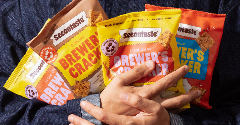
How Secon Taste is putting upcycled snacks on shelves
4 Aug 2026
Hungarian zero-waste startup Secon Taste is turning surplus food into upcycled snacks such as fibre-packed granola, instant porridge, and a circular coffee-tasting box.
Read more
Codex sets global thresholds for ‘may contain’ labels
3 Aug 2026
Codex Alimentarius has adopted its first global guidance on when to use “may contain” allergen warnings, setting thresholds intended to stop the label being used as blanket legal cover.
Read more