
Ingredients Categories
Finished Products
Finished Food Categories
- Bakery
- Beverages / Juices
- Cereal and grain products
- Confectionery
- Cooking Fats & Oils
- Dairy
- Egg products
- Fruits & Vegetables
- Infant & Baby food
- Meat, Poultry & Fish
- Nuts & Seeds products
- Other Finished Food Categories
- Pet Food
- Plant-based foods
- Prepared foods
- Sauces & Seasonings
- Sweet & Savoury Spreads
Specialised Finished Products
- Bee products
- Biotic products
- Dietary supplements
- Energy drinks
- Functional beverages
- Functional confectionery
- Functional food
- Functional powders
- Meal replacement products
- Nutricosmetics
- Other Specialised Finished Products
- Pet Dietary Supplements
- Pharma and OTC products
- Protein products
- Sugar replacers / Sweeteners
Health & Wellness Areas
Delivery Formats
Operations & Services
- 3D printing
- Analysis/ Testing
- Auditing & certifications
- Blending & mixing
- Bottling
- Certification
- Clinical trials
- Co-packing
- Coating
- Consulting
- Contract manufacturing
- Drying
- Electrospinning
- Encapsulating
- Enzymatic processing
- Extracting
- Extrusion
- Fat structuring
- Fermentation
- Filling
- Flavour development
- Freeze drying
- Granulating/ grinding/ milling / mixing
- High-pressure processing
- Labelling
- Other Operations & Services
- Packaging
- Packet filling
- Pasturising
- Quality assurance
- Saccharification
- Shear cell processing
- Spray drying
- Sterilisation
- Storage & Logistics
- Tabletting
- Toasting / roasting
- Ultra-high temperature processing
News
Quality counts: Don’t be seduced by big grams in protein bars
Lynda Searby, Freelance Journalist 19 Jan 2026Interactions with other ingredients can affect protein digestibility in energy bars. We look at how brands can ensure their ‘high protein’ claims do, in fact, benefit the consumer.
Bars have emerged as one of the winners in the high-protein craze of the last few years. They offer a convenient format for packing a large amount of protein, with many delivering more than 20 grams per serving.
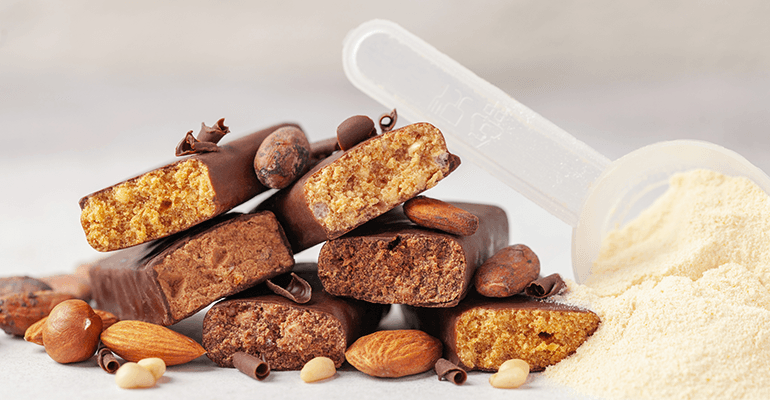
However, as the popularity of protein bars has surged, so has the amount of scrutiny over the quality of the nutrition they are delivering. And it has become apparent that the best bars aren’t necessarily the ones with the highest protein content.
“Protein quality isn’t just about how much protein is in a product, but how well the body can digest it and how complete its amino acid profile is,” Nichola Ludlam-Raine, dietician and author of the book How Not to Eat Ultra-Processed, told this publication.
The topic of protein quality vs quantity was investigated recently by researchers at the Hungarian University of Agriculture and Life Sciences. They found that although most protein bars are labelled ‘high in protein’ based on content, their actual nutritional quality may be low.
The researchers studied 1,641 commercially available bars. Of these, 81% were able to claim ‘high protein’ under EU Regulation 1924/2006, which requires that protein is a minimum of 20% of overall energy content. But when they tested the quality of that protein in four bars, they found that all of them fell short of the Food and Agriculture Organization’s (FAO) recommended minimum threshold for making protein quality claims.
“We believe that this research addresses a much neglected aspect of protein bars, i.e. that high protein content does not necessarily mean high protein nutritional quality,” wrote the researchers in Scientific Reports.
How to formulate a bar that contains high quality protein?
What does this mean for retailers when they are deciding which bars to stock? How can they determine which bars offer quality protein?
According to Ludlam-Raine, high quality proteins provide all the essential amino acids in proportions the body can use, and are readily digested and absorbed. As such they will generally score well on protein quality scoring systems like the Protein Digestibility-Corrected Amino Acid Score (PDCAAS) and the newer Digestible Indispensable Amino Acid Score (DIAAS).
“These measure both amino acid composition and digestibility, which together determine how effectively a protein contributes to human dietary needs,” she noted.
She said that animal-derived proteins such as whey, casein, milk proteins, and eggs consistently score high on these quality measures because they are complete proteins with high digestibility.
In terms of plant proteins, soy protein isolates score relatively well, whilst single plant proteins like rice or wheat tend to have lower scores due to less favourable essential amino acid profiles or lower digestibility, she explained.
Interactions with other ingredients can affect protein digestibility
So far, so good, but it starts to get complicated when proteins are incorporated into bars, as this can affect digestibility.
“When protein is included within a complex bar matrix, interactions with other ingredients – such as carbohydrates, fats, and fibre – can reduce in vitro digestibility scores compared with the same protein source tested in isolation,” explained Ludlam-Raine.
She continued: “This suggests the food form can influence the bioaccessibility of the protein’s amino acids, meaning less may ultimately be available for absorption, even if the label lists a high protein content.”
Protein quality lower ‘in bar’
Ludlam-Raine’s comments are consistent with the above-mentioned study, which found that the digestibility of all proteins was decreased by formulation into bars.
“Take whey protein and milk protein; the DIASS value of these two protein sources was drastically lowered in the bar. Both proteins have DIASS scores above 100, but in the bar they only reached around 60%. This was probably due to the presence of other ingredients such as carbohydrates, fats and fibres, which may hinder the digestibility of protein bars at the amino acid level,” lead researcher Judit Tormàsi said.
Whilst there is no escaping the fact that protein bars need additional ingredients to be palatable, this highlights the importance of looking beyond total grams of protein and considering the protein source and its digestibility within the finished product.
“The key thing to look for is a high proportion of complete, high-digestibility protein sources such as whey, milk, egg, soy, or a plant blend. Many products that combine a blend of dairy proteins and well formulated plant proteins use ingredient science to deliver better amino acid profiles and digestibility than bars relying primarily on lower quality protein inputs,” said Ludlam-Raine.

Get more of our news on Google
Set Ingredients Network as a 'Preferred Source' to get quicker access to the news you value.
Related news

Do the US dietary guidelines put UPFs under pressure?
10 Sep 2026
Will the US dietary guidelines change the way Americans eat, swapping ultra-processed foods for whole foods? We asked Dr Barry Popkin, renowned nutrition and obesity researcher.
Read more
Food fraud costs UK economy £2bn each year
9 Sep 2026
Food fraud is costing the UK economy up to £2 billion (€2.3 billion) every year although the food sector is more “resilient” than others, according to a recent study.
Read more
Kellogg accelerates work to remove artificial colours from all US cereals
3 Sep 2026
WK Kellogg has announced an accelerated timeline to eliminate all artificial colours and the chemical preservative, BHT, across its full US portfolio of cereals and cereal packaging.
Read more
Skimpflation: An ‘unfair’ and risky approach to keeping prices low
2 Sep 2026
Consumers see skimpflation – reducing the quality of ingredients due to rising costs – as more unfair than shrinkflation, making it a risky strategy according to recent research.
Read more
NielsenIQ’s EU barometer shows Britain leading in grocery inflation
31 Aug 2026
Britain was the only country to record grocery inflation above 2%, according to NielsenIQ data that compared Europe’s five biggest grocery markets from February to May 2026.
Read more
‘Urgent gaps’ in achieving 2030 food system goals
27 Aug 2026
Global food systems are failing to meet 2030 targets across indicators including health, environment, and resilience, according to a report co-authored by the Food and Agriculture Organisation (FAO).
Read more
Chimac’s fusion sauces bring Korean flavours to Europe
25 Aug 2026
Irish sauce brand Chimac is tapping into Korea’s culinary traditions, bringing its flavours and products to European consumers who want a taste of K-food.
Read more
Global demand for instant noodles continues to rise
24 Aug 2026
Global demand for instant noodles reached 124.21 billion servings last year, representing a 0.7% year-on-year increase – or 900 million extra servings.
Read more
Popular barbecue staples experience sharp price increases
19 Aug 2026
The typical cost of US shoppers’ barbecue baskets has risen by 12% over the past year – the fastest annual rise in a decade, figures from The Economist show.
Read more
Hot NPD: Nissin launches first cold-water Cup Noodles
18 Aug 2026
Nissin is taking one of Japan’s most iconic instant meals in a completely new direction with the launch of the first cold water-only Cup Noodles in the brand’s 55-year history.
Read more