
Ingredients Categories
Finished Products
Finished Food Categories
- Bakery
- Beverages / Juices
- Cereal and grain products
- Confectionery
- Cooking Fats & Oils
- Dairy
- Egg products
- Fruits & Vegetables
- Infant & Baby food
- Meat, Poultry & Fish
- Nuts & Seeds products
- Other Finished Food Categories
- Pet Food
- Plant-based foods
- Prepared foods
- Sauces & Seasonings
- Sweet & Savoury Spreads
Specialised Finished Products
- Bee products
- Biotic products
- Dietary supplements
- Energy drinks
- Functional beverages
- Functional confectionery
- Functional food
- Functional powders
- Meal replacement products
- Nutricosmetics
- Other Specialised Finished Products
- Pet Dietary Supplements
- Pharma and OTC products
- Protein products
- Sugar replacers / Sweeteners
Health & Wellness Areas
Delivery Formats
Operations & Services
- 3D printing
- Analysis/ Testing
- Auditing & certifications
- Blending & mixing
- Bottling
- Certification
- Clinical trials
- Co-packing
- Coating
- Consulting
- Contract manufacturing
- Drying
- Electrospinning
- Encapsulating
- Enzymatic processing
- Extracting
- Extrusion
- Fat structuring
- Fermentation
- Filling
- Flavour development
- Freeze drying
- Granulating/ grinding/ milling / mixing
- High-pressure processing
- Labelling
- Other Operations & Services
- Packaging
- Packet filling
- Pasturising
- Quality assurance
- Saccharification
- Shear cell processing
- Spray drying
- Sterilisation
- Storage & Logistics
- Tabletting
- Toasting / roasting
- Ultra-high temperature processing
News
PepsiCo formulates ‘naked’ Cheetos and Doritos products
Natasha Spencer-Jolliffe, Freelance Journalist 31 Dec 2025US food giant PepsiCo has launched its Simply NKD range, a move it says reimagines its popular products with new formulations free from artificial flavours, dyes, and colours.
“Cheetos and Doritos getting naked,” PepsiCo said as it announced its new Cheetos and Doritos releases in December.
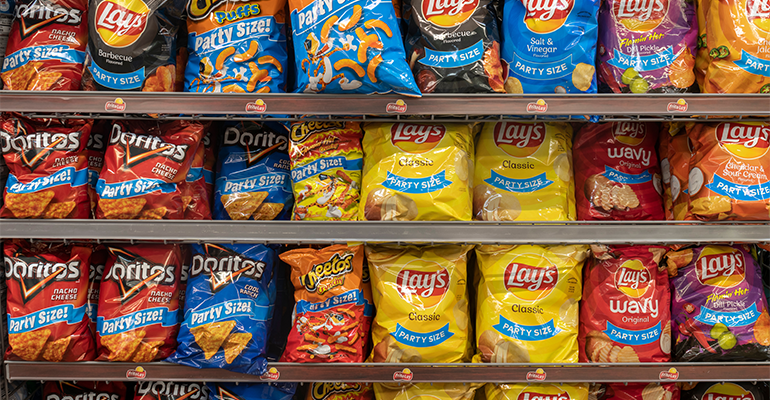
With a nod to the corporation stripping back its artificial content, the company confirmed its emphasis is on providing consumers with choice, indicating that the move focuses on expansion rather than restriction.
“More choices, same flavour, same brand power,” said Rachel Ferdinando, CEO of PepsiCo Foods US.
Its debut Simply NKD collection includes Doritos Simply NKD Nacho Cheese, Doritos Simply NKD Cool Ranch, Cheetos Simply NKD Puffs, and Cheetos Simply NKD Flamin’ Hot varieties.
Addressing additive concerns, maintaining appeal
PepsiCo said the new product range forms part of its broader transformation strategy, under which it will retain its familiar brands while extending offerings through reimagined formulations.
As such, the company anticipates that the ingredient changes in its products will not affect their sensorial appeal.
“Rest assured, our iconic Cheetos and Doritos remain unchanged. NKD is an additive option, not a replacement, introduced to meet consumer demand,” Ferdinando said. “This move underscores our commitment to flavour leadership, demonstrating that our taste remains strong even without visual cues.”
The company emphasised that Simply NKD retains the expected flavour and crunch to meet shoppers’ demands.
“We are reinventing our iconic – and most famous – brands to deliver options with the bold flavours fans know and love, now reimagined without any colours or artificial flavours,” said Hernán Tantardini, chief marketing officer of PepsiCo Foods US.
Additive rules undergo legal reform
Food additives such as artificial flavours, dyes, and colours have come under the radar in recent years, with governments banning or considering prohibiting certain artificial ingredients from formulations.
In October, global regulatory and market intelligence company ChemLinked reported that leading North American and Asian markets were updating their additive laws. The US Food and Drug Administration (FDA) has set effective dates for three food colour additives, while Thailand is amending its Food Additive Usage Regulation.
As part of the Cheetos and Doritos reformulation, their bright orange colouring will be removed. Removing Red 40 and Yellow 6 from ingredient lists may be welcomed by consumers seeking free-from alternatives.
It also reflects a push by European countries to phase out these additives and require warning labels on packaging.
Does the R&D go far enough?
PepsiCo said its reinvention followed the question: “What if we stripped our most iconic snacks down to their fundamentals?” After eight weeks of R&D, it took the idea from concept to completion.
However, the move has come under scrutiny. In a Substack post exploring “the big ideas and innovations shaping the future of food”, commentator Mike Lee said PepsiCo had “removed the dyes but kept everything else”.
He questioned whether the release represented meaningful progress toward a healthier food system, asking: “Faded Doritos that otherwise remain nutritionally unchanged?”
The nutritional profile of the new range indicates that no other changes have been made. A single 1oz serving contains 150 calories, 7g fat, and 150mg of sodium. That equates to approximately 10% of an adult’s daily fat allowance and 6% of the recommended daily sodium content.
“The dyes are not the most nutritionally suspect part of Doritos and Cheetos. Removing them is like putting a filter on a cigarette and calling it healthier,” said Lee.
Forming a healthier food system
PepsiCo’s press release announcing its Simply NKD launch concluded: “If we can reinvent Doritos and Cheetos, imagine what’s next.”
Lee outlined what he envisions to be the brand’s next steps clearly.
“What’s next is more of the same – slightly reformulated versions of the same ultra-processed products, each one stripped of whichever ingredient happens to be trending on social media that quarter, each one marketed as revolutionary while changing nothing about the fundamental business model that made these products problematic in the first place,” he wrote.

Get more of our news on Google
Set Ingredients Network as a 'Preferred Source' to get quicker access to the news you value.
Related news

Do the US dietary guidelines put UPFs under pressure?
10 Sep 2026
Will the US dietary guidelines change the way Americans eat, swapping ultra-processed foods for whole foods? We asked Dr Barry Popkin, renowned nutrition and obesity researcher.
Read more
Food fraud costs UK economy £2bn each year
9 Sep 2026
Food fraud is costing the UK economy up to £2 billion (€2.3 billion) every year although the food sector is more “resilient” than others, according to a recent study.
Read more
Kellogg accelerates work to remove artificial colours from all US cereals
3 Sep 2026
WK Kellogg has announced an accelerated timeline to eliminate all artificial colours and the chemical preservative, BHT, across its full US portfolio of cereals and cereal packaging.
Read more
Skimpflation: An ‘unfair’ and risky approach to keeping prices low
2 Sep 2026
Consumers see skimpflation – reducing the quality of ingredients due to rising costs – as more unfair than shrinkflation, making it a risky strategy according to recent research.
Read more
NielsenIQ’s EU barometer shows Britain leading in grocery inflation
31 Aug 2026
Britain was the only country to record grocery inflation above 2%, according to NielsenIQ data that compared Europe’s five biggest grocery markets from February to May 2026.
Read more
‘Urgent gaps’ in achieving 2030 food system goals
27 Aug 2026
Global food systems are failing to meet 2030 targets across indicators including health, environment, and resilience, according to a report co-authored by the Food and Agriculture Organisation (FAO).
Read more
Chimac’s fusion sauces bring Korean flavours to Europe
25 Aug 2026
Irish sauce brand Chimac is tapping into Korea’s culinary traditions, bringing its flavours and products to European consumers who want a taste of K-food.
Read more
Global demand for instant noodles continues to rise
24 Aug 2026
Global demand for instant noodles reached 124.21 billion servings last year, representing a 0.7% year-on-year increase – or 900 million extra servings.
Read more
Popular barbecue staples experience sharp price increases
19 Aug 2026
The typical cost of US shoppers’ barbecue baskets has risen by 12% over the past year – the fastest annual rise in a decade, figures from The Economist show.
Read more
Hot NPD: Nissin launches first cold-water Cup Noodles
18 Aug 2026
Nissin is taking one of Japan’s most iconic instant meals in a completely new direction with the launch of the first cold water-only Cup Noodles in the brand’s 55-year history.
Read more