
Ingredients Categories
Finished Products
Finished Food Categories
- Bakery
- Beverages / Juices
- Cereal and grain products
- Confectionery
- Cooking Fats & Oils
- Dairy
- Egg products
- Fruits & Vegetables
- Infant & Baby food
- Meat, Poultry & Fish
- Nuts & Seeds products
- Other Finished Food Categories
- Pet Food
- Plant-based foods
- Prepared foods
- Sauces & Seasonings
- Sweet & Savoury Spreads
Specialised Finished Products
- Bee products
- Biotic products
- Dietary supplements
- Energy drinks
- Functional beverages
- Functional confectionery
- Functional food
- Functional powders
- Meal replacement products
- Nutricosmetics
- Other Specialised Finished Products
- Pet Dietary Supplements
- Pharma and OTC products
- Protein products
- Sugar replacers / Sweeteners
Health & Wellness Areas
Delivery Formats
Operations & Services
- 3D printing
- Analysis/ Testing
- Auditing & certifications
- Blending & mixing
- Bottling
- Certification
- Clinical trials
- Co-packing
- Coating
- Consulting
- Contract manufacturing
- Drying
- Electrospinning
- Encapsulating
- Enzymatic processing
- Extracting
- Extrusion
- Fat structuring
- Fermentation
- Filling
- Flavour development
- Freeze drying
- Granulating/ grinding/ milling / mixing
- High-pressure processing
- Labelling
- Other Operations & Services
- Packaging
- Packet filling
- Pasturising
- Quality assurance
- Saccharification
- Shear cell processing
- Spray drying
- Sterilisation
- Storage & Logistics
- Tabletting
- Toasting / roasting
- Ultra-high temperature processing
News
Rethinking funding for food technology
Tessa Wiles, Content Editor - Food 28 Jun 2024The landscape of foodtech investment is evolving. With the need for long-term investment perspectives, what are the most effective strategies driving the next wave in foodtech innovation?
Five experts took to the Hack Summit stage to discuss challenges facing the food tech industry. The panel was moderated by Namratha Kothapalli, principal at SpeedInvest, and featured panellists Raffael Wohlgensinger, CEO and founder of FORMO, a precision fermentation animal-free cheese company, and three partners at venture capital and private equity firms: Alice Brooks, partner at Khosla Ventures, Erik Byrenius, founding partner at Mudcake, and Ariel Barack, senior partner at Ordway Selection.

What does ‘rethinking’ food funding even mean?
Kothpalli kicked off the discussion by posing a question to the panellists: “Why do we need to rethink food funding and what does it mean to each of us?”
Byrenius’s company Mudcake focuses on early stage investing in companies concentrating on the food system. He said: “We don't even use the word food tech nowadays. I think for me when we talk about the food system, we think about anything from super early production in crop inputs, all the way to biotech bioreactors, supply chain consumption, CPG [consumer packaged goods], and even waste management. So, for us, that's everything related to the food system.”
Barack’s definition revolves around sustainability: “For me, food tech is about feeding the world sustainably. It's about this incredible pull that we're seeing today from customers who want to eat better, and they want to understand what is in their food and why it's being sold to them at a certain price
“What is the social impact of our food? And it's incredible, how over the last few years the awareness of this has just increased. It's such a powerful force.”
For Brooks, food tech is broad. She said: “I like to frame it as things that are using tech to better human health or better planetary health and then bucketing within that could be novel foods, novel ingredients, novel production methods or inputs for conventional foods. So, I think it's a pretty wide bucket for me.”
Wohlgensinger's perspective differed slightly from the rest: “I'm the only non-investor here on the on the panel,” he said. “So, I probably have a bit more [of a] narrow view on it, not as broad, but for me personally […] food tech is kind of where food tech meets other kind of technologies and in our [Formo’s] case, mostly obviously biotech. So, I think this conversion of bio and food is what I'm most excited about.”
Long-term investment perspectives are needed to sustain the sector
According to Barack, food tech goes beyond consumer-facing products. He said that to understand the potential of food tech, the entire value chain should be considered, including the behind-the-scenes processes that sustain the industry, such as manufacturing, ingredients, and packaging.
Long-term investment perspectives are also integral to sustaining the sector. Brooks pointed out that despite unfavourable market conditions and the decline in valuations of public food tech companies, maintaining a long-term outlook is crucial. “If we are working with companies that are creating real value to consumers, real value to other stakeholders, in the long term, there will be that value there,” Brooks said, adding that some investors tend to prematurely exit the space due to underwhelming short-term results.
Byrenius held a similar opinion, reflecting on the significant valuation declines of companies like Beyond Meat and Oatly, suggesting that these instances have created a challenging environment for new investments. He discussed the issue of having a narrow viewpoint of the industry. He said: “If you’re not deep into it [food tech], you don’t understand what’s happening in all the different stages of the supply chain, then of course, that’s probably what’s forming your view of what is food tech.”
Barack agreed with Byrenius, adding that the initial wave of food tech initial public offerings (IPOs), such as Beyond Meat, failed to deliver sustainable success, which has led to reluctance among institutional investors. He suggested that while these IPOs did bring visibility to the space, they did not establish a strong track record of profitability, which is crucial for attracting institutional capital.
Brooks said that early public offerings have created scepticism and hesitance among investors who are now cautious about entering the market without proven results. “A lot of investors sort of dip their toes into the space then bounce [...] maybe [they] over-invested, got scared off and left the space, and that's a huge problem I think,” she added.
All in the timing: partnering with large corporations
Barack, Byrenius, and Wohlgensinger discussed the complexities and benefits of collaboration and partnerships with large corporations in the food tech industry.
Barack outlined how large companies are increasingly starting to realise that innovation often comes from smaller startups rather than in-house R&D, and as a result, are increasing their involvement. He added that these large corporations are now incorporating this into their strategies by partnering with or acquiring innovative startups.
He pointed to Ferrero as one example. As a family-owned company, the family can use separate vehicles for innovation and investment activities separate from corporate. This approach, he said, allows them to engage in these ventures without having the Ferrero name directly involved.
Wohlgensinger highlighted the timing challenges faced by early-stage startups when partnering with larger companies: “When you’re early, you don’t necessarily want to take something from the large corporation because it puts you on their timeline.” He added that these relationships can sometimes lead to misaligned goals and timelines.
Byrenius, however, suggested that these partnerships, if managed well, can provide valuable learning opportunities and resources for startups. He said: “We’ve seen that if you’re mindful about how you build that relationship and work with them in the right way, you more see it as a way for you to learn about mistakes.”

Get more of our news on Google
Set Ingredients Network as a 'Preferred Source' to get quicker access to the news you value.
Related news

M&S launches own-brand pet food range
11 Sep 2026
UK retailer Marks & Spencer has launched its own-brand pet food line Paws & Pals – a well-timed and strategic move that will appeal to loyal shoppers, says a marketing expert.
Read more
Do the US dietary guidelines put UPFs under pressure?
10 Sep 2026
Will the US dietary guidelines change the way Americans eat, swapping ultra-processed foods for whole foods? We asked Dr Barry Popkin, renowned nutrition and obesity researcher.
Read more
Food fraud costs UK economy £2bn each year
9 Sep 2026
Food fraud is costing the UK economy up to £2 billion (€2.3 billion) every year although the food sector is more “resilient” than others, according to a recent study.
Read more
EU's ban on Brazilian meat expected to raise prices
7 Sep 2026
Around 25% of the EU’s imported chicken and beef comes from Brazil. From September, products that fail to meet the EU antimicrobial resistance rules will be banned.
Read more
Skimpflation: An ‘unfair’ and risky approach to keeping prices low
2 Sep 2026
Consumers see skimpflation – reducing the quality of ingredients due to rising costs – as more unfair than shrinkflation, making it a risky strategy according to recent research.
Read more
NielsenIQ’s EU barometer shows Britain leading in grocery inflation
31 Aug 2026
Britain was the only country to record grocery inflation above 2%, according to NielsenIQ data that compared Europe’s five biggest grocery markets from February to May 2026.
Read more
‘Urgent gaps’ in achieving 2030 food system goals
27 Aug 2026
Global food systems are failing to meet 2030 targets across indicators including health, environment, and resilience, according to a report co-authored by the Food and Agriculture Organisation (FAO).
Read more
Seven-Eleven uses microbial testing tech to extend katsudon shelf life
26 Aug 2026
Japanese retail company Seven-Eleven has improved its factory’s microbial environment to keep comfort-food staple, katsudon, fresher for longer.
Read more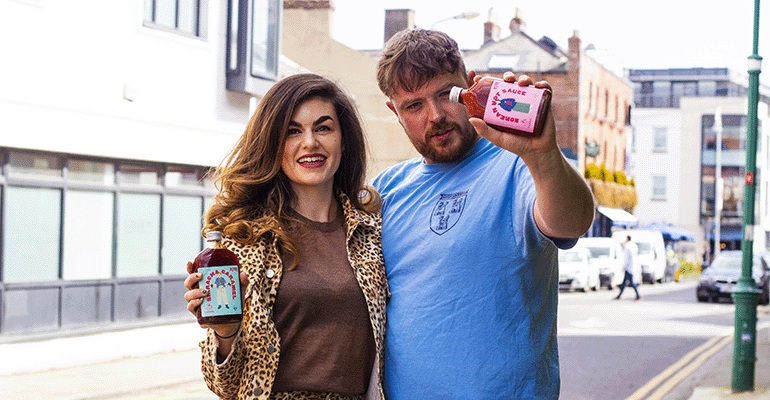
Chimac’s fusion sauces bring Korean flavours to Europe
25 Aug 2026
Irish sauce brand Chimac is tapping into Korea’s culinary traditions, bringing its flavours and products to European consumers who want a taste of K-food.
Read more
Global demand for instant noodles continues to rise
24 Aug 2026
Global demand for instant noodles reached 124.21 billion servings last year, representing a 0.7% year-on-year increase – or 900 million extra servings.
Read more