
Ingredients Categories
Finished Products
Finished Food Categories
- Bakery
- Beverages / Juices
- Cereal and grain products
- Confectionery
- Cooking Fats & Oils
- Dairy
- Egg products
- Fruits & Vegetables
- Infant & Baby food
- Meat, Poultry & Fish
- Nuts & Seeds products
- Other Finished Food Categories
- Pet Food
- Plant-based foods
- Prepared foods
- Sauces & Seasonings
- Sweet & Savoury Spreads
Specialised Finished Products
- Bee products
- Biotic products
- Dietary supplements
- Energy drinks
- Functional beverages
- Functional confectionery
- Functional food
- Functional powders
- Meal replacement products
- Nutricosmetics
- Other Specialised Finished Products
- Pet Dietary Supplements
- Pharma and OTC products
- Protein products
- Sugar replacers / Sweeteners
Health & Wellness Areas
Delivery Formats
Operations & Services
- 3D printing
- Analysis/ Testing
- Auditing & certifications
- Blending & mixing
- Bottling
- Certification
- Clinical trials
- Co-packing
- Coating
- Consulting
- Contract manufacturing
- Drying
- Electrospinning
- Encapsulating
- Enzymatic processing
- Extracting
- Extrusion
- Fat structuring
- Fermentation
- Filling
- Flavour development
- Freeze drying
- Granulating/ grinding/ milling / mixing
- High-pressure processing
- Labelling
- Other Operations & Services
- Packaging
- Packet filling
- Pasturising
- Quality assurance
- Saccharification
- Shear cell processing
- Spray drying
- Sterilisation
- Storage & Logistics
- Tabletting
- Toasting / roasting
- Ultra-high temperature processing
News
RTD alcohol market share to double by 2025
Katja Knox, Editorial Account Manager 26 Oct 2021Since 2018, volume sales of alcoholic ready-to-drink options have been growing more quickly than other major drink categories, according to new data from IWSR, a drinks market analyst firm.
By 2025, the research firm says that the category share is set to double from 4% to 8% of the overall alcoholic beverage market, growing at a compound annual growth rate of 15% year over year. The popularity of RTD beverages is proliferating at a rapid pace, and it is no longer only U.S. customers that are enjoying this category. IWSR’s research showed that while the U.S. market may be edging toward saturation, there is ample room for growth in 10 markets that represent 85% of worldwide RTD volumes.
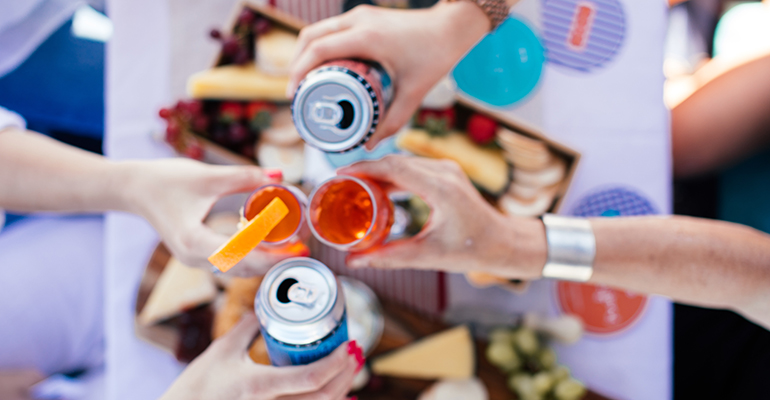
“Hard seltzer volumes outside the U.S. are small, but awareness is also low. As that awareness grows, we’re seeing that people are increasingly willing to consider trying these products,” Brandy Rand, COO of the Americas at IWSR Drinks Market Analysis said in a statement.
As with many alcohol categories, premiumization is one of the major driving trends in the space, Rand noted. In a category that was trailblazed by White Claw and Truly seltzer, there is now a plethora of alternative options, including Bombay Sapphire canned gin and tonic, Drinkworks, Russian Standard, and Travis Scott’s hard seltzer Cacti.
However, creating a premium brand is not as simple as being the newest entrant to the market. IWSR research shows that 56% of RTD drinkers view the regular release of new flavors to be the No.1 faction to establish premium positioning. Similarly, the research firm found that an individual’s connection to a new brand and the use of innovative packaging helps bolster this premium image. There is also a clear preference among U.S. consumers for sprits-based RTDs as they consider them to be of higher quality, and many other markets hold canned spirits in the same esteem.
Canada, the U.K., China and Australia are the four markets that IWSR predicts will experience the largest overall volume growth by 2025, increasing 50%, 90%, 84%, 24% respectively. However, consumers in each market appear to be interested in a slightly different subset of the overall RTD category. In Australia, Germany, Canada and Mexico canned cocktails are particularly in vogue and are forecast to grow almost 9% compound annual growth rate by 2025. In Brazil, China, Japan and South Africa flavored alcohol beverages in cans are heating up and are forecast to grow at a 7% compound annual growth rate by 2025.
As the category continues to grow, soft drink companies and brewers – two categories where sales have been trending downward for a number of years – are also getting into the game as they try to capitalize on the popularity of these perpetually popular products.
"Many well-known brands, from water to energy drinks to coffee, have recently crossed over into alcoholic RTDs, leading to several strategic partnerships between soft drinks, beer, and spirits companies to successfully leverage distribution across multiple outlets,” noted Rand. Anheuser-Busch and Diageo are two major brewers that have recently made moves to position themselves more squarely in the RTD space.
These findings that boast a continued surge in growth for these canned alcoholic beverages are promising following industry predictions that the RTD bubble was about to burst following this summer’s lower-than-expected sales of Boston’s Truly hard seltzer, which is one of the market leaders in the space.

Get more of our news on Google
Set Ingredients Network as a 'Preferred Source' to get quicker access to the news you value.
Related news

Do the US dietary guidelines put UPFs under pressure?
10 Sep 2026
Will the US dietary guidelines change the way Americans eat, swapping ultra-processed foods for whole foods? We asked Dr Barry Popkin, renowned nutrition and obesity researcher.
Read more
Food fraud costs UK economy £2bn each year
9 Sep 2026
Food fraud is costing the UK economy up to £2 billion (€2.3 billion) every year although the food sector is more “resilient” than others, according to a recent study.
Read more
Skimpflation: An ‘unfair’ and risky approach to keeping prices low
2 Sep 2026
Consumers see skimpflation – reducing the quality of ingredients due to rising costs – as more unfair than shrinkflation, making it a risky strategy according to recent research.
Read more
NielsenIQ’s EU barometer shows Britain leading in grocery inflation
31 Aug 2026
Britain was the only country to record grocery inflation above 2%, according to NielsenIQ data that compared Europe’s five biggest grocery markets from February to May 2026.
Read more
‘Urgent gaps’ in achieving 2030 food system goals
27 Aug 2026
Global food systems are failing to meet 2030 targets across indicators including health, environment, and resilience, according to a report co-authored by the Food and Agriculture Organisation (FAO).
Read more
China beverages: Is herbal innovation the future?
20 Aug 2026
Herbal and botanical innovation in China's drinks market continues to grow, with ingredients like astragalus root, ginger, and ginseng in the spotlight – and focus shifting far beyond refreshment.
Read more
Popular barbecue staples experience sharp price increases
19 Aug 2026
The typical cost of US shoppers’ barbecue baskets has risen by 12% over the past year – the fastest annual rise in a decade, figures from The Economist show.
Read more
Beyond 'nice to have': A spotlight on US functional beverages
12 Aug 2026
Functional beverage interest in the US is gaining important ground as consumers now expect function rather than see it as "nice to have", and there are clear market gaps for growth, according to Spate.
Read more
Manam Chocolate aims to bring premium Indian cacao to 'the world stage'
11 Aug 2026
Craft chocolate brand Manam Chocolate is investing in local expansion and supply chain innovation throughout India as it works to build out the premium reputation of its locally produced cacao products.
Read more
Digital twin technology gains ground in food manufacturing
6 Aug 2026
Food and beverage companies are increasingly turning to digital twins to optimise and automate manufacturing processes, but opportunities stretch far beyond this, say experts.
Read more