
Ingredients Categories
Finished Products
Finished Food Categories
- Bakery
- Beverages / Juices
- Cereal and grain products
- Confectionery
- Cooking Fats & Oils
- Dairy
- Egg products
- Fruits & Vegetables
- Infant & Baby food
- Meat, Poultry & Fish
- Nuts & Seeds products
- Other Finished Food Categories
- Pet Food
- Plant-based foods
- Prepared foods
- Sauces & Seasonings
- Sweet & Savoury Spreads
Specialised Finished Products
- Bee products
- Biotic products
- Dietary supplements
- Energy drinks
- Functional beverages
- Functional confectionery
- Functional food
- Functional powders
- Meal replacement products
- Nutricosmetics
- Other Specialised Finished Products
- Pet Dietary Supplements
- Pharma and OTC products
- Protein products
- Sugar replacers / Sweeteners
Health & Wellness Areas
Delivery Formats
Operations & Services
- 3D printing
- Analysis/ Testing
- Auditing & certifications
- Blending & mixing
- Bottling
- Certification
- Clinical trials
- Co-packing
- Coating
- Consulting
- Contract manufacturing
- Drying
- Electrospinning
- Encapsulating
- Enzymatic processing
- Extracting
- Extrusion
- Fat structuring
- Fermentation
- Filling
- Flavour development
- Freeze drying
- Granulating/ grinding/ milling / mixing
- High-pressure processing
- Labelling
- Other Operations & Services
- Packaging
- Packet filling
- Pasturising
- Quality assurance
- Saccharification
- Shear cell processing
- Spray drying
- Sterilisation
- Storage & Logistics
- Tabletting
- Toasting / roasting
- Ultra-high temperature processing
News
Sainsbury’s facial recognition pilot scheme hoped to benefit suppliers
25 Sep 2025UK supermarket Sainsbury’s hopes its trial of controversial facial recognition in two stores will help to tackle a rise in shoplifting and bring down costs for suppliers.
The retailer is working with UK tech company Facewatch for the pilot scheme, which was rolled out at the beginning of September at branches in Sydenham, south-east London, and Oldfield Park, Bath.
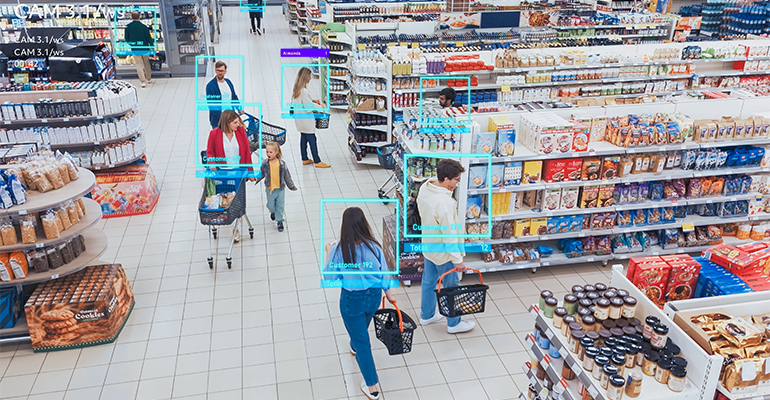
It comes after UK frozen foods retailer Iceland trialled technology provided by the same company earlier this year, while in June, the supermarket Asda chose to pilot a scheme by facial recognition tech competitor FaiceTech.
The technology offered by both tech companies is similar in that they install facial recognition cameras connected to a database that can identify anyone entering the stores.
Theft is proving a major problem for grocery retailers
It comes as grocery retailers across the UK have raised concerns about the growing incidence of security challenges in stores. Sainsbury’s said that theft, abuse, and threatening behaviour have all “continued to rise” in locations across the UK.
Its research shows that one in three customers believes that shoplifting and anti-social behaviour is getting worse, while one in five says violence against supermarket workers is a major concern.
Announcing the pilot scheme, its CEO, Simon Roberts, stated: “We have listened to the deep concerns our colleagues and customers have and they’re right to expect us to act.”
While acknowledging concerns the technology poses about data and privacy, he added: “This trial and subsequent rollout is not about monitoring colleagues or our valued customers. It’s focused solely on identifying serious offenders who have committed acts of violence, aggression, or theft, helping our teams prevent further harm.”
Concerns over privacy raised by privacy groups
Directly addressing the issue of privacy, Sainsbury’s said that it will immediately delete any facial records from its database that are not instantly recognised or related to previous criminal behaviour.
However, critics highlighted potential problems.
Madeleine Stone, senior advocacy officer for the privacy group Big Brother Watch, said: “Sainsbury’s decision to trial Orwellian facial recognition technology in its shops is deeply disproportionate and chilling.
“Facial recognition surveillance turns shoppers into suspects, with devastating consequences for people’s lives when it inevitably makes mistakes.
“Sainsbury’s and Facewatch are adding customers to secret watchlists with no due process, meaning people are being falsely accused, grossly mistreated, and blacklisted from shops, despite being entirely innocent.”
Facial recognition: A potential solution for high theft risk groceries?
The Sainsbury’s pilot may accelerate adoption of facial recognition technology across the UK grocery retail sector, where retail theft has been steadily increasing.
The UK trade retailer association BRC revealed in its Crime Survey Report 2025 that retail crime is “spiralling out of control”, with losses from theft totalling a record £2.3 billion in 2023/24.
The report highlighted the concurrent rise in the amount the nation’s retailers are spending on crime prevention. An estimated £1.8 billion went on prevention measures like security technology in 2024, raising the total investment to £4.2 billion, from £3.3 billion in 2023.
As supermarkets are wary of passing on all cost pressures to consumers, this is resulting in tougher pricing pressures on suppliers.
“Retailers operate on low margins, so losses to crime and expenditure on crime prevention reduce the capacity to invest further on prices, improve terms and conditions for staff, as well as the overall customer experience in store and online, and to increase efficiency,” the BRC report stated.
For packaged food and beverage producers, the benefits could be particularly strong in categories prone to theft – premium alcohol, confectionery, meat, and health supplements among them. A reduction in theft may lessen pressure for higher wholesale contributions or restrictive packaging, both of which suppliers often shoulder.

Get more of our news on Google
Set Ingredients Network as a 'Preferred Source' to get quicker access to the news you value.
Related news

Health and wellness engagement matures across Middle East and Africa
4 Sep 2026
Many consumers in the Middle East and Africa are now proactively engaged in health and wellness, looking to integrate better habits and products into their daily lives, say experts.
Read more
Kellogg accelerates work to remove artificial colours from all US cereals
3 Sep 2026
WK Kellogg has announced an accelerated timeline to eliminate all artificial colours and the chemical preservative, BHT, across its full US portfolio of cereals and cereal packaging.
Read more
Skimpflation: An ‘unfair’ and risky approach to keeping prices low
2 Sep 2026
Consumers see skimpflation – reducing the quality of ingredients due to rising costs – as more unfair than shrinkflation, making it a risky strategy according to recent research.
Read more
Royal Canin launches ‘freshly-cooked’ therapeutic dog food
1 Sep 2026
Mars-owned Royal Canin has moved into the therapeutic diet sector with the launch of its Fresh Veterinary Diets range for dogs with health conditions. We asked a veterinary nutritionist for her opinion.
Read more
NielsenIQ’s EU barometer shows Britain leading in grocery inflation
31 Aug 2026
Britain was the only country to record grocery inflation above 2%, according to NielsenIQ data that compared Europe’s five biggest grocery markets from February to May 2026.
Read more
‘Urgent gaps’ in achieving 2030 food system goals
27 Aug 2026
Global food systems are failing to meet 2030 targets across indicators including health, environment, and resilience, according to a report co-authored by the Food and Agriculture Organisation (FAO).
Read more
Seven-Eleven uses microbial testing tech to extend katsudon shelf life
26 Aug 2026
Japanese retail company Seven-Eleven has improved its factory’s microbial environment to keep comfort-food staple, katsudon, fresher for longer.
Read more
Chimac’s fusion sauces bring Korean flavours to Europe
25 Aug 2026
Irish sauce brand Chimac is tapping into Korea’s culinary traditions, bringing its flavours and products to European consumers who want a taste of K-food.
Read more
Global demand for instant noodles continues to rise
24 Aug 2026
Global demand for instant noodles reached 124.21 billion servings last year, representing a 0.7% year-on-year increase – or 900 million extra servings.
Read more
China beverages: Is herbal innovation the future?
20 Aug 2026
Herbal and botanical innovation in China's drinks market continues to grow, with ingredients like astragalus root, ginger, and ginseng in the spotlight – and focus shifting far beyond refreshment.
Read more