
Ingredients Categories
Finished Products
Finished Food Categories
- Bakery
- Beverages / Juices
- Cereal and grain products
- Confectionery
- Cooking Fats & Oils
- Dairy
- Egg products
- Fruits & Vegetables
- Infant & Baby food
- Meat, Poultry & Fish
- Nuts & Seeds products
- Other Finished Food Categories
- Pet Food
- Plant-based foods
- Prepared foods
- Sauces & Seasonings
- Sweet & Savoury Spreads
Specialised Finished Products
- Bee products
- Biotic products
- Dietary supplements
- Energy drinks
- Functional beverages
- Functional confectionery
- Functional food
- Functional powders
- Meal replacement products
- Nutricosmetics
- Other Specialised Finished Products
- Pet Dietary Supplements
- Pharma and OTC products
- Protein products
- Sugar replacers / Sweeteners
Health & Wellness Areas
Delivery Formats
Operations & Services
- 3D printing
- Analysis/ Testing
- Auditing & certifications
- Blending & mixing
- Bottling
- Certification
- Clinical trials
- Co-packing
- Coating
- Consulting
- Contract manufacturing
- Drying
- Electrospinning
- Encapsulating
- Enzymatic processing
- Extracting
- Extrusion
- Fat structuring
- Fermentation
- Filling
- Flavour development
- Freeze drying
- Granulating/ grinding/ milling / mixing
- High-pressure processing
- Labelling
- Other Operations & Services
- Packaging
- Packet filling
- Pasturising
- Quality assurance
- Saccharification
- Shear cell processing
- Spray drying
- Sterilisation
- Storage & Logistics
- Tabletting
- Toasting / roasting
- Ultra-high temperature processing
News
Savvy shoppers choose savings despite lower inflation
Natasha Spencer-Jolliffe, Freelance Journalist 12 Jun 2024Consumers remain cautious about spending, despite global drops in inflation and the UK recording its lowest inflation levels in recent years.
In May 2024, grocery inflation levels in the UK dropped to 2.4%. It signals the fifteenth month in a row that the country’s inflation has decreased and is currently at its lowest since October 2021. Market research firm Kantar International said that sales figures for take-home groceries were up by 2.9% over four weeks, ending on 12 May.
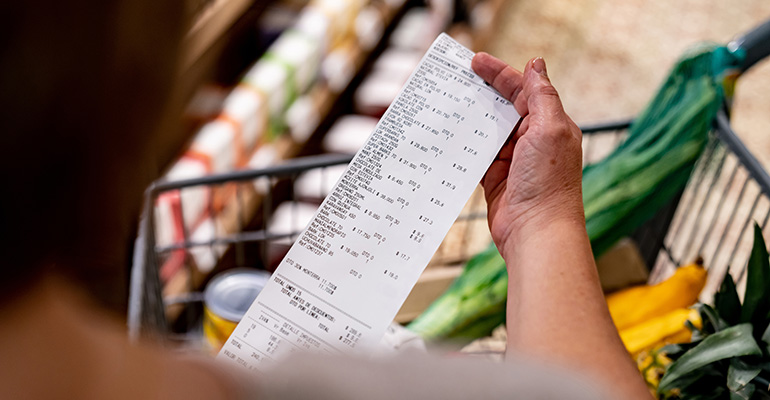
Around the globe, consumers have also seen inflation levels heading in a downward direction. Year-on-year inflation was stable in February 2024 at 5.7%, having sat at about 6.0% since May 2023, the OECD found in its Consumer Price Index (CPI) . Overall, inflation fell in three-quarters of OECD countries, with the annual change in food prices across 38 industrialised countries amounting to their lowest rate since before the war in Ukraine, as reported in the Financial Times.
Previously, the war on Ukraine elevated existing price pressures in the food sector in wider Europe, the European Central Bank said. Food inflation hit a new historical high of 7.5% in May 2022. Then, in March 2023, food inflation reached a new historical peak, doubling its earlier figure to 15%. According to the European Central Bank, a rapid rise in energy costs, global food commodity prices, and farm gate prices in the euro area were significant contributors to the high inflation levels.
Cost-conscious and cautious
In the UK, food and beverage (F&B) inflation levels have been at their lowest since October 2021, providing a welcome relief to shoppers facing the ongoing cost-of-living crisis with ever-stretched budgets. Yet, price stability and affordability assurances remain unreliable and concerning, with high prices seeing consumers modifying their grocery shopping habits.
“Inflation levels slowing are welcomed by consumers, but prices are still rising, and they are still making choices to compensate for this, such as buying products less often and amending basket sizes,” Rebecca Jamison, consumer insight director of Kantar International, told Ingredients Network.
Consumer behavioural changes are often observed when inflation rates sit around the 3%-mark, Kantar International said. At this rate and above, shoppers will typically move to cheaper brands and product alternatives. Similarly, when the inflation rate lowers, so too does consumers’ preference for more cost-effective product choices.
Yet, according to Kantar International, current consumer behaviour does not follow this typical trend. With almost two and a half years of price increases at a rapid rate, the market research firm’s head of retail and consumer insight, Fraser McKevitt, said: “It could take a bit longer for shoppers to unwind the habits they have learnt to help them manage the cost of living crisis”.
In a nod to the ongoing impact of the cost of living on consumer spending habits, own-label lines are growing faster than branded F&B, with over half (52%) of total spending comprising own-label product varieties. Consumers are also opting for premium own-brand labels, favouring these over branded products, increasing by almost a tenth (9.9%) compared to 2023 figures.
New categories within the discount retail space and reward schemes prove popular with consumers. Due in part to its bakery counters, which saw bread, cakes, or pastries enter a quarter of shoppers’ baskets, Lidl reached a new record-high market share of 8.1%. The discount store’s Lidl Plus app and accompanying loyalty scheme grew in-store bakery items’ volume sales by more than 40%.
Online orders optimise consumer convenience and draw consumers to the checkouts. Online-only retailer Ocado was the fastest-growing grocer in the quarter ending on 12 May. With a 12.4% sales increase, this figure is more than double that of the total online market, which sits at 5.4%.
Sugar and confectionery buck the trend
Sugar and chocolate confectionery are seeing inflation of over 6% in the UK. The segments’ inflation levels remain high, despite the country’s lowest inflation rate in recent history. “The confectionery category had a slower uptake in inflation levels, with groceries inflating at a faster rate initially,” Jamison said. “However, now there are wider factors, such as increasing cocoa prices, which are in turn being passed on to consumers,” Jamison added.
With cocoa prices showing no signs of slowing down, producers may need to raise prices in physical and online stores and invest entirely in new product development (NPD). “We believe the rising prices for cocoa can be expected to continue until at least the next harvest, and possibly beyond, especially as climate change impacts the global supply,” Jamison said.
Amid high inflation levels, F&B manufacturers may update their formulations or roll out new launches with fewer or different ingredients sourced from alternative suppliers to reduce production costs. “We could see the cost rise further,” added Jamison. As such, this could mean that manufacturers will have a choice about whether to pass these costs onto consumers or work on new product formulations.
Seasonal lift for inflation-impacted retailers
As Europe enters the summer months and big audience events like the 2024 UEFA European men’s football tournament and the Olympic Games, retailers may see a spike in sales.
Bank holiday weekends and warmer temperatures can mean increased sales of popular products for outdoor eating occasions like barbeques and picnics. Burger sales, for example, saw 13% growth at the end of April 2024 in the UK.

Get more of our news on Google
Set Ingredients Network as a 'Preferred Source' to get quicker access to the news you value.
Related news

M&S launches own-brand pet food range
11 Sep 2026
UK retailer Marks & Spencer has launched its own-brand pet food line Paws & Pals – a well-timed and strategic move that will appeal to loyal shoppers, says a marketing expert.
Read more
Do the US dietary guidelines put UPFs under pressure?
10 Sep 2026
Will the US dietary guidelines change the way Americans eat, swapping ultra-processed foods for whole foods? We asked Dr Barry Popkin, renowned nutrition and obesity researcher.
Read more
Food fraud costs UK economy £2bn each year
9 Sep 2026
Food fraud is costing the UK economy up to £2 billion (€2.3 billion) every year although the food sector is more “resilient” than others, according to a recent study.
Read more
Health and wellness engagement matures across Middle East and Africa
4 Sep 2026
Many consumers in the Middle East and Africa are now proactively engaged in health and wellness, looking to integrate better habits and products into their daily lives, say experts.
Read more
Kellogg accelerates work to remove artificial colours from all US cereals
3 Sep 2026
WK Kellogg has announced an accelerated timeline to eliminate all artificial colours and the chemical preservative, BHT, across its full US portfolio of cereals and cereal packaging.
Read more
Skimpflation: An ‘unfair’ and risky approach to keeping prices low
2 Sep 2026
Consumers see skimpflation – reducing the quality of ingredients due to rising costs – as more unfair than shrinkflation, making it a risky strategy according to recent research.
Read more
Royal Canin launches ‘freshly-cooked’ therapeutic dog food
1 Sep 2026
Mars-owned Royal Canin has moved into the therapeutic diet sector with the launch of its Fresh Veterinary Diets range for dogs with health conditions. We asked a veterinary nutritionist for her opinion.
Read more
NielsenIQ’s EU barometer shows Britain leading in grocery inflation
31 Aug 2026
Britain was the only country to record grocery inflation above 2%, according to NielsenIQ data that compared Europe’s five biggest grocery markets from February to May 2026.
Read more
‘Urgent gaps’ in achieving 2030 food system goals
27 Aug 2026
Global food systems are failing to meet 2030 targets across indicators including health, environment, and resilience, according to a report co-authored by the Food and Agriculture Organisation (FAO).
Read more
Seven-Eleven uses microbial testing tech to extend katsudon shelf life
26 Aug 2026
Japanese retail company Seven-Eleven has improved its factory’s microbial environment to keep comfort-food staple, katsudon, fresher for longer.
Read more