
Ingredients Categories
Finished Products
Finished Food Categories
- Bakery
- Beverages / Juices
- Cereal and grain products
- Confectionery
- Cooking Fats & Oils
- Dairy
- Egg products
- Fruits & Vegetables
- Infant & Baby food
- Meat, Poultry & Fish
- Nuts & Seeds products
- Other Finished Food Categories
- Pet Food
- Plant-based foods
- Prepared foods
- Sauces & Seasonings
- Sweet & Savoury Spreads
Specialised Finished Products
- Bee products
- Biotic products
- Dietary supplements
- Energy drinks
- Functional beverages
- Functional confectionery
- Functional food
- Functional powders
- Meal replacement products
- Nutricosmetics
- Other Specialised Finished Products
- Pet Dietary Supplements
- Pharma and OTC products
- Protein products
- Sugar replacers / Sweeteners
Health & Wellness Areas
Delivery Formats
Operations & Services
- 3D printing
- Analysis/ Testing
- Auditing & certifications
- Blending & mixing
- Bottling
- Certification
- Clinical trials
- Co-packing
- Coating
- Consulting
- Contract manufacturing
- Drying
- Electrospinning
- Encapsulating
- Enzymatic processing
- Extracting
- Extrusion
- Fat structuring
- Fermentation
- Filling
- Flavour development
- Freeze drying
- Granulating/ grinding/ milling / mixing
- High-pressure processing
- Labelling
- Other Operations & Services
- Packaging
- Packet filling
- Pasturising
- Quality assurance
- Saccharification
- Shear cell processing
- Spray drying
- Sterilisation
- Storage & Logistics
- Tabletting
- Toasting / roasting
- Ultra-high temperature processing
News
Sheep and goat plague: A new threat to Greece’s feta production
Tessa Wiles, Content Editor - Food 27 Aug 2024A recent goat and sheep plague outbreak threatens feta production in Greece. The flagship product accounts for roughly 10% of the country’s food exports, but Greek authorities say there is no cause for concern.
The outbreak of Peste des Petits Ruminants (PPR) – also known as sheep and goat plague – was first detected in the central Thessaly region in Greece on July 11, 2024, according to the Greek Agriculture Ministry.
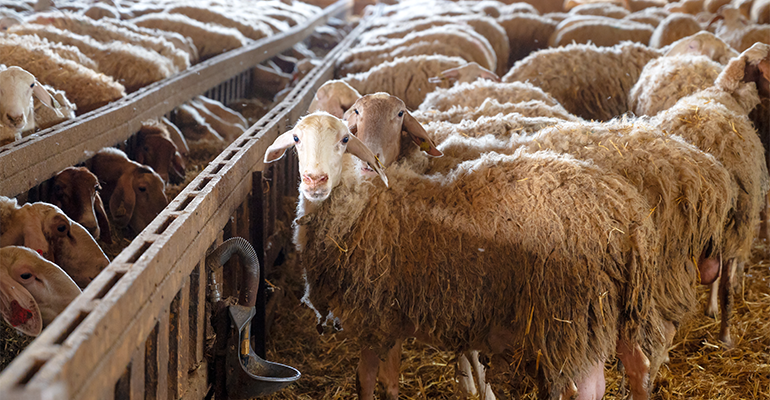
It has been alleged that infected animals were imported from Romania to the Thessaly region. “This is the first time it has appeared in Greece and we now believe it was imported from Romania in herds destined for slaughter,” said Dimitris Moskos, vice president of the Association of Greek Livestock (SEK), as reported by the Guardian.
PPR is a viral disease that affects domestic and wild small ruminants, including sheep and goats. The infection, which includes fever, nasal discharge, mouth lesions, and diarrhea, is spread through direct contact with infected animals or contaminated environments. The mortality rates of affected herds are up to 70%. While the disease does not spread from animals to humans, meaning meat and milk from infected animals are safe to consume, it does impact livestock production. Controlling the spread means many animals need to be culled.
‘Too early’ to predict the impact on the market
During a press conference held on August 1, 2024, the Greek minister of agriculture Kostas Tsiaras addressed numerous questions from journalists regarding the ongoing outbreak of PPR and its impacts.
The virus was reportedly imported from Romania last month and threatens to spread through neighbouring regions.
When questioned about the outbreak's origins, Tsiaras stated that "there is no real evidence" yet to confirm how the disease spread or if it came from Romania. He explained that proving the source requires matching the genotype of the virus in Greek animals with those in Romania. He noted the virus's incubation period of up to 22 days complicates tracing, as animals might have moved before showing symptoms
Tsiaras acknowledged that the outbreak could affect milk and meat prices. He explained that safety measures to eradicate the disease will only be effective 30 days after the last case is found, and it is too early to predict the market impact. Tsiaras added that he is coordinating with officials to enhance controls and minimise market repercussions
More than 10,000 sheep and goats culled to control the spread of the disease
A major concern surrounds the supply of feta, given the potential spread of PPR. Feta, traditionally made from sheep's milk, or a mix of sheep and goat milk, accounts for roughly 10% of Greece’s food exports. Each year the country produces around 140,000 tonnes of Feta, exporting about 65% of it. In addition, it is estimated that annually this provides jobs for around 300,000 people.
On the topic of feta exports, Tsiaras indicated that if losses remain low, exports should not be severely impacted. He mentioned that other countries have dealt with similar issues, suggesting that Greece's measures should protect its export levels.
The Greek government has reported culling over 10,000 sheep and goats to control the spread of the disease, as well as implementing strict measures across the country, including quarantining livestock farms.
Christos Tsopanos, the acting president at SEK, speaking to POLITICO, said:“Τhere are no shortages at the moment in the market. [...] Greece has 140 million goats and sheep, it’s a leader in the EU and the fact that some tens of thousands have been culled is not changing things rapidly.”
€150 per animal provided to farmers
During the press conference, Tsiaras was asked how much farmers who have lost their herds will be compensated, with the interviewer adding that the “planned 150 euros per animal, farmers say, is not enough.”
Tsiaras responded by noting that “it goes without saying that we will support the livestock world”, but emphasised the need to first record livestock losses and ensure the disease is eradicated.
The article by agro24, covering the press conference has been translated from Greek to English using Google Translate

Get more of our news on Google
Set Ingredients Network as a 'Preferred Source' to get quicker access to the news you value.
Related news

Do the US dietary guidelines put UPFs under pressure?
10 Sep 2026
Will the US dietary guidelines change the way Americans eat, swapping ultra-processed foods for whole foods? We asked Dr Barry Popkin, renowned nutrition and obesity researcher.
Read more
Food fraud costs UK economy £2bn each year
9 Sep 2026
Food fraud is costing the UK economy up to £2 billion (€2.3 billion) every year although the food sector is more “resilient” than others, according to a recent study.
Read more
Kellogg accelerates work to remove artificial colours from all US cereals
3 Sep 2026
WK Kellogg has announced an accelerated timeline to eliminate all artificial colours and the chemical preservative, BHT, across its full US portfolio of cereals and cereal packaging.
Read more
Skimpflation: An ‘unfair’ and risky approach to keeping prices low
2 Sep 2026
Consumers see skimpflation – reducing the quality of ingredients due to rising costs – as more unfair than shrinkflation, making it a risky strategy according to recent research.
Read more
‘Urgent gaps’ in achieving 2030 food system goals
27 Aug 2026
Global food systems are failing to meet 2030 targets across indicators including health, environment, and resilience, according to a report co-authored by the Food and Agriculture Organisation (FAO).
Read more
Popular barbecue staples experience sharp price increases
19 Aug 2026
The typical cost of US shoppers’ barbecue baskets has risen by 12% over the past year – the fastest annual rise in a decade, figures from The Economist show.
Read more
Savoury protein snacks shake up the on-the-go market
10 Aug 2026
Sweet flavours have dominated the high-protein snack category but savoury snacks, such as cheese bars and meat sticks, can appeal to health-conscious consumers.
Read more
Digital twin technology gains ground in food manufacturing
6 Aug 2026
Food and beverage companies are increasingly turning to digital twins to optimise and automate manufacturing processes, but opportunities stretch far beyond this, say experts.
Read more
Nestlé invests in regeneratively farmed wheat for KitKat
5 Aug 2026
Nestlé will pay a premium for Wildfarmed’s regeneratively farmed wheat but the CPG remains reticent to promote the move on packs of its KitKat bars.
Read more
Codex sets global thresholds for ‘may contain’ labels
3 Aug 2026
Codex Alimentarius has adopted its first global guidance on when to use “may contain” allergen warnings, setting thresholds intended to stop the label being used as blanket legal cover.
Read more