
Ingredients Categories
Finished Products
Finished Food Categories
- Bakery
- Beverages / Juices
- Cereal and grain products
- Confectionery
- Cooking Fats & Oils
- Dairy
- Egg products
- Fruits & Vegetables
- Infant & Baby food
- Meat, Poultry & Fish
- Nuts & Seeds products
- Other Finished Food Categories
- Pet Food
- Plant-based foods
- Prepared foods
- Sauces & Seasonings
- Sweet & Savoury Spreads
Specialised Finished Products
- Bee products
- Biotic products
- Dietary supplements
- Energy drinks
- Functional beverages
- Functional confectionery
- Functional food
- Functional powders
- Meal replacement products
- Nutricosmetics
- Other Specialised Finished Products
- Pet Dietary Supplements
- Pharma and OTC products
- Protein products
- Sugar replacers / Sweeteners
Health & Wellness Areas
Delivery Formats
Operations & Services
- 3D printing
- Analysis/ Testing
- Auditing & certifications
- Blending & mixing
- Bottling
- Certification
- Clinical trials
- Co-packing
- Coating
- Consulting
- Contract manufacturing
- Drying
- Electrospinning
- Encapsulating
- Enzymatic processing
- Extracting
- Extrusion
- Fat structuring
- Fermentation
- Filling
- Flavour development
- Freeze drying
- Granulating/ grinding/ milling / mixing
- High-pressure processing
- Labelling
- Other Operations & Services
- Packaging
- Packet filling
- Pasturising
- Quality assurance
- Saccharification
- Shear cell processing
- Spray drying
- Sterilisation
- Storage & Logistics
- Tabletting
- Toasting / roasting
- Ultra-high temperature processing
News
Shifting global consumer sentiment drives non-plastic packaging innovation
Rik Moors 24 Apr 2024Consumer attitudes towards packaging are rapidly changing around the world, causing brands to respond with increasing claims of ‘eco-friendly packaging’.
Between December 2018 and November 2023, market intelligence agency Mintel found that the proportion of new food, drink, beauty & personal care, and household products with such a claim nearly doubled from 15% to 27%.
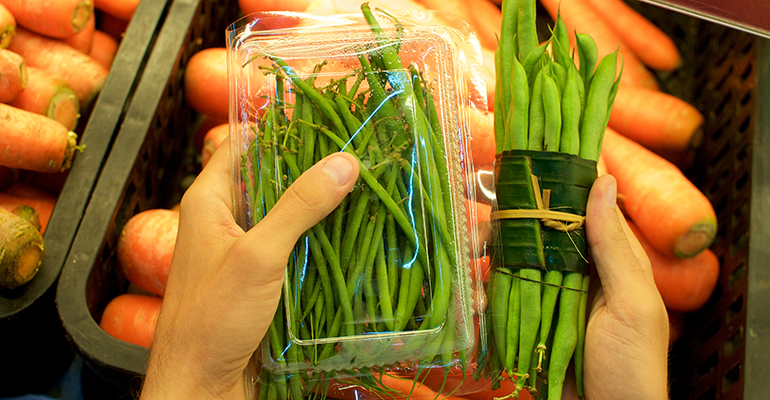
Driven by shifting consumer sentiment and a growing suite of environmental regulations, novel, non-plastic productions are clearly emerging as increasingly serious food and beverage packaging options. UK-based startup Xampla, which uses natural biopolymers to produce coatings, capsules, and films, is one example of a plastic alternative producer receiving a capital injection recently. The company raised €6.4 million in funding in January 2024 to expand the application of its brand Morro, which is already used by beverage retailer Britvic and meal-kit retailer Gousto.
But with plastic remaining cheap and easy to produce, consumer willingness to adopt unfamiliar alternatives – even if they might be more expensive or less convenient – will be a key factor in maintaining the momentum for more sustainable options.
Growing awareness of environmental impact
The good news is that consumer research shows shoppers are thinking more about the sustainability of packaging materials. Changing preferences clearly point to a rising demand for plastic alternatives and sustainable packaging and growing awareness of the environmental impact of different materials.
According to Mintel, only 15% and 19% of Thai consumers associate plastic pouches and plastic bottles as “environmentally friendly” – scoring much lower than any other packaging material. A 2022 McKinsey survey looking at US consumer views on sustainability in packaging found that more than half of consumers (52%) would buy products with more sustainable packaging “if those products didn’t cost more than conventionally packaged ones”. The survey also indicated consumer demand for more recyclable plastic packaging material and more fibre- and paper-based alternatives to plastic packaging.
Alternatives can be confusing
However, digging deeper reveals more complexity in terms of consumer attitudes, knowledge, and willingness to take packaging into account when making purchasing decisions. Mintel found that nearly two out of every five (39%) US food and beverage shoppers think brands should be responsible for the sustainability of their products, while only one out of every four shoppers (26%) would pay more for a more sustainable product.
The McKinsey study also found that 43% of US consumers found the environmental impact of product packaging “extremely or very important” – but this ranked as the least important factor behind food safety, ease of use, shelf life, durability, and appearance.
A 2020 Copenhagen Business School systematic review of consumer responses to environmentally-friendly food packaging also registered positive attitudes towards sustainable packaging, but identified a number of crucial challenges in terms of translating attitudes into effective behavioural change.
Firstly, an unfamiliarity with alternatives to plastics other than paper or glass and a lack of knowledge regarding key terms and labels – resulting in consumer perceptions that are misaligned with the actual environmental friendliness of packaging.
Secondly, the study aligned with other findings about packaging remaining less important that other product attributes such as price, functionality, appearance, and safety. Finally, there is a lot of variation within different consumer groups, with age, gender, and other consumer preferences significantly affecting consumers’ reactions to novel packaging options.
To replace plastic, novel packaging solutions need to address the relatively high costs of production and ensure that their product is as durable, safe, and hygienic as plastic – and they need to make sure that consumer perceptions are aligned with reality.

Get more of our news on Google
Set Ingredients Network as a 'Preferred Source' to get quicker access to the news you value.
Related news

M&S launches own-brand pet food range
11 Sep 2026
UK retailer Marks & Spencer has launched its own-brand pet food line Paws & Pals – a well-timed and strategic move that will appeal to loyal shoppers, says a marketing expert.
Read more
Do the US dietary guidelines put UPFs under pressure?
10 Sep 2026
Will the US dietary guidelines change the way Americans eat, swapping ultra-processed foods for whole foods? We asked Dr Barry Popkin, renowned nutrition and obesity researcher.
Read more
Food fraud costs UK economy £2bn each year
9 Sep 2026
Food fraud is costing the UK economy up to £2 billion (€2.3 billion) every year although the food sector is more “resilient” than others, according to a recent study.
Read more
Health and wellness engagement matures across Middle East and Africa
4 Sep 2026
Many consumers in the Middle East and Africa are now proactively engaged in health and wellness, looking to integrate better habits and products into their daily lives, say experts.
Read more
Kellogg accelerates work to remove artificial colours from all US cereals
3 Sep 2026
WK Kellogg has announced an accelerated timeline to eliminate all artificial colours and the chemical preservative, BHT, across its full US portfolio of cereals and cereal packaging.
Read more
Skimpflation: An ‘unfair’ and risky approach to keeping prices low
2 Sep 2026
Consumers see skimpflation – reducing the quality of ingredients due to rising costs – as more unfair than shrinkflation, making it a risky strategy according to recent research.
Read more
Royal Canin launches ‘freshly-cooked’ therapeutic dog food
1 Sep 2026
Mars-owned Royal Canin has moved into the therapeutic diet sector with the launch of its Fresh Veterinary Diets range for dogs with health conditions. We asked a veterinary nutritionist for her opinion.
Read more
NielsenIQ’s EU barometer shows Britain leading in grocery inflation
31 Aug 2026
Britain was the only country to record grocery inflation above 2%, according to NielsenIQ data that compared Europe’s five biggest grocery markets from February to May 2026.
Read more
‘Urgent gaps’ in achieving 2030 food system goals
27 Aug 2026
Global food systems are failing to meet 2030 targets across indicators including health, environment, and resilience, according to a report co-authored by the Food and Agriculture Organisation (FAO).
Read more
Seven-Eleven uses microbial testing tech to extend katsudon shelf life
26 Aug 2026
Japanese retail company Seven-Eleven has improved its factory’s microbial environment to keep comfort-food staple, katsudon, fresher for longer.
Read more