
Ingredients Categories
Finished Products
Finished Food Categories
- Bakery
- Beverages / Juices
- Cereal and grain products
- Confectionery
- Cooking Fats & Oils
- Dairy
- Egg products
- Fruits & Vegetables
- Infant & Baby food
- Meat, Poultry & Fish
- Nuts & Seeds products
- Other Finished Food Categories
- Pet Food
- Plant-based foods
- Prepared foods
- Sauces & Seasonings
- Sweet & Savoury Spreads
Specialised Finished Products
- Bee products
- Biotic products
- Dietary supplements
- Energy drinks
- Functional beverages
- Functional confectionery
- Functional food
- Functional powders
- Meal replacement products
- Nutricosmetics
- Other Specialised Finished Products
- Pet Dietary Supplements
- Pharma and OTC products
- Protein products
- Sugar replacers / Sweeteners
Health & Wellness Areas
Delivery Formats
Operations & Services
- 3D printing
- Analysis/ Testing
- Auditing & certifications
- Blending & mixing
- Bottling
- Certification
- Clinical trials
- Co-packing
- Coating
- Consulting
- Contract manufacturing
- Drying
- Electrospinning
- Encapsulating
- Enzymatic processing
- Extracting
- Extrusion
- Fat structuring
- Fermentation
- Filling
- Flavour development
- Freeze drying
- Granulating/ grinding/ milling / mixing
- High-pressure processing
- Labelling
- Other Operations & Services
- Packaging
- Packet filling
- Pasturising
- Quality assurance
- Saccharification
- Shear cell processing
- Spray drying
- Sterilisation
- Storage & Logistics
- Tabletting
- Toasting / roasting
- Ultra-high temperature processing
News
Singapore becomes first country to approve lab-grown meat
4 Jan 2021The Singapore Food Agency, the city state’s regulatory body for food, approved San Francisco startup Eat Just’s cell-based meat chicken product, paving the way for its sale in the country.
Eat Just’s cultured chicken will initially be used in chicken nuggets, according to The BBC, but there is no timeline on when the product will be released. However, the company said that when it debuts its chicken nuggets they will retail for a price that is comparable to premium conventional chicken products. Last year, the same chicken nuggets would have sold for $50 a piece.

Singapore found that cultured meat is safe for consumption, however, Eat Just went further with the number of accolades that it attributed to cell-cultured chicken, pointing out in a release that its lab-grown chicken had a lower microbiological content than conventional chicken and that its chicken was grown using no antibiotics.
But Singapore is not the only country in which Eat Just is working toward regulatory approval. Food Dive reported that the cell-based meat company is striving for approval in the U.S. as well as one other location that remains undisclosed. In addition to seeking additional approvals for its chicken products, the company is also developing other products that are both cell-based and plant-based.
In 2020, Eat Just received funding to manufacture its mung bean Just Egg product in Singapore. It is also working to produce cultured wagyu beef with the Japanese meat producer Toriyama. Food Dive reported that the company will present a culture beef line as the next product for regulatory approval.
Unlike plant-based meat substitutes, cultured or cell-based meat is a lab-grown product derived from real animal cells. Although the product is not vegetarian – the cells are taken from live chickens – manufacturers are looking to appeal to this demographic since this method of meat production does not entail killing animals. At the same time, another major demographic that cultured meat manufactures are looking to appeal to are carnivores.
Meat eaters and flexitarians – those who choose to occasionally consume a plant-based diet – are a major component driving the growth of meat alternatives, a category that the investment firm UBS forecasts to rise from $4.6 billion in 2018 to $85 billion in 2030. A primary reason for this astronomical growth is due to the health associations of meat alternatives. Fifty-two percent of U.S. consumers are eating more plant-based foods because it makes them feel healthier, per a study from DuPont Nutrition & Health found. Cell-based meat, however, is having a more difficult time taking off.
A 2019 poll from marketing firm Charleston|Orwig found that 40% of consumers found lab-created food to be “scary.” Nevertheless, a more recent report from the consulting firm Kearney anticipates that 35% of all meat consumed worldwide will be cell-based by 2040. With opinions on the subject evolving and companies making headway in terms of regulatory approvals, it is unlikely that the development of these cell-based alternatives will slow down. Instead, production is likely to increase, and the proliferation of these options may even result in changing opinions in regards to their appeal.

Get more of our news on Google
Set Ingredients Network as a 'Preferred Source' to get quicker access to the news you value.
Related news

Kellogg accelerates work to remove artificial colours from all US cereals
3 Sep 2026
WK Kellogg has announced an accelerated timeline to eliminate all artificial colours and the chemical preservative, BHT, across its full US portfolio of cereals and cereal packaging.
Read more
‘Urgent gaps’ in achieving 2030 food system goals
27 Aug 2026
Global food systems are failing to meet 2030 targets across indicators including health, environment, and resilience, according to a report co-authored by the Food and Agriculture Organisation (FAO).
Read more
Chimac’s fusion sauces bring Korean flavours to Europe
25 Aug 2026
Irish sauce brand Chimac is tapping into Korea’s culinary traditions, bringing its flavours and products to European consumers who want a taste of K-food.
Read more
Savoury protein snacks shake up the on-the-go market
10 Aug 2026
Sweet flavours have dominated the high-protein snack category but savoury snacks, such as cheese bars and meat sticks, can appeal to health-conscious consumers.
Read more
Nestlé invests in regeneratively farmed wheat for KitKat
5 Aug 2026
Nestlé will pay a premium for Wildfarmed’s regeneratively farmed wheat but the CPG remains reticent to promote the move on packs of its KitKat bars.
Read more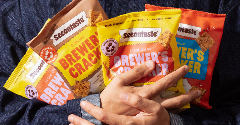
How Secon Taste is putting upcycled snacks on shelves
4 Aug 2026
Hungarian zero-waste startup Secon Taste is turning surplus food into upcycled snacks such as fibre-packed granola, instant porridge, and a circular coffee-tasting box.
Read more
Codex sets global thresholds for ‘may contain’ labels
3 Aug 2026
Codex Alimentarius has adopted its first global guidance on when to use “may contain” allergen warnings, setting thresholds intended to stop the label being used as blanket legal cover.
Read more
EU sets maximum MOAH levels to protect human health
28 Jul 2026
The EU will adopt maximum levels for mineral oil aromatic hydrocarbons (MOAH) in food to protect human health. What do manufacturers need to know?
Read more
UK publishes guidance on SPS food trade agreement with EU
27 Jul 2026
The UK government has shared guidance on how food businesses can prepare for its upcoming Sanitary and Phytosanitary (SPS) agreement with the EU.
Read more
Industry hits back at UK’s proposed healthy food rules
24 Jul 2026
Food brands, including Haribo, have hit out against the UK’s proposed nutrient profiling model, which places a new focus on free sugars that are added during manufacturing.
Read more