
Ingredients Categories
Finished Products
Finished Food Categories
- Bakery
- Beverages / Juices
- Cereal and grain products
- Confectionery
- Cooking Fats & Oils
- Dairy
- Egg products
- Fruits & Vegetables
- Infant & Baby food
- Meat, Poultry & Fish
- Nuts & Seeds products
- Other Finished Food Categories
- Pet Food
- Plant-based foods
- Prepared foods
- Sauces & Seasonings
- Sweet & Savoury Spreads
Specialised Finished Products
- Bee products
- Biotic products
- Dietary supplements
- Energy drinks
- Functional beverages
- Functional confectionery
- Functional food
- Functional powders
- Meal replacement products
- Nutricosmetics
- Other Specialised Finished Products
- Pet Dietary Supplements
- Pharma and OTC products
- Protein products
- Sugar replacers / Sweeteners
Health & Wellness Areas
Delivery Formats
Operations & Services
- 3D printing
- Analysis/ Testing
- Auditing & certifications
- Blending & mixing
- Bottling
- Certification
- Clinical trials
- Co-packing
- Coating
- Consulting
- Contract manufacturing
- Drying
- Electrospinning
- Encapsulating
- Enzymatic processing
- Extracting
- Extrusion
- Fat structuring
- Fermentation
- Filling
- Flavour development
- Freeze drying
- Granulating/ grinding/ milling / mixing
- High-pressure processing
- Labelling
- Other Operations & Services
- Packaging
- Packet filling
- Pasturising
- Quality assurance
- Saccharification
- Shear cell processing
- Spray drying
- Sterilisation
- Storage & Logistics
- Tabletting
- Toasting / roasting
- Ultra-high temperature processing
News
UNIDO highlights food system transformation as a driver of industrial growth
Rik Moors 8 May 2025Agroprocessing and food innovation are driving industrial development, with Senegal and Brazil offering examples of targeted national strategies.
The 2024 Industrial Development Report from the United Nations Industrial Development Organization (UNIDO), published in April, identifies food systems as critical to achieving inclusive industrial growth.
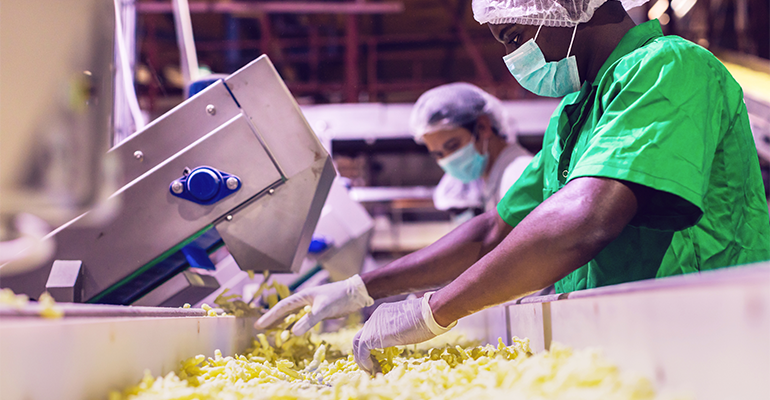
It highlights agroprocessing and food innovation as effective tools to address rising demand, inflation, and employment challenges.
With sub-Saharan Africa’s working-age population projected to double by 2050, the report, Turning Challenges into Sustainable Solutions, calls for updated industrial policies to meet shifting consumption patterns and build resilience through domestic food production and processing.
Senegal targets inclusive growth through agro-industrial zones
Senegal features as an example of industrial policy built around agroprocessing.
The country is implementing Special Agro-Industrial Processing Zones (SAPZs), spatially targeted industrial development hubs designed to link agricultural production with processing infrastructure and trade corridors. These zones aim to reduce post-harvest losses, increase rural employment, and enhance food security.
The SAPZ approach is central to the country’s Plan for an Emerging Senegal 2035. Five regional “agropoles” are being developed by the Ministry of Industrial Development and Small and Medium Industries in partnership with development banks and international agencies.
The hubs are designed to scale up local processing of cereals, legumes, and horticultural crops while integrating water management, cold storage, and packaging infrastructure.
Agriculture accounts for a significant share of GDP and employment, and expanding processing capacity helps absorb rural labour, improve productivity, and reduce the country’s dependence on imported foods. The agro-industrial strategy also supports the development of rural economies and connects them to national and regional markets.
The African Development Bank (AfDB), which has committed $1.1 billion to SAPZs in 13 African countries, sees the initiative as a core part of its food systems strategy. AfDB president Akinwumi Adesina said in April that the zones would “transform Africa into an industrial powerhouse for food and agriculture”.
In southern Senegal, the Agropole Sud project alone is projected to create 14,500 direct jobs by 2025, with 50% earmarked for women and 60% for youth. It is also expected to benefit 65,000 rural households through improved market access, training, and integration into formal value chains.
SAPZs are supported by international development institutions, including UNIDO, the World Bank and the Islamic Development Bank, as a means to overcome persistent structural challenges in African agro-industrial development such as weak infrastructure, fragmented supply chains, and limited investment in food processing SMEs.
However, Senegal has also faced challenges in scaling up and transforming agriculture and food production.
In April, the Associated Press reported that US registered company African Agriculture failed to deliver on a planned 20,000-hectare alfalfa export project near Lake Guiers. The company is facing legal claims over unpaid wages and local authorities are pushing to return the land to public use.
Such failures reflect broader concerns about land governance and investment oversight across the continent.
According to think tank Geopolitical Intelligence Services, Africa accounts for 37% of large-scale global agricultural investments, but just 11% of contracted land is under cultivation.
Brazil builds innovation capacity in alternative proteins
In Latin America, UNIDO has found that industrialisation of the food sector is increasingly driven by high-tech innovation.
Brazil’s southern state of Paraná is developing a research and production ecosystem focused on cultivated meat and alternative proteins, as part of a broader push to adapt traditional animal protein production to emerging global trends.
Led by the Araucária Foundation, the initiative involves three universities and has secured $1.1 million in funding to establish and upgrade laboratories, develop local cell lines and bioreactors, and offer new academic courses.
The project is designed to enhance Brazil’s competitiveness in the global alternative protein market while leveraging its established role in conventional livestock production.
Paraná currently accounts for a third of Brazil’s chicken production, 21% of pork, and nearly 14% of milk output. By investing in cellular agriculture, the state is seeking to position itself at the forefront of sustainable food innovation, aligning with global trends in gene editing, synthetic biology, and precision fermentation.
Brazil has also been identified as a region to watch in the global AgriFoodTech landscape. The 2024 FoodTech 500, published by Forward Fooding, lists the country among several emerging innovation hubs, alongside Spain, West Africa, and the Gulf Cooperation Council region.
Brazil’s focus on scaling sustainable food production positions it to play a growing role in the development of novel ingredients and processing technologies.

Get more of our news on Google
Set Ingredients Network as a 'Preferred Source' to get quicker access to the news you value.
Related news

Do the US dietary guidelines put UPFs under pressure?
10 Sep 2026
Will the US dietary guidelines change the way Americans eat, swapping ultra-processed foods for whole foods? We asked Dr Barry Popkin, renowned nutrition and obesity researcher.
Read more
Health and wellness engagement matures across Middle East and Africa
4 Sep 2026
Many consumers in the Middle East and Africa are now proactively engaged in health and wellness, looking to integrate better habits and products into their daily lives, say experts.
Read more
Skimpflation: An ‘unfair’ and risky approach to keeping prices low
2 Sep 2026
Consumers see skimpflation – reducing the quality of ingredients due to rising costs – as more unfair than shrinkflation, making it a risky strategy according to recent research.
Read more
‘Urgent gaps’ in achieving 2030 food system goals
27 Aug 2026
Global food systems are failing to meet 2030 targets across indicators including health, environment, and resilience, according to a report co-authored by the Food and Agriculture Organisation (FAO).
Read more
Seven-Eleven uses microbial testing tech to extend katsudon shelf life
26 Aug 2026
Japanese retail company Seven-Eleven has improved its factory’s microbial environment to keep comfort-food staple, katsudon, fresher for longer.
Read more
Chimac’s fusion sauces bring Korean flavours to Europe
25 Aug 2026
Irish sauce brand Chimac is tapping into Korea’s culinary traditions, bringing its flavours and products to European consumers who want a taste of K-food.
Read more
Global demand for instant noodles continues to rise
24 Aug 2026
Global demand for instant noodles reached 124.21 billion servings last year, representing a 0.7% year-on-year increase – or 900 million extra servings.
Read more
Popular barbecue staples experience sharp price increases
19 Aug 2026
The typical cost of US shoppers’ barbecue baskets has risen by 12% over the past year – the fastest annual rise in a decade, figures from The Economist show.
Read more
Hot NPD: Nissin launches first cold-water Cup Noodles
18 Aug 2026
Nissin is taking one of Japan’s most iconic instant meals in a completely new direction with the launch of the first cold water-only Cup Noodles in the brand’s 55-year history.
Read more
Manam Chocolate aims to bring premium Indian cacao to 'the world stage'
11 Aug 2026
Craft chocolate brand Manam Chocolate is investing in local expansion and supply chain innovation throughout India as it works to build out the premium reputation of its locally produced cacao products.
Read more