
Ingredients Categories
Finished Products
Finished Food Categories
- Bakery
- Beverages / Juices
- Cereal and grain products
- Confectionery
- Cooking Fats & Oils
- Dairy
- Egg products
- Fruits & Vegetables
- Infant & Baby food
- Meat, Poultry & Fish
- Nuts & Seeds products
- Other Finished Food Categories
- Pet Food
- Plant-based foods
- Prepared foods
- Sauces & Seasonings
- Sweet & Savoury Spreads
Specialised Finished Products
- Bee products
- Biotic products
- Dietary supplements
- Energy drinks
- Functional beverages
- Functional confectionery
- Functional food
- Functional powders
- Meal replacement products
- Nutricosmetics
- Other Specialised Finished Products
- Pet Dietary Supplements
- Pharma and OTC products
- Protein products
- Sugar replacers / Sweeteners
Health & Wellness Areas
Delivery Formats
Operations & Services
- 3D printing
- Analysis/ Testing
- Auditing & certifications
- Blending & mixing
- Bottling
- Certification
- Clinical trials
- Co-packing
- Coating
- Consulting
- Contract manufacturing
- Drying
- Electrospinning
- Encapsulating
- Enzymatic processing
- Extracting
- Extrusion
- Fat structuring
- Fermentation
- Filling
- Flavour development
- Freeze drying
- Granulating/ grinding/ milling / mixing
- High-pressure processing
- Labelling
- Other Operations & Services
- Packaging
- Packet filling
- Pasturising
- Quality assurance
- Saccharification
- Shear cell processing
- Spray drying
- Sterilisation
- Storage & Logistics
- Tabletting
- Toasting / roasting
- Ultra-high temperature processing
News
Seafood set to ‘dethrone’ poultry as protein growth king
David Burrows, Freelance Journalist 19 Mar 2025Seafood is poised to surpass poultry as the leading contributor to global protein supply growth this year, according to Rabobank’s latest protein outlook.
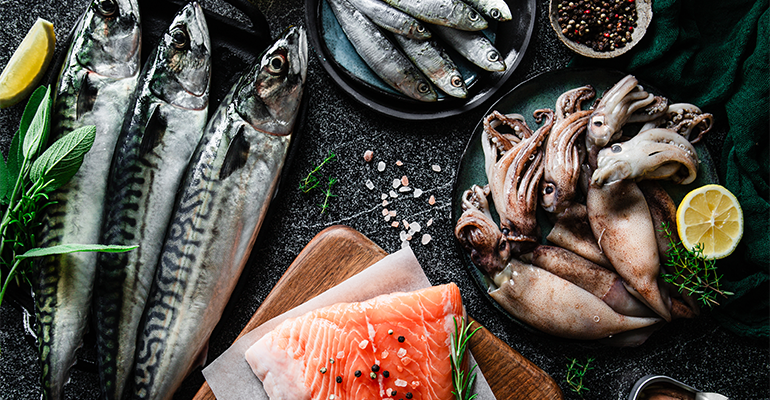
This year marks a “pivotal moment” for production across various regions and commodities, the Dutch financial services firm Rabobank noted, with “slightly faster” growth than 2024 thanks to aquaculture, wild catch, and poultry. Seafood and pork are expected to move back into growth, though the beef market will contract “reshaping market dynamics and supply chains”.
With the global economy still recovering both policy and macroeconomic conditions could affect demand and access to global animal protein supplies, Rabobank’s experts noted. However, “[t]his more balanced production outlook may just prove advantageous given the uncertainties and complexities on the demand side”.
The authors warned that higher costs are on the way thanks to conflicts and protectionist policies. This will lead to a “complicated” landscape for sustainability rules and initiatives too.
More opportunities in premium protein alternatives for mushroom roots
Those in the alternative meat space will continue to find things tough – the focus will be on more premium products that cater to those seeking healthier, less processed options, and new ingredients like mushroom roots.
In 2025, Rabobank expects the protein alternatives industry to continue to focus on establishing a “solid niche” rather than its initial “very high ambitions of capturing a significant share of the total protein market”.
The outlook for the protein market is certainly mixed this year, with production in Brazil set to fall 1%, driven by a 5% drop in beef. China will bounce back from a contraction last year, though only to 0.4% growth, while production in the Oceana region will remain similar to 2024. A slowdown is expected in North America, the EU, and Southeast Asia.
Global protein production is expected to increase by nearly 6 million metric tonnes in 2025 compared to 2024. “The year 2025 marks a pivotal moment for production across various regions and commodities,” said RaboResearch senior protein analyst Angus Gidley-Baird.
“Overall production is set to grow slightly faster than in 2024, driven by aquaculture, wild catch, and poultry. Seafood and pork are expected to transition from contraction to growth, while beef will move from growth to contraction, reshaping market dynamics and supply chains,” he added.
Fish is flying as salmon leaps forward
The shift in protein mix predicted in this year’s report has caught the eye, with aquaculture and wild catch to “dethrone” poultry as the growth leader.
Poultry production’s steady growth will continue in 2025, as it has done for the past decade. However, aquaculture and wild catch are both projected to see strong growth of 2.3% year-on-year, following 2024’s 0.3% decline.
The elevated costs of salmon last year are expected to “soften”, attracting price-conscious consumers to this “relatively affordable” protein when compared to other higher-priced proteins. However, the analysts caveat their 3% to 4% year-on-year growth forecasts given the “considerable biological issues”, like sea lice and lower sea temperatures, that continue to plague the salmon industry, especially in Norway, the world’s largest producer.
Biological issues and political decisions add to uneasy protein market
There are biological issues affecting other parts of the protein market, too. The highly pathogenic avian influenza remains the primary risk for poultry due to its “disruptive potential and low predictability”, Rabobank noted. The outbreak of foot and mouth disease in Hungary has also sparked widespread concern, and the protein industry will have to increasingly adopt vaccines, genetics, and technologies like artificial intelligence to better manage and control animal disease, said Rabobank’s experts.
These pressures all add to the uneasy landscape. “Although inflationary pressures have been easing, policy decisions [including protectionist measures and tariffs] could reverse this trend, potentially weakening consumer demand if incomes do not rise accordingly,” said Rabobank.
Politics will also have a part to play in the development of sustainability initiatives. Livestock protein is a major contributor to greenhouse gas emissions and biodiversity loss.
“Legislative action on sustainability is an emerging trend for animal protein supply chains, but political influences and implementation delays make policy developments hard to predict,” the authors noted, citing the case of delayed compliance to the EU Deforestation Regulation (EUDR) as well as the lack of consensus on credible nature and biodiversity metrics which threaten to stall land and water commitments under the Science Based Targets Network (SBTN).

Get more of our news on Google
Set Ingredients Network as a 'Preferred Source' to get quicker access to the news you value.
Related news

Do the US dietary guidelines put UPFs under pressure?
10 Sep 2026
Will the US dietary guidelines change the way Americans eat, swapping ultra-processed foods for whole foods? We asked Dr Barry Popkin, renowned nutrition and obesity researcher.
Read more
Health and wellness engagement matures across Middle East and Africa
4 Sep 2026
Many consumers in the Middle East and Africa are now proactively engaged in health and wellness, looking to integrate better habits and products into their daily lives, say experts.
Read more
Skimpflation: An ‘unfair’ and risky approach to keeping prices low
2 Sep 2026
Consumers see skimpflation – reducing the quality of ingredients due to rising costs – as more unfair than shrinkflation, making it a risky strategy according to recent research.
Read more
‘Urgent gaps’ in achieving 2030 food system goals
27 Aug 2026
Global food systems are failing to meet 2030 targets across indicators including health, environment, and resilience, according to a report co-authored by the Food and Agriculture Organisation (FAO).
Read more
Seven-Eleven uses microbial testing tech to extend katsudon shelf life
26 Aug 2026
Japanese retail company Seven-Eleven has improved its factory’s microbial environment to keep comfort-food staple, katsudon, fresher for longer.
Read more
Chimac’s fusion sauces bring Korean flavours to Europe
25 Aug 2026
Irish sauce brand Chimac is tapping into Korea’s culinary traditions, bringing its flavours and products to European consumers who want a taste of K-food.
Read more
Global demand for instant noodles continues to rise
24 Aug 2026
Global demand for instant noodles reached 124.21 billion servings last year, representing a 0.7% year-on-year increase – or 900 million extra servings.
Read more
Popular barbecue staples experience sharp price increases
19 Aug 2026
The typical cost of US shoppers’ barbecue baskets has risen by 12% over the past year – the fastest annual rise in a decade, figures from The Economist show.
Read more
Hot NPD: Nissin launches first cold-water Cup Noodles
18 Aug 2026
Nissin is taking one of Japan’s most iconic instant meals in a completely new direction with the launch of the first cold water-only Cup Noodles in the brand’s 55-year history.
Read more
Manam Chocolate aims to bring premium Indian cacao to 'the world stage'
11 Aug 2026
Craft chocolate brand Manam Chocolate is investing in local expansion and supply chain innovation throughout India as it works to build out the premium reputation of its locally produced cacao products.
Read more