
Ingredients Categories
Finished Products
Finished Food Categories
- Bakery
- Beverages / Juices
- Cereal and grain products
- Confectionery
- Cooking Fats & Oils
- Dairy
- Egg products
- Fruits & Vegetables
- Infant & Baby food
- Meat, Poultry & Fish
- Nuts & Seeds products
- Other Finished Food Categories
- Pet Food
- Plant-based foods
- Prepared foods
- Sauces & Seasonings
- Sweet & Savoury Spreads
Specialised Finished Products
- Bee products
- Biotic products
- Dietary supplements
- Energy drinks
- Functional beverages
- Functional confectionery
- Functional food
- Functional powders
- Meal replacement products
- Nutricosmetics
- Other Specialised Finished Products
- Pet Dietary Supplements
- Pharma and OTC products
- Protein products
- Sugar replacers / Sweeteners
Health & Wellness Areas
Delivery Formats
Operations & Services
- 3D printing
- Analysis/ Testing
- Auditing & certifications
- Blending & mixing
- Bottling
- Certification
- Clinical trials
- Co-packing
- Coating
- Consulting
- Contract manufacturing
- Drying
- Electrospinning
- Encapsulating
- Enzymatic processing
- Extracting
- Extrusion
- Fat structuring
- Fermentation
- Filling
- Flavour development
- Freeze drying
- Granulating/ grinding/ milling / mixing
- High-pressure processing
- Labelling
- Other Operations & Services
- Packaging
- Packet filling
- Pasturising
- Quality assurance
- Saccharification
- Shear cell processing
- Spray drying
- Sterilisation
- Storage & Logistics
- Tabletting
- Toasting / roasting
- Ultra-high temperature processing
News
Singapore explores farmland-free food production
Natasha Spencer-Jolliffe, Freelance Journalist 17 Feb 2025Researchers discover new technology replicating on-farm food production conditions from within the indoor lab environment.
“In a rapidly changing world, it’s wise to look to the early adopters for inspiration on scalable solutions,” Mirte Gosker, managing director of the Good Food Institute APAC, Asia-based alternative protein think tank, told Ingredients Network. After becoming the first country to approve lab-grown meat, Singapore is leading in another area of sustainable food production: farm management systems.
Developing the farms of the future
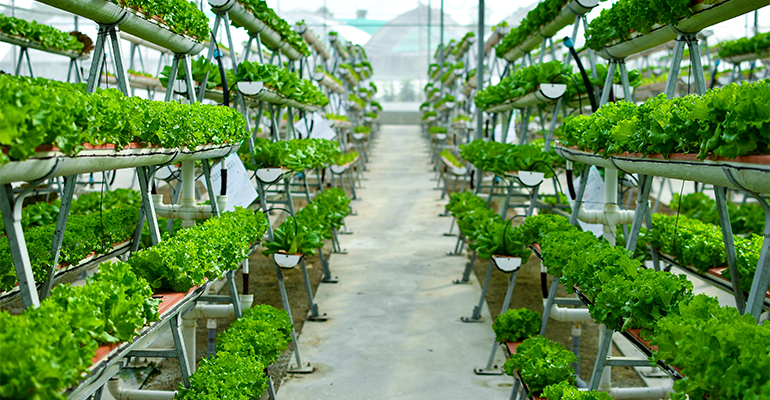
One Singaporean partnership sees Artisan Green and Siemens combine modern farming techniques with technology to advance agricultural methods and food production to help feed its population. Based in urban Singapore, Artisan Green is an indoor hydroponics farm building pesticide-free vertical farms to secure the future of the country’s sustainable and healthy food supply. Focusing on the commercial market, Artisan Green provides food to supermarket retailers as well as cafes, restaurants and hotels.
Currently, the country imports over 90% of its food supply. Extensive reliance on imports creates challenges, namely global food market volatility, climate changes and disease outbreaks. The emphasis is on building food resilience in Singapore to navigate these uncertainties and risks while delivering sustainable food to its citizens.
The Singaporean government has devised its 30 by 30 vision to achieve this, which strives to achieve sustainable food production for 30% of the country’s local nutritional needs by 2030. With land scarce in Singapore, attention is being directed to improving productivity to maximise space for agricultural usage. Growing more with less, reducing wastage, and opting for more sustainable growth resources also contribute to making food more sustainable.
A modern solution
Looking at other innovations launched throughout history, comparisons are made between global challenges of the past that found scalable solutions with today’s food and environmental concerns. “When low-lying nations face new challenges of coastal flooding, they look to the Dutch to learn from their centuries of experience taming hostile seas,” said Gosker.
Today, where food production demands complex questions be answered, new ways of thinking and technologies are under the spotlight as a way to secure the future of food and ensure it’s accessible for all. “In an era when protein production is under greater strain than ever, we must all look to countries like Singapore, which are pioneering technologies that make more with less,” said Gosker.
Life-cycle assessments show that harnessing protein directly from its biological source has environmental benefits. Gathering protein from plants, microbes, and cultivated animal cells, for example, rather than feeding massive amounts of crops to animals, alternative protein products can reduce meat’s greenhouse gas (GHG) emissions by up to 98%.
Using proteins derived from their biological sources, farmers and manufacturers can also reduce the use of agricultural land and water by up to 96% and 99%, respectively. As such, using biotechnology to re-envision protein in this way can boost food resilience and transform scarcity into abundance.
Institutions like Singapore’s Bezos Centre for Sustainable Protein are exploring breakthrough ‘hybrid’ formulations that blend nutrient-dense plant proteins with small amounts of cultivated meat or fat to develop scalable models for such foods. These ‘hybrid’ formulations can be sourced directly from local farmers, ensuring they retain an integral and instrumental role in the food and agricultural supply chain.
“This potent combination could deliver a flavour punch that closes the taste and price gap with conventional meat—with a tiny fraction of the carbon footprint—and provides a template that can be replicated around the world,” added Gosker.
Indoor farms in an urban setting
Cross-collaboration in sustainable food production has emerged as a leading strategy in recent years, enabling companies, consumers and the wider globe to benefit from individual expertise in food, farming and agriculture with technological solutions like automation, personalisation and digitalisation.
Utilising technology for sustainability, Artisan Green and Siemens are building a farm management system designed to utilise automation and digitalisation to transform how farmers grow and produce food. The system is based on a series of modules that manage different farming and food production model components, including production type, product name, crop planting protocol, crop type, nutrient profiles, lighting profiles, irrigation events and growing parameters.
Artisan Green and Siemens aim to increase yields while using fewer resources, such as human intervention, to manage crop performance. The collaboration also extends to a broader network of plant scientists, whereby the duo learns their language and translates shared knowledge into the farm management system.
Artisan Green and Siemen’s partnership has enabled the duo to digitalise all the plant science available and enter it into a comprehensive and easily accessible database. Artisan Green operates out of a 300-square-metre farm, home to 20 grain racks that house up to 20 varieties of fresh produce.
Adopting additional technology within the farm, it uses advanced hydroponics in a fully controlled indoor environment. Its indoor setting frees the farmers from the impact of outdoor conditions and associated weather events like the El Niño phenomenon, climate change and diseases caused by pests, which can all impact crop quality and performance.
Growing indoor farms’ potential
The farm management system controls how a crop is grown, the amount of fertiliser and water used, and what is required at each stage of the growing process. Artisan Green has digital access to the farm at all times and can see various metrics such as crop status, energy consumption and water consumption.
While this technology is at its infancy, systems like these hold the potential for more expansive sustainable food production. The automation system controls relevant machines and processes from within the indoor environment. Housed within a farm management system is also a recipe management system. Siemens has developed a prototype for a precision nutrient injector, enabling the farmers to store over 100 recipes and stipulate nutrient profile requirements. The machine will combine the elements needed to create the recipe and deliver it on demand to the relevant grow beds.
Today, Singapore’s population has reached a record high of more than six million, making accessing and utilising sustainable food sources even more vital. Farms like Artisan Green provide a scalable solution. Having received a two-hectare plot of land from the Singapore Food Agency, Artisan Green plans to build this out by the end of 2025.
Building plans anticipate it will be 18 times the size of its current farm, reaching 5500 square metres, and the company will be able to do 30 times more than it is currently handling. The system is designed to grow more recipes and add computing power, scaling operations from one farm to several.

Get more of our news on Google
Set Ingredients Network as a 'Preferred Source' to get quicker access to the news you value.
Related news

Do the US dietary guidelines put UPFs under pressure?
10 Sep 2026
Will the US dietary guidelines change the way Americans eat, swapping ultra-processed foods for whole foods? We asked Dr Barry Popkin, renowned nutrition and obesity researcher.
Read more
Health and wellness engagement matures across Middle East and Africa
4 Sep 2026
Many consumers in the Middle East and Africa are now proactively engaged in health and wellness, looking to integrate better habits and products into their daily lives, say experts.
Read more
Skimpflation: An ‘unfair’ and risky approach to keeping prices low
2 Sep 2026
Consumers see skimpflation – reducing the quality of ingredients due to rising costs – as more unfair than shrinkflation, making it a risky strategy according to recent research.
Read more
‘Urgent gaps’ in achieving 2030 food system goals
27 Aug 2026
Global food systems are failing to meet 2030 targets across indicators including health, environment, and resilience, according to a report co-authored by the Food and Agriculture Organisation (FAO).
Read more
Seven-Eleven uses microbial testing tech to extend katsudon shelf life
26 Aug 2026
Japanese retail company Seven-Eleven has improved its factory’s microbial environment to keep comfort-food staple, katsudon, fresher for longer.
Read more
Chimac’s fusion sauces bring Korean flavours to Europe
25 Aug 2026
Irish sauce brand Chimac is tapping into Korea’s culinary traditions, bringing its flavours and products to European consumers who want a taste of K-food.
Read more
Global demand for instant noodles continues to rise
24 Aug 2026
Global demand for instant noodles reached 124.21 billion servings last year, representing a 0.7% year-on-year increase – or 900 million extra servings.
Read more
Popular barbecue staples experience sharp price increases
19 Aug 2026
The typical cost of US shoppers’ barbecue baskets has risen by 12% over the past year – the fastest annual rise in a decade, figures from The Economist show.
Read more
Hot NPD: Nissin launches first cold-water Cup Noodles
18 Aug 2026
Nissin is taking one of Japan’s most iconic instant meals in a completely new direction with the launch of the first cold water-only Cup Noodles in the brand’s 55-year history.
Read more
Manam Chocolate aims to bring premium Indian cacao to 'the world stage'
11 Aug 2026
Craft chocolate brand Manam Chocolate is investing in local expansion and supply chain innovation throughout India as it works to build out the premium reputation of its locally produced cacao products.
Read more