
Ingredients Categories
Finished Products
Finished Food Categories
- Bakery
- Beverages / Juices
- Cereal and grain products
- Confectionery
- Cooking Fats & Oils
- Dairy
- Egg products
- Fruits & Vegetables
- Infant & Baby food
- Meat, Poultry & Fish
- Nuts & Seeds products
- Other Finished Food Categories
- Pet Food
- Plant-based foods
- Prepared foods
- Sauces & Seasonings
- Sweet & Savoury Spreads
Specialised Finished Products
- Bee products
- Biotic products
- Dietary supplements
- Energy drinks
- Functional beverages
- Functional confectionery
- Functional food
- Functional powders
- Meal replacement products
- Nutricosmetics
- Other Specialised Finished Products
- Pet Dietary Supplements
- Pharma and OTC products
- Protein products
- Sugar replacers / Sweeteners
Health & Wellness Areas
Delivery Formats
Operations & Services
- 3D printing
- Analysis/ Testing
- Auditing & certifications
- Blending & mixing
- Bottling
- Certification
- Clinical trials
- Co-packing
- Coating
- Consulting
- Contract manufacturing
- Drying
- Electrospinning
- Encapsulating
- Enzymatic processing
- Extracting
- Extrusion
- Fat structuring
- Fermentation
- Filling
- Flavour development
- Freeze drying
- Granulating/ grinding/ milling / mixing
- High-pressure processing
- Labelling
- Other Operations & Services
- Packaging
- Packet filling
- Pasturising
- Quality assurance
- Saccharification
- Shear cell processing
- Spray drying
- Sterilisation
- Storage & Logistics
- Tabletting
- Toasting / roasting
- Ultra-high temperature processing
Sponsored Content
Vitifresh: A clean label solution for food protection
24 Sep 2025Vitifresh, an upcycled grape extract from Spain, offers powerful antioxidant and antimicrobial benefits, extending food shelf life naturally and supporting clean label trends.
Consumer demand for safe, natural, and transparent food solutions is stronger than ever. Shoppers want products free from synthetic preservatives while still maintaining freshness, taste, and safety. In this context, Vitifresh emerges as a groundbreaking solution: a 100% natural, upcycled grape extract with proven antioxidant and antimicrobial properties.
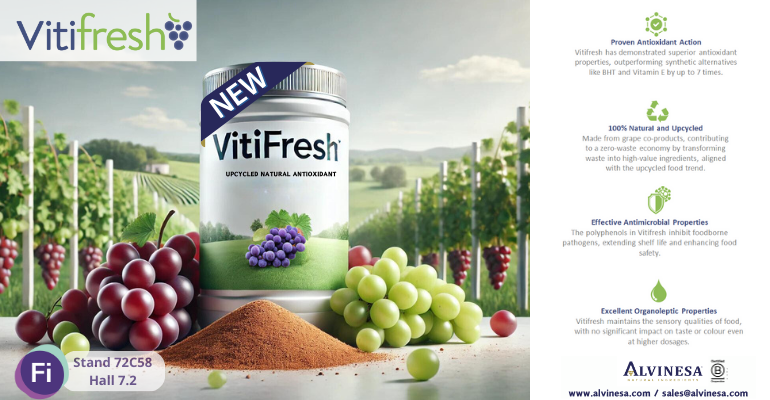
What is Vitifresh?
Vitifresh is derived from the seeds and skins of grapes, co-products of the wine industry. By transforming this co-product into a high-value food ingredient, Vitifresh aligns with sustainability and circular economy principles. It is produced using water extraction, free of solvents, ensuring a clean and environmentally friendly process.
The extract is rich in polyphenols (particularly flavan-3-ol, OPCs, and anthocyanins) which are powerful natural antioxidants. These compounds protect foods against oxidation and microbial spoilage while maintaining their sensory qualities.
Antioxidant power
Food oxidation leads to rancidity, discolouration, and unpleasant tastes, directly impacting product quality and shelf life. Vitifresh combats this by neutralising free radicals and chelating metals that catalyse oxidation.
Scientific studies have shown that Vitifresh can be up to seven times more effective than common synthetic antioxidants, such as BHT and sodium ascorbate. Compared with natural options like rosemary extract and vitamin E, Vitifresh also demonstrates superior performance in reducing lipid peroxidation and preserving colour.
Antimicrobial properties
Beyond its antioxidant capacity, Vitifresh has demonstrated antimicrobial activity against foodborne pathogens including E. coli and Listeria monocytogenes. Its polyphenols disrupt microbial cell membranes, limiting bacterial growth and contributing to food safety.
This dual action – antioxidant and antimicrobial – makes Vitifresh an effective solution in natural food preservation.
Proven organoleptic excellence
A frequent challenge with natural preservatives is their potential to alter flavour, aroma or appearance. Vitifresh overcomes this hurdle. Independent trials in meat and bakery products show no significant differences in taste, smell, or colour between Vitifresh-treated samples and control products. Consumers reported equal acceptance, confirming that Vitifresh protects food without compromising sensory quality.
Applications across food categories
Vitifresh’s versatility enables its use in a wide range of food and beverage products, including:
- Processed meats;
- Dairy and plant-based alternatives;
- Bakery and confectionery;
- Beverages;
- Sauces and dressings.
Recommended dosages range from 100 to 1,000ppm, depending on the food matrix and application. Alvinesa’s R&D team provides support to optimise formulation and achieve the best preservative performance.
A sustainable and clean label ingredient
Vitifresh reflects the growing consumer preference for natural and clean label ingredients. As a Mediterranean product from Spain, it carries strong appeal in global markets seeking transparency, traceability, and sustainability.
Key benefits include:
- 100% natural and solvent-free production;
- Upcycled from grape co-products, contributing to zero waste;
- Stable under heat, light, and pH variations;
- Clean label positioning, free from artificial additives.
Scientific and industry validation
Multiple trials confirm Vitifresh’s effectiveness. In meat applications, Vitifresh extracts outperformed commercial antioxidants, reducing rancidity and extending shelf life even under challenging storage conditions. In bakery trials, it prevented mold growth and preserved texture, taste, and appearance.
These results underline its potential as a natural alternative to conventional preservatives, supporting both food safety and consumer trust.
Leading the future of natural preservation
By combining sustainability, scientific validation, and functional excellence, Vitifresh represents a new era of food protection. It enables food manufacturers to meet consumer demands for clean label, safe, and high quality products while contributing to environmental responsibility.
As the demand for natural and sustainable ingredients grows, Vitifresh stands as a leading solution – bridging the gap between performance and clean label expectations.
This piece of content is provided by an advertiser or created on behalf of an advertiser. The views or opinions expressed in this piece of content do not reflect those of Informa.
Companies mentioned

Get more of our news on Google
Set Ingredients Network as a 'Preferred Source' to get quicker access to the news you value.
Related news
Kellogg accelerates work to remove artificial colours from all US cereals
3 Sep 2026
WK Kellogg has announced an accelerated timeline to eliminate all artificial colours and the chemical preservative, BHT, across its full US portfolio of cereals and cereal packaging.
Read more
‘Urgent gaps’ in achieving 2030 food system goals
27 Aug 2026
Global food systems are failing to meet 2030 targets across indicators including health, environment, and resilience, according to a report co-authored by the Food and Agriculture Organisation (FAO).
Read more
Seven-Eleven uses microbial testing tech to extend katsudon shelf life
26 Aug 2026
Japanese retail company Seven-Eleven has improved its factory’s microbial environment to keep comfort-food staple, katsudon, fresher for longer.
Read more
Global demand for instant noodles continues to rise
24 Aug 2026
Global demand for instant noodles reached 124.21 billion servings last year, representing a 0.7% year-on-year increase – or 900 million extra servings.
Read more
Critics slam ‘chaotic’ response to cyclosporiasis outbreak after first deaths reported
7 Aug 2026
Questions have been raised over the “chaotic” response to the cyclosporiasis outbreak in the US after two deaths were reported.
Read more
Digital twin technology gains ground in food manufacturing
6 Aug 2026
Food and beverage companies are increasingly turning to digital twins to optimise and automate manufacturing processes, but opportunities stretch far beyond this, say experts.
Read more
Codex sets global thresholds for ‘may contain’ labels
3 Aug 2026
Codex Alimentarius has adopted its first global guidance on when to use “may contain” allergen warnings, setting thresholds intended to stop the label being used as blanket legal cover.
Read more
EU sets maximum MOAH levels to protect human health
28 Jul 2026
The EU will adopt maximum levels for mineral oil aromatic hydrocarbons (MOAH) in food to protect human health. What do manufacturers need to know?
Read more
UK publishes guidance on SPS food trade agreement with EU
27 Jul 2026
The UK government has shared guidance on how food businesses can prepare for its upcoming Sanitary and Phytosanitary (SPS) agreement with the EU.
Read more
US Supreme Court sides with Bayer on glyphosate pesticides
7 Jul 2026
The US Supreme Court has ruled that Bayer cannot be held liable for failure to warn of health risks related to its glyphosate-based products – a ruling met with mixed response amongst industry and NGOs.
Read more