
Ingredients Categories
Finished Products
Finished Food Categories
- Bakery
- Beverages / Juices
- Cereal and grain products
- Confectionery
- Cooking Fats & Oils
- Dairy
- Egg products
- Fruits & Vegetables
- Infant & Baby food
- Meat, Poultry & Fish
- Nuts & Seeds products
- Other Finished Food Categories
- Pet Food
- Plant-based foods
- Prepared foods
- Sauces & Seasonings
- Sweet & Savoury Spreads
Specialised Finished Products
- Bee products
- Biotic products
- Dietary supplements
- Energy drinks
- Functional beverages
- Functional confectionery
- Functional food
- Functional powders
- Meal replacement products
- Nutricosmetics
- Other Specialised Finished Products
- Pet Dietary Supplements
- Pharma and OTC products
- Protein products
- Sugar replacers / Sweeteners
Health & Wellness Areas
Delivery Formats
Operations & Services
- 3D printing
- Analysis/ Testing
- Auditing & certifications
- Blending & mixing
- Bottling
- Certification
- Clinical trials
- Co-packing
- Coating
- Consulting
- Contract manufacturing
- Drying
- Electrospinning
- Encapsulating
- Enzymatic processing
- Extracting
- Extrusion
- Fat structuring
- Fermentation
- Filling
- Flavour development
- Freeze drying
- Granulating/ grinding/ milling / mixing
- High-pressure processing
- Labelling
- Other Operations & Services
- Packaging
- Packet filling
- Pasturising
- Quality assurance
- Saccharification
- Shear cell processing
- Spray drying
- Sterilisation
- Storage & Logistics
- Tabletting
- Toasting / roasting
- Ultra-high temperature processing
News
EU proposes delaying anti-deforestation rules by another year
Natasha Spencer-Jolliffe, Freelance Journalist 3 Oct 2025The European Union (EU) plans to push back the already-delayed European Union Deforestation Regulation (EUDR) by another year, citing IT problems.
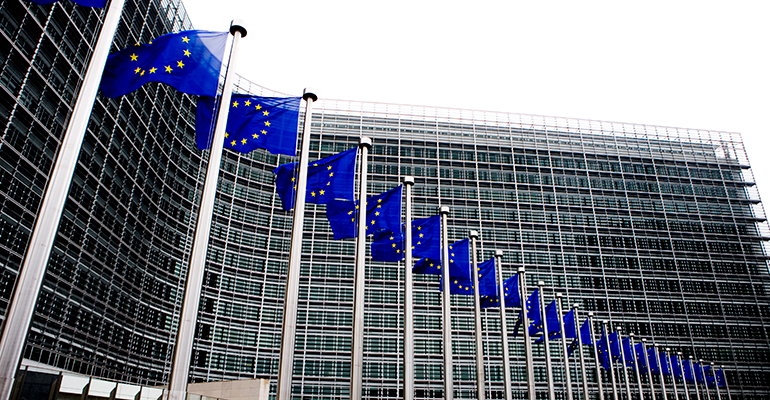
In September, environment commissioner Jessika Roswall announced her intention to ask for a delay to the introduction of the EUDR, which prohibits the import of products that contribute to deforestation.
The law was initially scheduled to come into force on 30 December 2024 for large enterprises and 30 June 2025 for small- and medium-sized companies.
However, with national bodies and companies calling on the EU Commission to provide more time to prepare, the European Commission announced an initial delay in October 2024, adopting a December 2025 implementation date.
Now, the food and beverage industry is gearing up for further postponement as the European Commission considers another pause.
EUDR: IT issues blamed for proposed delay
In a letter to Antonio Decaro, who chairs the EU Parliament’s Committee on the Environment, Climate and Food Safety, Roswall recommended that the law’s introduction be postponed until 2026.
She cited unresolved IT challenges and stated that an extensive system was required to handle the vast amount of data necessary to ensure EUDR compliance.
The Commission said it recognised there are “serious capacity concerns regarding the IT system”. A robust system is needed to implement the EUDR rules, and the Commission stated it needs more time to ensure operations are effective and fully support the bill’s requirements.
“We have concluded that we cannot meet the original deadline without causing disruptions to our businesses and supply chain,” commission spokesman Olof Gill told a press conference.
Since last year’s initial delay, ongoing efforts have focused on simplifying EUDR-related technology. Yet, they still fall short of what the European environment commissioner believes is necessary to prevent business disruption.
“We need the time to combat the risk with the load of information in the IT system,” Roswall said.
She confirmed the proposal was not based on complaints from trade partners such as the US, Japan, or Malaysia, nor on recent discussions with Indonesia. In clarifying this position, Roswall said that modifying the deforestation bill’s contents remained an option and that simplification efforts for the law would remain ongoing.
The proposed delay needs to gain approval from member states and the European Parliament.
Potential postponement poses problems
Global food and beverage businesses have invested time and money to ensure their own systems can assimilate the new traceability data requirements for EUDR.
“The recent announcements from the European Commission do not provide the certainty that businesses need, and changing the goalposts at this stage makes navigating complex regulations and global supply chain compliance even harder,” Rebecca Kaya, senior regulatory advisor at Ashbury Global, told Ingredients Network.
The potential pushback date means food and beverage businesses that have committed resources to compliance will now be contemplating their reallocation, from both a staffing and financial perspective.
“Any delay or pushback will certainly not be helpful in any way, chiefly because complaint businesses will have already set things in motion,” said Kaya.
As businesses transition towards EUDR compliance, ensuring all supply chain participants are considered and prepared is vital.
“As an industry, we should continue to invest in stronger partnerships, digital infrastructure and practical pathways to compliance,” Julia Ocampo, VP of cocoa sourcing and sustainability at Luker Chocolate, told Ingredients Network.
Widening the gap between ‘ready’ and ‘not yet’
The proposed delay risks widening the gap between businesses that are ready and those which may deprioritise EUDR compliance. Unprepared companies may struggle to effectively integrate data systems and understand how to manage them.
“They may experience severe difficulties in securing suppliers who have themselves already taken sufficient steps to be compliant,” Kaya said.
Subsequently, this may result in a two-tier supply chain, where EUDR-compliant products cost significantly more than their non-compliant counterparts.
“This introduces both an element of risk of food fraud and the temptation for food businesses to cut corners, compromising food safety,” she added.
Looking towards a deforestation-free future
Despite the uncertainty, emphasis should be on building relationships with producers and suppliers, improving communication, and collaboration to work towards the eventual full implementation of EUDR, according to Kaya.
“‘Change is the only constant’, so food businesses need to focus on moving forward, ensuring they are building regulatory compliance into all their operations,” she said.
The sentiment is that these delays do not dilute the seriousness and importance attached to the EUDR.
“It brings several important and far-reaching aspects of ethical, financial, and environmental regulatory requirements into the realm of supply chain management,” Kaya added.
Ocampo said: “The delay to EUDR shouldn’t be seen as a pause button, but as an opportunity to focus on what really matters: helping smallholder farmers get ready.”

Get more of our news on Google
Set Ingredients Network as a 'Preferred Source' to get quicker access to the news you value.
Related news

M&S launches own-brand pet food range
11 Sep 2026
UK retailer Marks & Spencer has launched its own-brand pet food line Paws & Pals – a well-timed and strategic move that will appeal to loyal shoppers, says a marketing expert.
Read more
Do the US dietary guidelines put UPFs under pressure?
10 Sep 2026
Will the US dietary guidelines change the way Americans eat, swapping ultra-processed foods for whole foods? We asked Dr Barry Popkin, renowned nutrition and obesity researcher.
Read more
Food fraud costs UK economy £2bn each year
9 Sep 2026
Food fraud is costing the UK economy up to £2 billion (€2.3 billion) every year although the food sector is more “resilient” than others, according to a recent study.
Read more
EU's ban on Brazilian meat expected to raise prices
7 Sep 2026
Around 25% of the EU’s imported chicken and beef comes from Brazil. From September, products that fail to meet the EU antimicrobial resistance rules will be banned.
Read more
Skimpflation: An ‘unfair’ and risky approach to keeping prices low
2 Sep 2026
Consumers see skimpflation – reducing the quality of ingredients due to rising costs – as more unfair than shrinkflation, making it a risky strategy according to recent research.
Read more
NielsenIQ’s EU barometer shows Britain leading in grocery inflation
31 Aug 2026
Britain was the only country to record grocery inflation above 2%, according to NielsenIQ data that compared Europe’s five biggest grocery markets from February to May 2026.
Read more
‘Urgent gaps’ in achieving 2030 food system goals
27 Aug 2026
Global food systems are failing to meet 2030 targets across indicators including health, environment, and resilience, according to a report co-authored by the Food and Agriculture Organisation (FAO).
Read more
Seven-Eleven uses microbial testing tech to extend katsudon shelf life
26 Aug 2026
Japanese retail company Seven-Eleven has improved its factory’s microbial environment to keep comfort-food staple, katsudon, fresher for longer.
Read more
Chimac’s fusion sauces bring Korean flavours to Europe
25 Aug 2026
Irish sauce brand Chimac is tapping into Korea’s culinary traditions, bringing its flavours and products to European consumers who want a taste of K-food.
Read more
Global demand for instant noodles continues to rise
24 Aug 2026
Global demand for instant noodles reached 124.21 billion servings last year, representing a 0.7% year-on-year increase – or 900 million extra servings.
Read more