
Ingredients Categories
Finished Products
Finished Food Categories
- Bakery
- Beverages / Juices
- Cereal and grain products
- Confectionery
- Cooking Fats & Oils
- Dairy
- Egg products
- Fruits & Vegetables
- Infant & Baby food
- Meat, Poultry & Fish
- Nuts & Seeds products
- Other Finished Food Categories
- Pet Food
- Plant-based foods
- Prepared foods
- Sauces & Seasonings
- Sweet & Savoury Spreads
Specialised Finished Products
- Bee products
- Biotic products
- Dietary supplements
- Energy drinks
- Functional beverages
- Functional confectionery
- Functional food
- Functional powders
- Meal replacement products
- Nutricosmetics
- Other Specialised Finished Products
- Pet Dietary Supplements
- Pharma and OTC products
- Protein products
- Sugar replacers / Sweeteners
Health & Wellness Areas
Delivery Formats
Operations & Services
- 3D printing
- Analysis/ Testing
- Auditing & certifications
- Blending & mixing
- Bottling
- Certification
- Clinical trials
- Co-packing
- Coating
- Consulting
- Contract manufacturing
- Drying
- Electrospinning
- Encapsulating
- Enzymatic processing
- Extracting
- Extrusion
- Fat structuring
- Fermentation
- Filling
- Flavour development
- Freeze drying
- Granulating/ grinding/ milling / mixing
- High-pressure processing
- Labelling
- Other Operations & Services
- Packaging
- Packet filling
- Pasturising
- Quality assurance
- Saccharification
- Shear cell processing
- Spray drying
- Sterilisation
- Storage & Logistics
- Tabletting
- Toasting / roasting
- Ultra-high temperature processing
News
Food fraud risks rise as brands fight economic and environmental headwinds
David Burrows, Freelance Journalist 10 Oct 2025Climate change, geopolitics, regulations, and demand for sustainable products are pushing up food fraud and adulteration risks, warns a world-leading food fraud expert.
There are 77 different herbs and spices sold in Europe, each coming from a complex supply chain and often grown in areas where regulation, surveillance and policing of these products is “not particularly good”, according to Professor Chris Elliott, from Thailand’s Thammasat University.

“Most of the products are heavily processed too,” he explained – for example, into powders – leaving plenty of room for fraud and adulteration.
Indeed, 2024 research published in the journal Foods using data from 33 years of health notifications recorded by the EU’s Rapid Alert System for Food and Feed (RASFF) showed that 25.6% related to fraud or adulteration, with most relating to composition (63%), the use of food additives and flavourings (13%), and adulteration fraud (13%).
Unauthorised synthetic dyes – Fast Garnet GBC, Orange II, and Sudan were found to be a particular problem – are added to intensify the colour of herbs and spices.
This topic is Elliott’s bread and butter. A former professor of food safety at Queen’s University Belfast, he is perhaps best known for his review into the integrity and assurance of food supply networks for the UK Government – research that followed the horsemeat scandal and made Elliott a household name for anyone in the global food chain.
Speaking to Ingredients Network in September, he warned how climate change and nature loss, geopolitics, regulations, and consumer demand – and willingness to pay – for more “sustainable products” are combining to drive prices up, which sucks more fraudsters into the supply chain and leaves food companies tempted to buy at lower prices that are too good to be true but keep costs down.
Spice shockwave
Elliott first raised the alarm over herbs and spices 10 years ago when research he published with the UK consumer magazine Which? showed that 25% of the oregano on sale in the nation had been adulterated in some shape or form.
This sent “shockwaves” across the world, Elliott wrote in 2020, as he revealed a second analysis that found just one sample had been adulterated.
Case closed? Not a chance, because he also tested sage: 25% of the samples were adulterated. Many had been “bulked out” with non-food materials like olive leaves, which, in some cases, accounted for as much as 58% of the sample.
Five years on, and Elliott is still “finding a lot of fraud” in the herbs and spices chain – in Europe and in Southeast Asia, where is currently working on several projects relating to food fraud, regulation and authenticity generally.
He has written about the huge scandal in Vietnam, in which thousands of tonnes of livestock-grade vegetable oil intended for livestock feed were found to have been repackaged and sold as edible cooking oil into the markets.
“The big fraud opportunity that had been identified by the criminals was the price difference between feed-grade and edible oil and realising they could sell the repackaged product at a 17% premium,” he wrote in one of his regular columns.
“They could also avoid paying VAT on what they had bought, as animal feed oil is tax-exempt.”
He told Ingredients Network that his work in the area is starting from a low base.
“We are trying to build awareness in the Mekong Delta area and we are starting to get buy-in, particularly in Thailand,” he explained.
Though authenticity testing has improved quite dramatically – testing can now be done in a matter of minutes rather than days – herbs and spices are among the products that “will always be really problematic”, he added.
But this is not the only food chain at risk. Food fraud costs the industry an estimated £25 billion to 30 billion annually, according to the US Grocery Manufacturers Association (GMA).
From the dilution of olive oil to the substitution of seafood species, fraud can jeopardise food safety, erode customer trust, and wreak havoc on a business's reputation, noted the UK Food and Environment Research Agency (FERA).
In Europe, suspected fraudulent activities relating to food and feed increased in 2024, according to the annual report from the bloc’s Alert and Cooperation Network.
The findings, published in May, showed notifications to the RASFF and the Administrative Assistance and Cooperation networks that possibly resulted from “intentional behaviour” were up 21% and 24% respectively year on year.
The spice is right
This will come as no surprise to the likes of Elliott, who “still studies food fraud more than any other subject”. Just look at the price of coffee, he said, or cocoa – both commodities to have suffered from climate change and crop failures, and now regularly feature in articles about price rises in food and drink chains.
These are among the commodities also grappling with new regulations like the EU Deforestation Regulation (EUDR), as well as age-old issues such as enforced child labour.
This is creating the perfect recipe for fraud, especially given that some businesses will be keen to keep prices low, and perhaps at any cost.
“When you’ve got soaring cost in supply chains and suddenly someone offers you something at 10% lower than the market price… we are just a little bit worried that a few too many will turn a blind eye regarding where it has actually come from,” he said.
Palm oil is another ingredient impacted by the EUDR – and another Elliott flags as a rising fraud issue. There are “huge amounts” of fraud in the chain, he explained.
“What we are finding is that palm oil is being diluted out with other types of oils, including industrial oils, and then red dyes, like sedan dyes, are being added to it to achieve the colour people expect,” he explained.
The current economic and environmental climate is fuelling food fraud, but that will drive the likes of Elliott to keep up and help catch them out.

Get more of our news on Google
Set Ingredients Network as a 'Preferred Source' to get quicker access to the news you value.
Related news

M&S launches own-brand pet food range
11 Sep 2026
UK retailer Marks & Spencer has launched its own-brand pet food line Paws & Pals – a well-timed and strategic move that will appeal to loyal shoppers, says a marketing expert.
Read more
Do the US dietary guidelines put UPFs under pressure?
10 Sep 2026
Will the US dietary guidelines change the way Americans eat, swapping ultra-processed foods for whole foods? We asked Dr Barry Popkin, renowned nutrition and obesity researcher.
Read more
Food fraud costs UK economy £2bn each year
9 Sep 2026
Food fraud is costing the UK economy up to £2 billion (€2.3 billion) every year although the food sector is more “resilient” than others, according to a recent study.
Read more
Kellogg accelerates work to remove artificial colours from all US cereals
3 Sep 2026
WK Kellogg has announced an accelerated timeline to eliminate all artificial colours and the chemical preservative, BHT, across its full US portfolio of cereals and cereal packaging.
Read more
‘Urgent gaps’ in achieving 2030 food system goals
27 Aug 2026
Global food systems are failing to meet 2030 targets across indicators including health, environment, and resilience, according to a report co-authored by the Food and Agriculture Organisation (FAO).
Read more
Chimac’s fusion sauces bring Korean flavours to Europe
25 Aug 2026
Irish sauce brand Chimac is tapping into Korea’s culinary traditions, bringing its flavours and products to European consumers who want a taste of K-food.
Read more
Savoury protein snacks shake up the on-the-go market
10 Aug 2026
Sweet flavours have dominated the high-protein snack category but savoury snacks, such as cheese bars and meat sticks, can appeal to health-conscious consumers.
Read more
Nestlé invests in regeneratively farmed wheat for KitKat
5 Aug 2026
Nestlé will pay a premium for Wildfarmed’s regeneratively farmed wheat but the CPG remains reticent to promote the move on packs of its KitKat bars.
Read more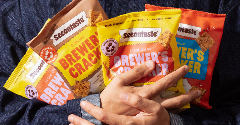
How Secon Taste is putting upcycled snacks on shelves
4 Aug 2026
Hungarian zero-waste startup Secon Taste is turning surplus food into upcycled snacks such as fibre-packed granola, instant porridge, and a circular coffee-tasting box.
Read more
Codex sets global thresholds for ‘may contain’ labels
3 Aug 2026
Codex Alimentarius has adopted its first global guidance on when to use “may contain” allergen warnings, setting thresholds intended to stop the label being used as blanket legal cover.
Read more