
Ingredients Categories
Finished Products
Finished Food Categories
- Bakery
- Beverages / Juices
- Cereal and grain products
- Confectionery
- Cooking Fats & Oils
- Dairy
- Egg products
- Fruits & Vegetables
- Infant & Baby food
- Meat, Poultry & Fish
- Nuts & Seeds products
- Other Finished Food Categories
- Pet Food
- Plant-based foods
- Prepared foods
- Sauces & Seasonings
- Sweet & Savoury Spreads
Specialised Finished Products
- Bee products
- Biotic products
- Dietary supplements
- Energy drinks
- Functional beverages
- Functional confectionery
- Functional food
- Functional powders
- Meal replacement products
- Nutricosmetics
- Other Specialised Finished Products
- Pet Dietary Supplements
- Pharma and OTC products
- Protein products
- Sugar replacers / Sweeteners
Health & Wellness Areas
Delivery Formats
Operations & Services
- 3D printing
- Analysis/ Testing
- Auditing & certifications
- Blending & mixing
- Bottling
- Certification
- Clinical trials
- Co-packing
- Coating
- Consulting
- Contract manufacturing
- Drying
- Electrospinning
- Encapsulating
- Enzymatic processing
- Extracting
- Extrusion
- Fat structuring
- Fermentation
- Filling
- Flavour development
- Freeze drying
- Granulating/ grinding/ milling / mixing
- High-pressure processing
- Labelling
- Other Operations & Services
- Packaging
- Packet filling
- Pasturising
- Quality assurance
- Saccharification
- Shear cell processing
- Spray drying
- Sterilisation
- Storage & Logistics
- Tabletting
- Toasting / roasting
- Ultra-high temperature processing
News
Alkaline water brands tap into demand for sports nutrition products
7 Oct 2022
With purported health benefits, alkaline water brands are finding success as they position their premium as sports nutrition beverages with added functionality.
With healthy sales across continents, it is hard to see how water can improve upon its health and sustainability credentials, boasting an enviable mineral profile, an all-natural source, and a ‘clean’ universally accepted taste.

However, alkaline water is trying to do just that. Practically unheard of a decade ago, the water is on course to be a multi-million-dollar global segment by 2023.
Alkaline water’s pH typically sits within the 7-10 range with products bottled from a naturally high pH source or treated in the processing stage to increase pH levels.
Most alkaline waters are marketed as premium products that aid an active lifestyle, and command a higher price compared to regular bottled water.
Food and drink analysts at Zenith Global have predicted rapid growth in alkaline water consumption with global volumes forecast to jump from 635 million litres in 2018 to 2,200 million litres by 2023.
“Alkalinity has become a high value point of difference for both manufacturers and consumers,” commented Zenith Global Senior Consultant Robin Bell. “It has a broadening target audience and multiple consumption occasions that we have identified.”
Alkaline and active lifestyles
The sports nutrition positioning could be behind alkaline water’s success.
Earlier this year, The Alkaline Water Company, the makers of Himalayan rock salt infused Alkaline88, rolled out Alkaline88 Sport, a sports drink that “adds a layer of sports functionality.” The functionality is a cap bottle that stores ingredients, allowing consumers to mix functional ingredients prior to consumption.
The success of the segment is also part of the wider demand for energy, according to Julian Mellentin, founder of food consultancy New Nutrition Business.
Consumers are increasingly looking for ingredients that give them an energy boost and a wide range of products have emerged to meet this demand, from such as turning kale into chips or cauliflower into pizza,
It’s a concept that can easily be applied to beverages. “The skill of NPD teams in re-making “old” foods with better tastes or more convenience has driven many successes from the almond to the cauliflower,” he said.
“Coffee – a 400-year-old energy drink – is one example of a category which continues to reinvent itself and expand thanks to creative NPD.”
 © AdobeStock/morkdam
Purported – but disputed – health benefits: Enhanced hydration, better digestion
Aside from energy gains, alkaline water brands claim it has health benefits, which include stronger bones, the easing of acid reflux, and enhanced hydration.
Proponents of the water also point to a role in counteracting the negative effects of consuming acidic foods and beverages, which have been linked to metabolic syndrome and tooth enamel erosion.
One recent Japanese study demonstrated how alkaline ionised water increased the pH level of enamel surface after consumption of acidic beverages. The Functional Water Foundation-funded research confirmed that enamel surface (Es) pH, which was lowered by the ingestion of cola or a sports drink, was rapidly increased by the ingestion of AIW.
A further study also points to alkaline water’s positive effect on diabetes and obesity, as well as a “synergistic effect to lifestyle modification, such as exercise.”
These findings are of course countered by research that found no evidence of an alkaline diet’s protective effect on bone health or any clinical evidence that shows its ability to address acid reflux.
Alkaline water and CBD
Alkaline water brands in North America are innovating with added functional ingredients, such as CBD.
The Alkaline Water Company in 2018 launched its hemp-derived CBD 10mg infused Alakaline88 water. This was closely followed up by Canadian-based Flow Alkaline Spring Water’s offering - a functional water infused with CBD and other botanical ingredients.

Get more of our news on Google
Set Ingredients Network as a 'Preferred Source' to get quicker access to the news you value.
Related news

Skimpflation: An ‘unfair’ and risky approach to keeping prices low
2 Sep 2026
Consumers see skimpflation – reducing the quality of ingredients due to rising costs – as more unfair than shrinkflation, making it a risky strategy according to recent research.
Read more
NielsenIQ’s EU barometer shows Britain leading in grocery inflation
31 Aug 2026
Britain was the only country to record grocery inflation above 2%, according to NielsenIQ data that compared Europe’s five biggest grocery markets from February to May 2026.
Read more
‘Urgent gaps’ in achieving 2030 food system goals
27 Aug 2026
Global food systems are failing to meet 2030 targets across indicators including health, environment, and resilience, according to a report co-authored by the Food and Agriculture Organisation (FAO).
Read more
China beverages: Is herbal innovation the future?
20 Aug 2026
Herbal and botanical innovation in China's drinks market continues to grow, with ingredients like astragalus root, ginger, and ginseng in the spotlight – and focus shifting far beyond refreshment.
Read more
Popular barbecue staples experience sharp price increases
19 Aug 2026
The typical cost of US shoppers’ barbecue baskets has risen by 12% over the past year – the fastest annual rise in a decade, figures from The Economist show.
Read more
Beyond 'nice to have': A spotlight on US functional beverages
12 Aug 2026
Functional beverage interest in the US is gaining important ground as consumers now expect function rather than see it as "nice to have", and there are clear market gaps for growth, according to Spate.
Read more
Manam Chocolate aims to bring premium Indian cacao to 'the world stage'
11 Aug 2026
Craft chocolate brand Manam Chocolate is investing in local expansion and supply chain innovation throughout India as it works to build out the premium reputation of its locally produced cacao products.
Read more
Digital twin technology gains ground in food manufacturing
6 Aug 2026
Food and beverage companies are increasingly turning to digital twins to optimise and automate manufacturing processes, but opportunities stretch far beyond this, say experts.
Read more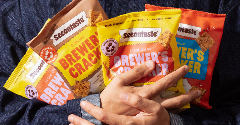
How Secon Taste is putting upcycled snacks on shelves
4 Aug 2026
Hungarian zero-waste startup Secon Taste is turning surplus food into upcycled snacks such as fibre-packed granola, instant porridge, and a circular coffee-tasting box.
Read more
Codex sets global thresholds for ‘may contain’ labels
3 Aug 2026
Codex Alimentarius has adopted its first global guidance on when to use “may contain” allergen warnings, setting thresholds intended to stop the label being used as blanket legal cover.
Read more