
Ingredients Categories
Finished Products
Finished Food Categories
- Bakery
- Beverages / Juices
- Cereal and grain products
- Confectionery
- Cooking Fats & Oils
- Dairy
- Egg products
- Fruits & Vegetables
- Infant & Baby food
- Meat, Poultry & Fish
- Nuts & Seeds products
- Other Finished Food Categories
- Pet Food
- Plant-based foods
- Prepared foods
- Sauces & Seasonings
- Sweet & Savoury Spreads
Specialised Finished Products
- Bee products
- Biotic products
- Dietary supplements
- Energy drinks
- Functional beverages
- Functional confectionery
- Functional food
- Functional powders
- Meal replacement products
- Nutricosmetics
- Other Specialised Finished Products
- Pet Dietary Supplements
- Pharma and OTC products
- Protein products
- Sugar replacers / Sweeteners
Health & Wellness Areas
Delivery Formats
Operations & Services
- 3D printing
- Analysis/ Testing
- Auditing & certifications
- Blending & mixing
- Bottling
- Certification
- Clinical trials
- Co-packing
- Coating
- Consulting
- Contract manufacturing
- Drying
- Electrospinning
- Encapsulating
- Enzymatic processing
- Extracting
- Extrusion
- Fat structuring
- Fermentation
- Filling
- Flavour development
- Freeze drying
- Granulating/ grinding/ milling / mixing
- High-pressure processing
- Labelling
- Other Operations & Services
- Packaging
- Packet filling
- Pasturising
- Quality assurance
- Saccharification
- Shear cell processing
- Spray drying
- Sterilisation
- Storage & Logistics
- Tabletting
- Toasting / roasting
- Ultra-high temperature processing
News
How industry can future-proof food procurement
Kacey Culliney, Freelance Journalist 5 Feb 2026Global food supply chains must adapt procurement strategies to remain resilient and sustainable, according to a World Economic Forum paper.
More than 60 heads of state gathered in January at the World Economic Forum's Annual Meeting 2026 in Davos, Switzerland, under this year's theme “A Spirit of Dialogue”. The international NGO draws together political leaders every year to address the most pressing global issues and create space to reach agreements and solutions. Alongside the event, a flurry of white papers are released under various themes, delving into the latest research, data, and analysis to educate and inspire change.
The ‘future resilience’ of food
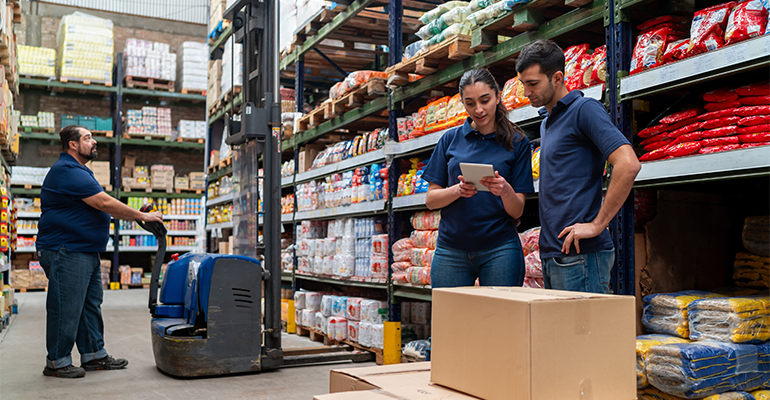
This year, the World Economic Forum released a paper on the future of global food procurement: First Movers Coalition for Food: CEO Lessons for the Future of Food Procurement, in collaboration with management consulting firm Bain & Company. The paper outlines a vision for how global businesses can future-proof food procurement in light of current market and climate challenges.
“For a century, food supply chains have been feeding a growing global population with unprecedented efficiency. However, they were built to operate in a stable climate, with more predictable costs and consumer demand. Today this stability is being challenged by pressures both outside and within the food system – from geopolitical shifts and population growth to rising climate and nature impacts,” the World Economic Forum wrote in its paper.
“In this context, businesses face increasing risk and pressure to adapt, driving demand for resilient and sustainable solutions. The choices companies make in what they buy and how they buy it will define the future resilience of our food system.”
‘Bold demand-side leadership’ is needed
The NGO said that whilst a host of proven sustainable food procurement strategies already exist – the likes of regenerative farming, water management and lower-methane approaches – very few make it past pilot stages. “What's often missing is bold demand-side leadership: strong, credible market signals that unlock finance, align value chain partners, and give farmers the confidence to invest.”
Some large scale examples of success do exist. Nestlé, for example, sourced 21.3% of its ingredients from farmers adopting regenerative agricultural practices in 2024 and PepsiCo sourced 66% of its key ingredients from sustainable sources across 60 countries over the same period.
Coca-Cola has established comprehensive requirements for ingredient suppliers around quality, food safety, and sustainable agriculture, including due diligence processes and compliance tracking, while Danone signs three- to five-year contracts with dairy farmers, offering stability and lower overall risk.
According to report findings, based on in-depth executive-level interviews and multiple case studies, approaches can be successfully scaled if accompanied by “consistent dialogue with suppliers and farmers” and careful management across entire company operations and supply chains.
Several best practices can be followed to strengthen the future of food procurement, the World Economic Forum said.
Efforts must be made to mature sourcing systems, for example, taking them beyond basic sustainability improvements to connected procurement models. Strategic sourcing pathways should also be looked at, like spec-anchored sourcing and decoupled sourcing, to help grow resilient, sustainable systems–potentially different depending on commodity. And finally, partnerships must be strengthened and corporate operations aligned to help “unlock change at scale”.
Resilience becoming as important as cost-efficiency
The paper said building resilience today is becoming as important to procurement as pursuing cost-efficiency, particularly amidst climate volatility, changing consumer preferences and regulatory and stakeholder pressures.
“Now is the time to bridge the gap between ambition and execution,” the World Economic Forum said. “In an era defined by uncertainty, building resilient food supply systems capable of delivering sustainable sourcing at scale can help create long-term business value and ensure food security.”
The NGO is already working to drive change via its First Movers Coalition for Food platform, which brings together major food companies and buyers to share strategies that support real-word impact. Its goal is to build early demand for low-emissions and nature-positive goods and services to scale up sustainable global food supply.
The coalition's work spans the globe, with working groups in South East Asia, North America, South America and various developed markets, and its members hold combined revenues of more than US$900 billion.
“Preparing for the future requires careful thinking about every aspect of how companies procure, invest and collaborate along supply chains,” the World Economic Forum said. “Organisations should adopt an approach that embraces the potential for system-wide change, but with the flexibility to cope with real-world complexity.”

Get more of our news on Google
Set Ingredients Network as a 'Preferred Source' to get quicker access to the news you value.
Related news

Do the US dietary guidelines put UPFs under pressure?
10 Sep 2026
Will the US dietary guidelines change the way Americans eat, swapping ultra-processed foods for whole foods? We asked Dr Barry Popkin, renowned nutrition and obesity researcher.
Read more
Health and wellness engagement matures across Middle East and Africa
4 Sep 2026
Many consumers in the Middle East and Africa are now proactively engaged in health and wellness, looking to integrate better habits and products into their daily lives, say experts.
Read more
Skimpflation: An ‘unfair’ and risky approach to keeping prices low
2 Sep 2026
Consumers see skimpflation – reducing the quality of ingredients due to rising costs – as more unfair than shrinkflation, making it a risky strategy according to recent research.
Read more
‘Urgent gaps’ in achieving 2030 food system goals
27 Aug 2026
Global food systems are failing to meet 2030 targets across indicators including health, environment, and resilience, according to a report co-authored by the Food and Agriculture Organisation (FAO).
Read more
Seven-Eleven uses microbial testing tech to extend katsudon shelf life
26 Aug 2026
Japanese retail company Seven-Eleven has improved its factory’s microbial environment to keep comfort-food staple, katsudon, fresher for longer.
Read more
Chimac’s fusion sauces bring Korean flavours to Europe
25 Aug 2026
Irish sauce brand Chimac is tapping into Korea’s culinary traditions, bringing its flavours and products to European consumers who want a taste of K-food.
Read more
Global demand for instant noodles continues to rise
24 Aug 2026
Global demand for instant noodles reached 124.21 billion servings last year, representing a 0.7% year-on-year increase – or 900 million extra servings.
Read more
Popular barbecue staples experience sharp price increases
19 Aug 2026
The typical cost of US shoppers’ barbecue baskets has risen by 12% over the past year – the fastest annual rise in a decade, figures from The Economist show.
Read more
Hot NPD: Nissin launches first cold-water Cup Noodles
18 Aug 2026
Nissin is taking one of Japan’s most iconic instant meals in a completely new direction with the launch of the first cold water-only Cup Noodles in the brand’s 55-year history.
Read more
Manam Chocolate aims to bring premium Indian cacao to 'the world stage'
11 Aug 2026
Craft chocolate brand Manam Chocolate is investing in local expansion and supply chain innovation throughout India as it works to build out the premium reputation of its locally produced cacao products.
Read more