
Ingredients Categories
Finished Products
Finished Food Categories
- Bakery
- Beverages / Juices
- Cereal and grain products
- Confectionery
- Cooking Fats & Oils
- Dairy
- Egg products
- Fruits & Vegetables
- Infant & Baby food
- Meat, Poultry & Fish
- Nuts & Seeds products
- Other Finished Food Categories
- Pet Food
- Plant-based foods
- Prepared foods
- Sauces & Seasonings
- Sweet & Savoury Spreads
Specialised Finished Products
- Bee products
- Biotic products
- Dietary supplements
- Energy drinks
- Functional beverages
- Functional confectionery
- Functional food
- Functional powders
- Meal replacement products
- Nutricosmetics
- Other Specialised Finished Products
- Pet Dietary Supplements
- Pharma and OTC products
- Protein products
- Sugar replacers / Sweeteners
Health & Wellness Areas
Delivery Formats
Operations & Services
- 3D printing
- Analysis/ Testing
- Auditing & certifications
- Blending & mixing
- Bottling
- Certification
- Clinical trials
- Co-packing
- Coating
- Consulting
- Contract manufacturing
- Drying
- Electrospinning
- Encapsulating
- Enzymatic processing
- Extracting
- Extrusion
- Fat structuring
- Fermentation
- Filling
- Flavour development
- Freeze drying
- Granulating/ grinding/ milling / mixing
- High-pressure processing
- Labelling
- Other Operations & Services
- Packaging
- Packet filling
- Pasturising
- Quality assurance
- Saccharification
- Shear cell processing
- Spray drying
- Sterilisation
- Storage & Logistics
- Tabletting
- Toasting / roasting
- Ultra-high temperature processing
News
Amazon adds to grocery portfolio with ‘no frills’ brand
14 Nov 2024Amazon has made available a new private-label brand that offer discounts on grocery staples such as beverages, snacks, and pastas, as part of the multinational’s plans to strengthen its online food presence.
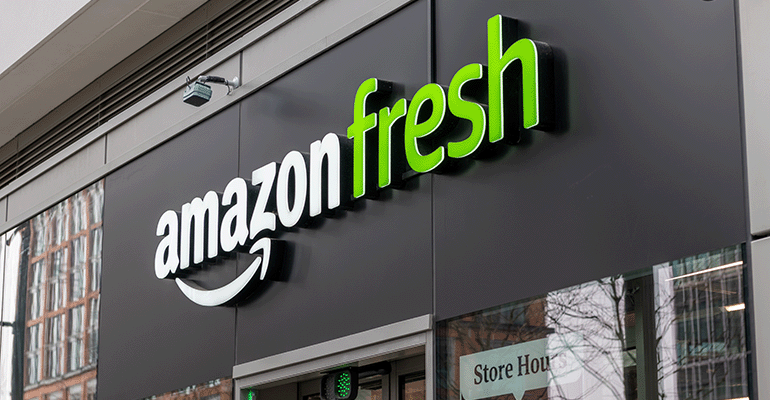
The Amazon Saver brand, which is positioned under company’s Amazon Fresh grocery banner, offers items priced at less than $5 (€4.61) such as cookies and crackers and perishable items like sliced turkey and ham with additional items revealed in the coming months.
In addition, Prime members receive an extra 10% off Amazon Saver products that form part of its ‘Our Brands’ discount made available through the customer benefits program.
“We're always looking to make grocery shopping easier, faster, and more affordable for our customers,” said Claire Peters, global vice president of Amazon Fresh.
“With expanded Prime member savings, the introduction of the new Amazon Saver brand, and simplified online shopping, it’s now easier than ever to get your weekly grocery shopping done on a budget with Amazon Fresh – whether you're browsing the aisles or filling your online cart.”
Amazon Saver brand is the latest own brand joining Amazon Kitchen and 365 by Whole Foods
As an introductory offer, Amazon has expanded savings to over 3,000 grocery items for Prime members that consist of up to 50% off 8 to 15 fresh produce, protein, and pantry staple products on a weekly rotation.
In addition, savings of 25% are available on over 1,200 rotating Prime-exclusive groceries and household essentials from top brands.
The Amazon Saver brand is the latest pricing model for the company, which launched the first iteration of Amazon Fresh back in 2007.
Since then, the e-commerce giant has acquired Whole Foods for $13.7bn (€12.6bn) in 2017, strengthening its Amazon Fresh brand and extending its roster of own brands, which include Aplenty, Amazon Kitchen, Happy Belly and 365 by Whole Foods Market.
Alongside this, Amazon’s ongoing experimentation with its online and brick-and-mortar grocery retail strategy, has seen the company assemble a portfolio of private label brands across food and non-food products, such as Solimo, Wag, Wickedly Prime, Presto!, Revly and AmazonBasics.
Unlocking private label value involves consistent positioning and scalable processes
“For many grocery retailers today, the lack of a comprehensive Private Brand strategy means that they'll get left behind,” said John Clear, senior director in Alvarez & Marsal's Consumer and Retail Group, based in New York.
“To unlock the value of private label, grocers need to have a clear plan in place: a differentiated brand architecture and consistent positioning across categories; scalable processes and innovation capabilities that will ensure their success is repeatable.”
According to the US-based consulting firm, private label’s market share is around 20% of the total grocery market, with predictions that this will increase to 24% by 2030.
Marco Valentini, managing director at Alvarez & Marsal's Consumer and Retail Group added that there was a strong correlation between the most successful private brand grocers and their market share and financial performance.
“The best players act differently from the rest of the pack,” he said. “Their C-level executives are committed to growing their own brands and driving differentiation through them. Marketing and branding efforts are aimed at elevating, differentiating products, and increasing overall customer awareness and advocacy of their brands.”
“Product innovation cycles need to reflect the yearly cadence of line reviews and retailers must be able to constantly innovate and update their ‘Own Brand' products.”
Consumers are laser-focused on value when they are grocery shopping
Commenting on the launch of Amazon Saver, Neil Saunders, managing director and retail analyst at GlobalData Retail said: “It makes sense because, after years of high inflation, consumers are laser like focused on value when they are grocery shopping.
“That’s one of the reasons there has been a migration to store own brands across many categories.
“Amazon still has big ambitions in grocery, so it needs to jump on this bandwagon as well as sharpen its value for money position.”
Saunders added that success depends on price points being genuinely competitive, but also on Amazon communicating these well in stores and online.
He pointed out that it was also important that the new brand established a reputation for reasonable quality.
“Consumers do not want cheap products; they want good products with low prices,” he said.
“More broadly, Amazon still has a lot of work to do in order to truly breakthrough in grocery. It has had some success online, but it still hasn’t come up with a store format and proposition that enables it to take on established grocery rivals in a serious way.”

Get more of our news on Google
Set Ingredients Network as a 'Preferred Source' to get quicker access to the news you value.
Related news

Health and wellness engagement matures across Middle East and Africa
4 Sep 2026
Many consumers in the Middle East and Africa are now proactively engaged in health and wellness, looking to integrate better habits and products into their daily lives, say experts.
Read more
Kellogg accelerates work to remove artificial colours from all US cereals
3 Sep 2026
WK Kellogg has announced an accelerated timeline to eliminate all artificial colours and the chemical preservative, BHT, across its full US portfolio of cereals and cereal packaging.
Read more
Skimpflation: An ‘unfair’ and risky approach to keeping prices low
2 Sep 2026
Consumers see skimpflation – reducing the quality of ingredients due to rising costs – as more unfair than shrinkflation, making it a risky strategy according to recent research.
Read more
Royal Canin launches ‘freshly-cooked’ therapeutic dog food
1 Sep 2026
Mars-owned Royal Canin has moved into the therapeutic diet sector with the launch of its Fresh Veterinary Diets range for dogs with health conditions. We asked a veterinary nutritionist for her opinion.
Read more
NielsenIQ’s EU barometer shows Britain leading in grocery inflation
31 Aug 2026
Britain was the only country to record grocery inflation above 2%, according to NielsenIQ data that compared Europe’s five biggest grocery markets from February to May 2026.
Read more
‘Urgent gaps’ in achieving 2030 food system goals
27 Aug 2026
Global food systems are failing to meet 2030 targets across indicators including health, environment, and resilience, according to a report co-authored by the Food and Agriculture Organisation (FAO).
Read more
Seven-Eleven uses microbial testing tech to extend katsudon shelf life
26 Aug 2026
Japanese retail company Seven-Eleven has improved its factory’s microbial environment to keep comfort-food staple, katsudon, fresher for longer.
Read more
Chimac’s fusion sauces bring Korean flavours to Europe
25 Aug 2026
Irish sauce brand Chimac is tapping into Korea’s culinary traditions, bringing its flavours and products to European consumers who want a taste of K-food.
Read more
Global demand for instant noodles continues to rise
24 Aug 2026
Global demand for instant noodles reached 124.21 billion servings last year, representing a 0.7% year-on-year increase – or 900 million extra servings.
Read more
China beverages: Is herbal innovation the future?
20 Aug 2026
Herbal and botanical innovation in China's drinks market continues to grow, with ingredients like astragalus root, ginger, and ginseng in the spotlight – and focus shifting far beyond refreshment.
Read more