
Ingredients Categories
Finished Products
Finished Food Categories
- Bakery
- Beverages / Juices
- Cereal and grain products
- Confectionery
- Cooking Fats & Oils
- Dairy
- Egg products
- Fruits & Vegetables
- Infant & Baby food
- Meat, Poultry & Fish
- Nuts & Seeds products
- Other Finished Food Categories
- Pet Food
- Plant-based foods
- Prepared foods
- Sauces & Seasonings
- Sweet & Savoury Spreads
Specialised Finished Products
- Bee products
- Biotic products
- Dietary supplements
- Energy drinks
- Functional beverages
- Functional confectionery
- Functional food
- Functional powders
- Meal replacement products
- Nutricosmetics
- Other Specialised Finished Products
- Pet Dietary Supplements
- Pharma and OTC products
- Protein products
- Sugar replacers / Sweeteners
Health & Wellness Areas
Delivery Formats
Operations & Services
- 3D printing
- Analysis/ Testing
- Auditing & certifications
- Blending & mixing
- Bottling
- Certification
- Clinical trials
- Co-packing
- Coating
- Consulting
- Contract manufacturing
- Drying
- Electrospinning
- Encapsulating
- Enzymatic processing
- Extracting
- Extrusion
- Fat structuring
- Fermentation
- Filling
- Flavour development
- Freeze drying
- Granulating/ grinding/ milling / mixing
- High-pressure processing
- Labelling
- Other Operations & Services
- Packaging
- Packet filling
- Pasturising
- Quality assurance
- Saccharification
- Shear cell processing
- Spray drying
- Sterilisation
- Storage & Logistics
- Tabletting
- Toasting / roasting
- Ultra-high temperature processing
News
Bimbo Bakeries in hot water over misleading US allergen labels
Tessa Wiles, Content Editor - Food 17 Jul 2024The FDA issued a warning to Bimbo Bakeries for falsely listing allergens, including sesame, on its product labels in the US. The warning comes amid reports of manufacturers adding allergens to both product labels and formulations to avoid cross-contamination events and rigorous cleaning procedures required by new labelling laws.
Bimbo Bakeries USA, the American division of Grupo Bimbo, a Mexican multinational bakery company, received a warning letter from the US Food and Drug Administration (FDA) on 17 June 2024 due to significant labelling violations discovered during inspections at the company’s Phoenix and Topeka facilities in late 2023. Bimbo Bakeries brands include Sara Lee, the Cheesecake Factory at Home, and Nature’s Harvest, among others.
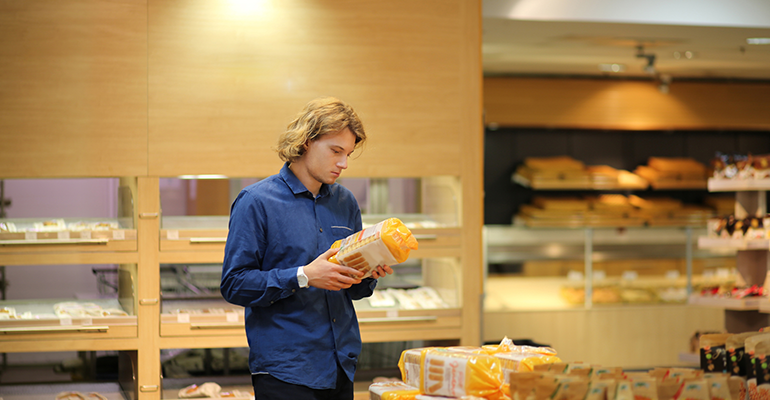
The FDA identified that several ready-to-eat bread products were misbranded under the Federal Food, Drug, and Cosmetic Act (FD&C Act) because they listed major food allergens on their labels that were not present in the product formulations. According to the FDA, via a constituent update, food products must "bear truthful and non-misleading labelling" and that failing to do so, means they are considered misbranded.
In addition, the FDA acknowledged that such practices could decrease choices for consumers with food allergies. It also reiterated the importance of accurate and truthful labelling across the supply chain to protect consumers.
Bimbo Bakeries incorrectly lists various nuts on labels
The FDA inspection of the Phoenix facility from 3 -27 October 2023, found that products including the Sara Lee brand, Artesano Brioche, Delightful Multigrain, Artesano Golden Wheat, and Artesano Smooth Multigrain, listed sesame in their ingredient and "Contains" statements, despite there being no sesame in the formulations.
Similarly, the Brownberry brand Whole Grains 12 Grains and Seeds product, inspected at the Topeka facility between November 13 - 27, 2023, incorrectly listed walnuts, almonds, and hazelnuts in the ingredient and "Contains" statements without these nuts being part of the product formulation. The FDA said: “Firms are required to accurately list ingredients present in their product.” The FDA added that firms must not rely on misleading labels as a substitute for following good manufacturing practices (GMPs) and must implement appropriate preventive controls to prevent allergen cross-contact.
Manufacturers intentionally add allergens to previously allergen-free products
In January 2023 sesame was added to the list of major food allergens, as part of the Food Allergy Safety, Treatment, Education, and Research (FASTER) Act, in the US. What this means is that food manufacturers using sesame in their formulations need to declare its presence on both the ingredients list and in the “Contains” statement, as well as ensure procedures are in place to avoid cross-contamination and that manufacturing equipment is thoroughly cleaned between production lines.
However, following the 2023 enactment, there have been multiple reports of manufacturers responding to the allergen labelling laws by intentionally adding allergens like sesame to previously allergen-free products to avoid the need for rigorous cleaning procedures to prevent cross-contamination.
This practice has been criticised by organisations like the Center for Science in the Public Interest (CSPI), which filed a regulatory petition to the FDA in 2023, urging the FDA to rein in manufacturers intentionally adding sesame to their formulations. In a press release Sarah Sorscher, director of regulatory affairs at CSPI said:“The allergen labeling and food safety rules give companies a responsibility to identify and reduce risks, […] their approach is completely backwards.”
Sorscher also highlighted the danger of this practice by manufacturers, adding “If companies can do this with sesame, there is nothing to stop them from adding other peanuts, milk, or other major allergens instead of cleaning the lines for allergens in between products.”
Bimbo Bakeries facing industry backlash over the incident
In response to the FDA warning letter, the non-profit organisation Food Allergy Research & Education (FARE) issued a statement, in which Robert Earl, vice president of regulatory affairs said: “Our community relies on accurate product labelling for their health and safety and these findings about Bimbo Bakeries’ products undermine their trust and further limit choices."This stance was further emphasised by Sung Poblete, FARE’s CEO, who added "Given the size and reach of Bimbo Bakeries to American consumers, FARE expects better. Losing the food allergy community's respect also extends to the restaurants and institutions that buy their products, beyond retail packaged products. The food allergy community shouldn’t have to deserve less.”
Lauren Handel, principal attorney at Handel Food Law LLC, based in New York, also posted to her LinkedIn about the incident. She said: “If these allegations are true, why would a big, sophisticated food manufacturer say that its product contains allergens when it does not?”
She added: “With undeclared food allergens being the top reason for food recalls (and recalls being an expensive hassle), it is understandable that manufacturers would seek to reduce the risk of a recall by declaring an allergen that could unintentionally be present in the product due to cross contact.”
She, however, criticised the practice of using misleading labels, stating, “The important lesson here is that food labels must be truthful and not misleading. You should not use a label to make up for deficiencies in manufacturing processes.”
Response from Bimbo Bakeries expected within 15 working days
In the warning letter, the FDA has requested a response from Bimbo Bakeries within 15 working days, detailing the specific steps the company has taken to address the violations or providing a justification if Bimbo Bakeries believes it is not in violation.

Get more of our news on Google
Set Ingredients Network as a 'Preferred Source' to get quicker access to the news you value.
Related news

Do the US dietary guidelines put UPFs under pressure?
10 Sep 2026
Will the US dietary guidelines change the way Americans eat, swapping ultra-processed foods for whole foods? We asked Dr Barry Popkin, renowned nutrition and obesity researcher.
Read more
Food fraud costs UK economy £2bn each year
9 Sep 2026
Food fraud is costing the UK economy up to £2 billion (€2.3 billion) every year although the food sector is more “resilient” than others, according to a recent study.
Read more
Kellogg accelerates work to remove artificial colours from all US cereals
3 Sep 2026
WK Kellogg has announced an accelerated timeline to eliminate all artificial colours and the chemical preservative, BHT, across its full US portfolio of cereals and cereal packaging.
Read more
Skimpflation: An ‘unfair’ and risky approach to keeping prices low
2 Sep 2026
Consumers see skimpflation – reducing the quality of ingredients due to rising costs – as more unfair than shrinkflation, making it a risky strategy according to recent research.
Read more
NielsenIQ’s EU barometer shows Britain leading in grocery inflation
31 Aug 2026
Britain was the only country to record grocery inflation above 2%, according to NielsenIQ data that compared Europe’s five biggest grocery markets from February to May 2026.
Read more
‘Urgent gaps’ in achieving 2030 food system goals
27 Aug 2026
Global food systems are failing to meet 2030 targets across indicators including health, environment, and resilience, according to a report co-authored by the Food and Agriculture Organisation (FAO).
Read more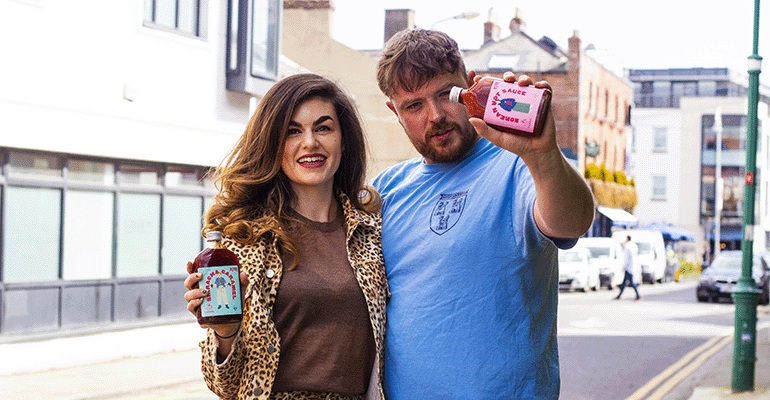
Chimac’s fusion sauces bring Korean flavours to Europe
25 Aug 2026
Irish sauce brand Chimac is tapping into Korea’s culinary traditions, bringing its flavours and products to European consumers who want a taste of K-food.
Read more
Global demand for instant noodles continues to rise
24 Aug 2026
Global demand for instant noodles reached 124.21 billion servings last year, representing a 0.7% year-on-year increase – or 900 million extra servings.
Read more
Popular barbecue staples experience sharp price increases
19 Aug 2026
The typical cost of US shoppers’ barbecue baskets has risen by 12% over the past year – the fastest annual rise in a decade, figures from The Economist show.
Read more
Hot NPD: Nissin launches first cold-water Cup Noodles
18 Aug 2026
Nissin is taking one of Japan’s most iconic instant meals in a completely new direction with the launch of the first cold water-only Cup Noodles in the brand’s 55-year history.
Read more