
Ingredients Categories
Finished Products
Finished Food Categories
- Bakery
- Beverages / Juices
- Cereal and grain products
- Confectionery
- Cooking Fats & Oils
- Dairy
- Egg products
- Fruits & Vegetables
- Infant & Baby food
- Meat, Poultry & Fish
- Nuts & Seeds products
- Other Finished Food Categories
- Pet Food
- Plant-based foods
- Prepared foods
- Sauces & Seasonings
- Sweet & Savoury Spreads
Specialised Finished Products
- Bee products
- Biotic products
- Dietary supplements
- Energy drinks
- Functional beverages
- Functional confectionery
- Functional food
- Functional powders
- Meal replacement products
- Nutricosmetics
- Other Specialised Finished Products
- Pet Dietary Supplements
- Pharma and OTC products
- Protein products
- Sugar replacers / Sweeteners
Health & Wellness Areas
Delivery Formats
Operations & Services
- 3D printing
- Analysis/ Testing
- Auditing & certifications
- Blending & mixing
- Bottling
- Certification
- Clinical trials
- Co-packing
- Coating
- Consulting
- Contract manufacturing
- Drying
- Electrospinning
- Encapsulating
- Enzymatic processing
- Extracting
- Extrusion
- Fat structuring
- Fermentation
- Filling
- Flavour development
- Freeze drying
- Granulating/ grinding/ milling / mixing
- High-pressure processing
- Labelling
- Other Operations & Services
- Packaging
- Packet filling
- Pasturising
- Quality assurance
- Saccharification
- Shear cell processing
- Spray drying
- Sterilisation
- Storage & Logistics
- Tabletting
- Toasting / roasting
- Ultra-high temperature processing
News
Cana Technology shuts down rollout of custom beverage printer
1 Jun 2023
US startup Cana Technology promised to give consumers fully customised drinks via its 3D beverage printers but it has now closed operations. What does this mean for the future of personalised kitchen tech?
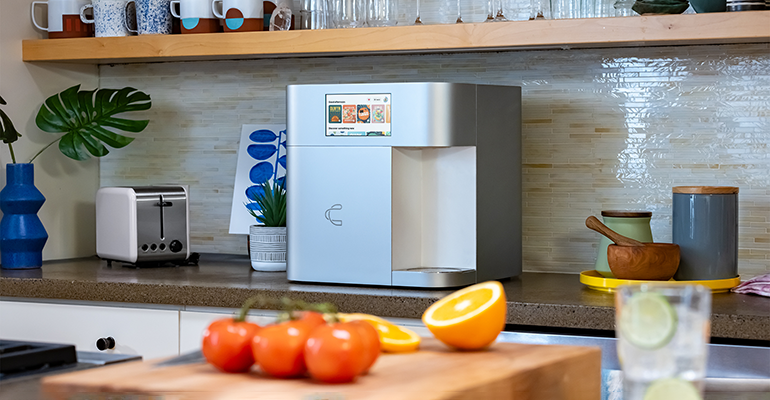
Cana Technology was in the process of building a home beverage appliance that could fully customise drinks and fight waste pollution, but has halted production and shut its doors due to a lack of funding.
Several former employees of Cana posted on LinkedIn recently about the company shutting down, expressing frustrations over the situation.
“Despite developing a fully functional product and securing brand partners, Cana unfortunately faced a lack of critical funding necessary to build a production line for manufacturing and shipping devices. This resulted in the difficult decision to shut down,” one employee said.
“It was a privilege to work at Cana. The Cana team will always be a source of inspiration for me. Their passion, dedication, and hard work will continue to motivate me to strive for excellence every day.”
Not ready for rollout
The business shuttering comes abruptly on the heels of Cana revealing in March that Sir Patrick Stewart would be its new brand ambassador. The partnership led with the mission to help end the global trash crisis.
“The $2.5 trillion global beverage and bottling industrial complex revolves around the centralized production and distribution of a product that’s mostly water, using an archaic system that generates trillions of tons of trash,” Cana said.
Stewart, of Star Trek fame, said that Cana’s initiatives reminded him of “advancements in technology that for some may have only been conceivable in the world of science fiction.”
The startup first announced its prototype in early 2022, claiming that the appliance could “print” thousands of beverages like soft drinks, iced coffee, wine and cocktails. The company planned to ship customised carts directly to customers that contained a small percentage of ingredients that could create unlimited variety when combined with water.
Cana confirmed that its first product offering would be called Cana One, “a molecular beverage printer that serves thousands of beverages on demand – without the plastic, aluminium or glass packaging of conventional beverages.”
Cana One had a price tag of $899 and Cana said it would begin shipping in the fourth quarter of 2023. The company additionally intended to offer a Creator Studio software platform that allowed customers to formulate and distribute new beverages from scratch.
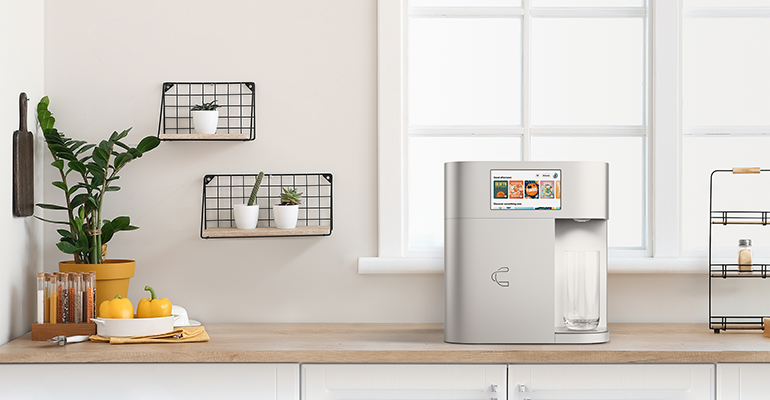 Pictured: Cana One Molecular Beverage Printer (Photo: Business Wire)
Cana struggled to secure enough funding to see these plans through, however. It received $30 million in capital in 2022, but the company laid off 16% of its staff last summer, according to Bloomberg. Although, Cana appeared to be growing as of early 2023, and still has job postings for scientists and engineers currently listed on its LinkedIn page.
The reaction to Cana’s mission was mostly enthusiastic from those in the beverage, technology and sustainability industries, but it also garnered a healthy dose of scepticism.
Tech journalists wrote about hesitations in the marketplace for yet another smart beverage appliance when consumers already have Keurigs, Nespressos and Soda Streams cluttering up their kitchen counters. Consumers are spending more than ever on small kitchen gadgets, driven by health, convenience and sustainability.
The Cana machine was also quite tech-forward, complex and expensive, and many worried it would have to overcome too big of a learning curve before gaining mainstream popularity in a crowded market.

Get more of our news on Google
Set Ingredients Network as a 'Preferred Source' to get quicker access to the news you value.
Related news

Skimpflation: An ‘unfair’ and risky approach to keeping prices low
2 Sep 2026
Consumers see skimpflation – reducing the quality of ingredients due to rising costs – as more unfair than shrinkflation, making it a risky strategy according to recent research.
Read more
NielsenIQ’s EU barometer shows Britain leading in grocery inflation
31 Aug 2026
Britain was the only country to record grocery inflation above 2%, according to NielsenIQ data that compared Europe’s five biggest grocery markets from February to May 2026.
Read more
‘Urgent gaps’ in achieving 2030 food system goals
27 Aug 2026
Global food systems are failing to meet 2030 targets across indicators including health, environment, and resilience, according to a report co-authored by the Food and Agriculture Organisation (FAO).
Read more
China beverages: Is herbal innovation the future?
20 Aug 2026
Herbal and botanical innovation in China's drinks market continues to grow, with ingredients like astragalus root, ginger, and ginseng in the spotlight – and focus shifting far beyond refreshment.
Read more
Popular barbecue staples experience sharp price increases
19 Aug 2026
The typical cost of US shoppers’ barbecue baskets has risen by 12% over the past year – the fastest annual rise in a decade, figures from The Economist show.
Read more
Beyond 'nice to have': A spotlight on US functional beverages
12 Aug 2026
Functional beverage interest in the US is gaining important ground as consumers now expect function rather than see it as "nice to have", and there are clear market gaps for growth, according to Spate.
Read more
Manam Chocolate aims to bring premium Indian cacao to 'the world stage'
11 Aug 2026
Craft chocolate brand Manam Chocolate is investing in local expansion and supply chain innovation throughout India as it works to build out the premium reputation of its locally produced cacao products.
Read more
Digital twin technology gains ground in food manufacturing
6 Aug 2026
Food and beverage companies are increasingly turning to digital twins to optimise and automate manufacturing processes, but opportunities stretch far beyond this, say experts.
Read more
How Secon Taste is putting upcycled snacks on shelves
4 Aug 2026
Hungarian zero-waste startup Secon Taste is turning surplus food into upcycled snacks such as fibre-packed granola, instant porridge, and a circular coffee-tasting box.
Read more
Codex sets global thresholds for ‘may contain’ labels
3 Aug 2026
Codex Alimentarius has adopted its first global guidance on when to use “may contain” allergen warnings, setting thresholds intended to stop the label being used as blanket legal cover.
Read more