
Ingredients Categories
Finished Products
Finished Food Categories
- Bakery
- Beverages / Juices
- Cereal and grain products
- Confectionery
- Cooking Fats & Oils
- Dairy
- Egg products
- Fruits & Vegetables
- Infant & Baby food
- Meat, Poultry & Fish
- Nuts & Seeds products
- Other Finished Food Categories
- Pet Food
- Plant-based foods
- Prepared foods
- Sauces & Seasonings
- Sweet & Savoury Spreads
Specialised Finished Products
- Bee products
- Biotic products
- Dietary supplements
- Energy drinks
- Functional beverages
- Functional confectionery
- Functional food
- Functional powders
- Meal replacement products
- Nutricosmetics
- Other Specialised Finished Products
- Pet Dietary Supplements
- Pharma and OTC products
- Protein products
- Sugar replacers / Sweeteners
Health & Wellness Areas
Delivery Formats
Operations & Services
- 3D printing
- Analysis/ Testing
- Auditing & certifications
- Blending & mixing
- Bottling
- Certification
- Clinical trials
- Co-packing
- Coating
- Consulting
- Contract manufacturing
- Drying
- Electrospinning
- Encapsulating
- Enzymatic processing
- Extracting
- Extrusion
- Fat structuring
- Fermentation
- Filling
- Flavour development
- Freeze drying
- Granulating/ grinding/ milling / mixing
- High-pressure processing
- Labelling
- Other Operations & Services
- Packaging
- Packet filling
- Pasturising
- Quality assurance
- Saccharification
- Shear cell processing
- Spray drying
- Sterilisation
- Storage & Logistics
- Tabletting
- Toasting / roasting
- Ultra-high temperature processing
News
Churning solutions for the food industry: Food tech startup creates ‘butter’ out of thin air
Will Chu, Freelance Journalist 23 Oct 2024A foodtech startup has detailed an intriguing method to create fats out of carbon dioxide extracted from the air and hydrogen from water, to develop a sustainably produced butter.
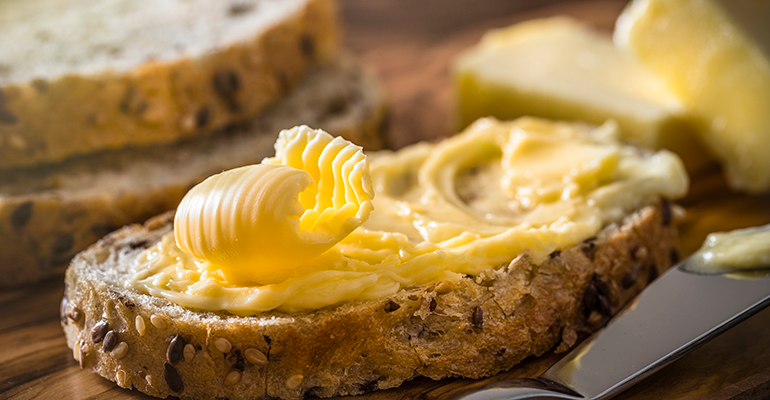
Behind this biochemical wizardry is Savor, a Californian-based company that has set its sights on producing high-quality, healthy, and affordable fats and oils without a negative impact on the climate.
“Our process has the potential to produce fats and oils as well as products like butter with dramatically lower land use, water use, and greenhouse gas emissions,” explained Kathleen Alexander, co-founder & CEO at Savor.
“The core of our technology is the thermochemical production of fats from feedstocks containing carbon (such as CO2, CH4, etc.).
“One such fat we can create is our milkfat, which we make into butter by emulsifying the milkfat with water and an emulsifier (e.g. lecithin). We also add salt, colour (e.g. beta carotene), and flavour (e.g. rosemary oil) to finish the butter.”
Bill Gates believes in upcoming alternatives to animal fats and palm oil
The initiative has received some major backing from Bill Gates, who, in his blog earlier this year, highlighted the work Savor was involved in and its efforts in achieving a shared environmental goal of reducing greenhouse gas emissions and the use of hazardous chemicals.
“The focus on animal fats is a priority because they have an outsized impact on climate—and play an outsized role in many beloved foods,” said Gates.
“But even if we could eliminate emissions from the production of all animal fats overnight, we’d still have a challenge.
“Even some plant-based fats and oils can be a problem for climate change. The worst culprit is palm oil,” he added.
The investor and philanthropist went on to highlight that currently, palm oil is the most widely consumed plant-based fat in the world.
“It’s found in half of all packaged goods—everything from peanut butter, cookies, instant ramen, coffee creamer, and frozen dinners to makeup, body wash, toothpaste, laundry detergent, and deodorant to candles, cat food, baby formula, and so much more. It’s even used as a biofuel for diesel engines.”
Fats account for 7% of all greenhouse gas emissions
Savor, a company operating under the umbrella of Orca Sciences, firmly believes that fat production is a real climate problem, which due to the complexities of quantifying its impact on global warming, has meant its exact contribution has proved elusive.
In a recent company post, Alexander proposed a total of >7% of all anthropogenic emissions could be attributed to fat production. These anthropogenic emissions can include the burning of fossil fuels, deforestation, land use and land-use changes, livestock production, fertilisation, waste management, and industrial processes.
“Automotive transportation, steel production, and cement production each contribute about 7%, as well,” she said. “But the environmental impacts of fat production are devastating to a degree that is not fully represented by a number like 7%.
“This is what sets the food system, and fat in particular, apart from other climate problems: if we are successful in commercialising our non-agricultural approach to fat production, we could capture an unprecedented opportunity to preserve existing forests and even rewild historic forestlands. For me, that easily transcends a number like 7%.”
Could consumers be hesitant by the 'lab-made' connotations of the product?
Commenting on the possibility that consumers may be turned off by a product that was not considered 'natural' or 'authentic,' Alexander said: “Our work at Savor is fundamentally about pursuing a future food system that is sustainable, equitable, and delicious.
“Our approach to molecularly constructing fats is truly transformational. However, it is an inescapable truth that our approach is not well-represented by the zeitgeist of the 2020s food system.
“We are excited to share more about our vision and mission and ethics-driven approach to food production as we work towards commercialising our first products.”
Further details about the science behind artificially synthesizing dietary fats were outlined in an Orca Science-authored paper that appeared in the journal Nature Sustainability.
Alongside a team from the University of California, the researchers detailed how their approach could produce a certain amount of lab-grown fats with less than one gram of carbon dioxide emissions per one thousand calories.
This is compared favourably to farm-grown animal fats that create around one to three grams of carbon dioxide emissions per thousand calories.

Get more of our news on Google
Set Ingredients Network as a 'Preferred Source' to get quicker access to the news you value.
Related news

Do the US dietary guidelines put UPFs under pressure?
10 Sep 2026
Will the US dietary guidelines change the way Americans eat, swapping ultra-processed foods for whole foods? We asked Dr Barry Popkin, renowned nutrition and obesity researcher.
Read more
Kellogg accelerates work to remove artificial colours from all US cereals
3 Sep 2026
WK Kellogg has announced an accelerated timeline to eliminate all artificial colours and the chemical preservative, BHT, across its full US portfolio of cereals and cereal packaging.
Read more
Skimpflation: An ‘unfair’ and risky approach to keeping prices low
2 Sep 2026
Consumers see skimpflation – reducing the quality of ingredients due to rising costs – as more unfair than shrinkflation, making it a risky strategy according to recent research.
Read more
‘Urgent gaps’ in achieving 2030 food system goals
27 Aug 2026
Global food systems are failing to meet 2030 targets across indicators including health, environment, and resilience, according to a report co-authored by the Food and Agriculture Organisation (FAO).
Read more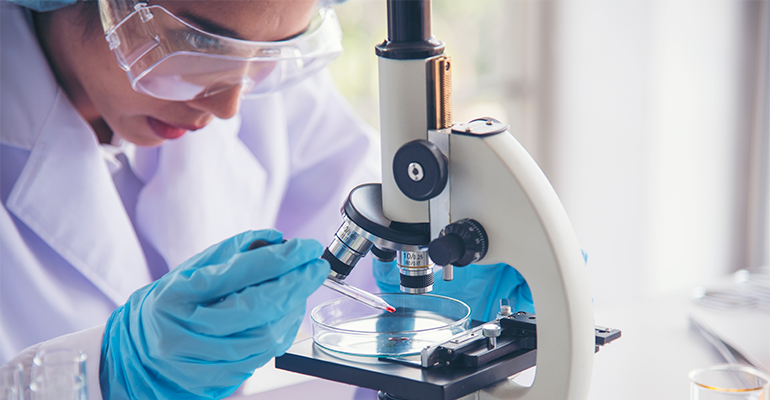
Seven-Eleven uses microbial testing tech to extend katsudon shelf life
26 Aug 2026
Japanese retail company Seven-Eleven has improved its factory’s microbial environment to keep comfort-food staple, katsudon, fresher for longer.
Read more
Chimac’s fusion sauces bring Korean flavours to Europe
25 Aug 2026
Irish sauce brand Chimac is tapping into Korea’s culinary traditions, bringing its flavours and products to European consumers who want a taste of K-food.
Read more
Global demand for instant noodles continues to rise
24 Aug 2026
Global demand for instant noodles reached 124.21 billion servings last year, representing a 0.7% year-on-year increase – or 900 million extra servings.
Read more
Popular barbecue staples experience sharp price increases
19 Aug 2026
The typical cost of US shoppers’ barbecue baskets has risen by 12% over the past year – the fastest annual rise in a decade, figures from The Economist show.
Read more
Hot NPD: Nissin launches first cold-water Cup Noodles
18 Aug 2026
Nissin is taking one of Japan’s most iconic instant meals in a completely new direction with the launch of the first cold water-only Cup Noodles in the brand’s 55-year history.
Read more
Beyond 'nice to have': A spotlight on US functional beverages
12 Aug 2026
Functional beverage interest in the US is gaining important ground as consumers now expect function rather than see it as "nice to have", and there are clear market gaps for growth, according to Spate.
Read more