
Ingredients Categories
Finished Products
Finished Food Categories
- Bakery
- Beverages / Juices
- Cereal and grain products
- Confectionery
- Cooking Fats & Oils
- Dairy
- Egg products
- Fruits & Vegetables
- Infant & Baby food
- Meat, Poultry & Fish
- Nuts & Seeds products
- Other Finished Food Categories
- Pet Food
- Plant-based foods
- Prepared foods
- Sauces & Seasonings
- Sweet & Savoury Spreads
Specialised Finished Products
- Bee products
- Biotic products
- Dietary supplements
- Energy drinks
- Functional beverages
- Functional confectionery
- Functional food
- Functional powders
- Meal replacement products
- Nutricosmetics
- Other Specialised Finished Products
- Pet Dietary Supplements
- Pharma and OTC products
- Protein products
- Sugar replacers / Sweeteners
Health & Wellness Areas
Delivery Formats
Operations & Services
- 3D printing
- Analysis/ Testing
- Auditing & certifications
- Blending & mixing
- Bottling
- Certification
- Clinical trials
- Co-packing
- Coating
- Consulting
- Contract manufacturing
- Drying
- Electrospinning
- Encapsulating
- Enzymatic processing
- Extracting
- Extrusion
- Fat structuring
- Fermentation
- Filling
- Flavour development
- Freeze drying
- Granulating/ grinding/ milling / mixing
- High-pressure processing
- Labelling
- Other Operations & Services
- Packaging
- Packet filling
- Pasturising
- Quality assurance
- Saccharification
- Shear cell processing
- Spray drying
- Sterilisation
- Storage & Logistics
- Tabletting
- Toasting / roasting
- Ultra-high temperature processing
News
Is paper packaging always better for the environment than plastic?
David Burrows, Freelance Journalist 30 Apr 2026Sustainability concerns are driving demand for paper packaging – but without careful design and sourcing, paper packaging may offer “little or no benefit”, say experts.
Food and drink manufacturers are increasingly choosing materials such as paper, pulp, and fibre for their sustainability benefits, according to new research by GlobalData, an intelligence and productivity platform.
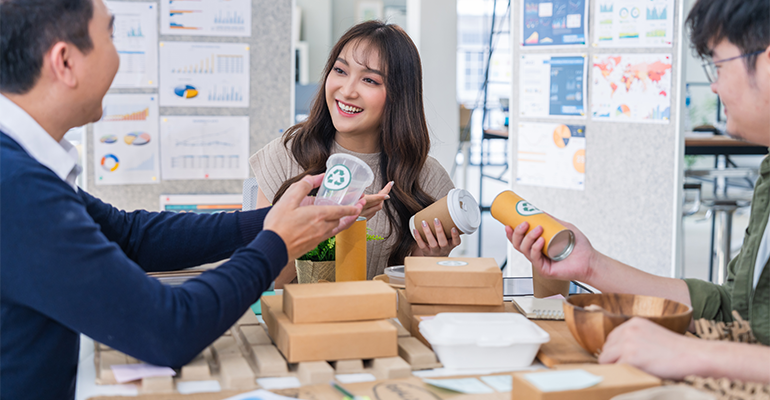
“Compostable and recyclable packaging options that use paper and moulded fibre are growing in demand, and manufacturers are capitalising on this trend by introducing innovative packaging formats using these materials,” said the platform’s consumer analyst Naveed Khan.
Mars Australia has long had a paper-based Squeeze-On Tomato Sauce pack under its MasterFoods brand, with a reported 58% less plastic than the traditional pack. Mondelēz International has also moved to paper-based packaging for its multipacks of confectionery, biscuits, and chocolates. And Nestlé has boasted of 90% reductions in single-use plastic following new fibre-based packaging formats.
Those with a heavy presence in confectionery and convenience in particular have been chasing innovation in paper packaging, with flexible plastic wrappers notoriously difficult to recycle. Incorporating recycled plastic into these wrappers is harder still, with very few innovations having passed food contact safety laws in Europe, for example.
Bel Group is the latest brand to the paper party, in January committing to a target of 100% responsibly sourced paper packaging for Babybel by 2027. Since late 2020, Babybel has used a bio-based, home-compostable cellophane, and the transition to paper has not been straightforward, said Bel director of RID Delphine Chatelin.
“[This] is a true technical and industrial challenge. It is not simply about replacing one material with another, it requires rethinking the entire protection system to ensure product quality and safety from production to consumption,” she explained.
Packaging companies have also been investing heavily in new fibre formats, working closely with manufacturers. Sappi, the paper, pulp and packaging manufacturer headquartered in South Africa, has just expanded its range of functional packaging papers with a set of heat-sealable options for brand owners who want fibre-based alternatives to plastic.
“Many companies face pressure from new regulations, including the EU Packaging and Packaging Waste Regulation (PPWR), growing customer expectations, and rising demand for recyclable packaging across global markets,” the company said in a statement. “At the same time, they need stable sealing results, strong mechanical strength, and materials that run well on existing equipment. Total cost of ownership also plays a role, as paper-based solutions must be competitive with plastic,” it added.
Price is a key concern. Closures of plastic recycling plants in the UK and Europe have created a crisis in recycling of plastic and availability of recycled plastic, for example. Conflict in the Middle East is also casting a shadow over packaging production as oil and energy prices spike, and supply chains are disrupted. This all comes as regulations to reduce single-use plastics, in particular, loom in many regions.
Sachets, wrappers and pouches are fastest-growing plastic packaging globally
The Ellen MacArthur Foundation, which leads the Global Plastics Commitment signed by a host of leading FMCG companies, last month (March) came out in support of paper packaging alternatives to flexible plastic packaging – albeit with caveats.
The think tank’s new report – endorsed by businesses including Mars, PepsiCo and Unilever, plus WWF, the NGO – noted that sachets, wrappers and pouches, are the fastest-growing type of plastic packaging worldwide, and in countries with low formal collection and recycling systems, they are a major source of pollution, making up 80% of the plastic packaging that ends up in oceans. This type of packaging also has “one of the lowest recycling rates”, the report noted.
“Paper-based alternatives have the advantage that they can be more easily designed to be both recyclable and biodegradable,” EMF said. “In markets [like India, Indonesia, Philippines, Thailand and Vietnam] where flexible packaging has a high likelihood of ending up in the environment, this would enable them to be recycled once collection and recycling systems are in place, while reducing persistent plastic pollution in the event they do leak into the environment.”
Paper isn’t automatically better than plastic, say environmentalists
EMF’s report highlights that paper-based solutions do not yet exist at the scale, cost or performance needed. However, the report’s authors also warned that without careful design and sourcing, paper packaging may offer “little or no benefit”.
Indeed, environmental campaigners have been cautious to promote paper packaging given links to deforestation – some have reported that switching from single-use plastic to paper is simply swapping one environmental disaster for another.
Ivy Schlegel, policy lead at Canopy, an NGO, said EMF’s report “reinforces a crucial point: paper isn’t automatically ‘better’. In many cases, paper-based packaging can introduce significant risks, like forest degradation, high water use, and underestimated emissions, and may not deliver meaningful improvement over the plastic if it isn’t responsibly designed and sourced,” she added.
Food companies should prioritise ‘next-gen’ non-wood fibres
Schlegel advised food companies to prioritise recycled and ‘next-gen’ non-wood fibres and to “design for recyclability and safer chemistry”, as well as account for sourcing impacts in scope 3 emissions accounting.
Khan at GlobalData said the growing paperisation trend would present significant opportunities for manufacturers to innovate, enhance their brand image, and expand their market presence.
“Manufacturers need to invest more in sustainable packaging materials and formats and introduce innovative packaging options to compete in the evolving packaging landscape,” he added.

Get more of our news on Google
Set Ingredients Network as a 'Preferred Source' to get quicker access to the news you value.
Related news

Do the US dietary guidelines put UPFs under pressure?
10 Sep 2026
Will the US dietary guidelines change the way Americans eat, swapping ultra-processed foods for whole foods? We asked Dr Barry Popkin, renowned nutrition and obesity researcher.
Read more
Health and wellness engagement matures across Middle East and Africa
4 Sep 2026
Many consumers in the Middle East and Africa are now proactively engaged in health and wellness, looking to integrate better habits and products into their daily lives, say experts.
Read more
Skimpflation: An ‘unfair’ and risky approach to keeping prices low
2 Sep 2026
Consumers see skimpflation – reducing the quality of ingredients due to rising costs – as more unfair than shrinkflation, making it a risky strategy according to recent research.
Read more
‘Urgent gaps’ in achieving 2030 food system goals
27 Aug 2026
Global food systems are failing to meet 2030 targets across indicators including health, environment, and resilience, according to a report co-authored by the Food and Agriculture Organisation (FAO).
Read more
Seven-Eleven uses microbial testing tech to extend katsudon shelf life
26 Aug 2026
Japanese retail company Seven-Eleven has improved its factory’s microbial environment to keep comfort-food staple, katsudon, fresher for longer.
Read more
Chimac’s fusion sauces bring Korean flavours to Europe
25 Aug 2026
Irish sauce brand Chimac is tapping into Korea’s culinary traditions, bringing its flavours and products to European consumers who want a taste of K-food.
Read more
Global demand for instant noodles continues to rise
24 Aug 2026
Global demand for instant noodles reached 124.21 billion servings last year, representing a 0.7% year-on-year increase – or 900 million extra servings.
Read more
Popular barbecue staples experience sharp price increases
19 Aug 2026
The typical cost of US shoppers’ barbecue baskets has risen by 12% over the past year – the fastest annual rise in a decade, figures from The Economist show.
Read more
Hot NPD: Nissin launches first cold-water Cup Noodles
18 Aug 2026
Nissin is taking one of Japan’s most iconic instant meals in a completely new direction with the launch of the first cold water-only Cup Noodles in the brand’s 55-year history.
Read more
Manam Chocolate aims to bring premium Indian cacao to 'the world stage'
11 Aug 2026
Craft chocolate brand Manam Chocolate is investing in local expansion and supply chain innovation throughout India as it works to build out the premium reputation of its locally produced cacao products.
Read more