
Ingredients Categories
Finished Products
Finished Food Categories
- Bakery
- Beverages / Juices
- Cereal and grain products
- Confectionery
- Cooking Fats & Oils
- Dairy
- Egg products
- Fruits & Vegetables
- Infant & Baby food
- Meat, Poultry & Fish
- Nuts & Seeds products
- Other Finished Food Categories
- Pet Food
- Plant-based foods
- Prepared foods
- Sauces & Seasonings
- Sweet & Savoury Spreads
Specialised Finished Products
- Bee products
- Biotic products
- Dietary supplements
- Energy drinks
- Functional beverages
- Functional confectionery
- Functional food
- Functional powders
- Meal replacement products
- Nutricosmetics
- Other Specialised Finished Products
- Pet Dietary Supplements
- Pharma and OTC products
- Protein products
- Sugar replacers / Sweeteners
Health & Wellness Areas
Delivery Formats
Operations & Services
- 3D printing
- Analysis/ Testing
- Auditing & certifications
- Blending & mixing
- Bottling
- Certification
- Clinical trials
- Co-packing
- Coating
- Consulting
- Contract manufacturing
- Drying
- Electrospinning
- Encapsulating
- Enzymatic processing
- Extracting
- Extrusion
- Fat structuring
- Fermentation
- Filling
- Flavour development
- Freeze drying
- Granulating/ grinding/ milling / mixing
- High-pressure processing
- Labelling
- Other Operations & Services
- Packaging
- Packet filling
- Pasturising
- Quality assurance
- Saccharification
- Shear cell processing
- Spray drying
- Sterilisation
- Storage & Logistics
- Tabletting
- Toasting / roasting
- Ultra-high temperature processing
News
Which technologies can reduce damage and losses in the supply chain?
Natasha Spencer-Jolliffe, Freelance Journalist 11 May 2026Goods are often damaged throughout the supply chain but novel technologies – such as hyperspectral imaging, automated reject systems, and smart indicators – are reducing losses.
According to the Food and Agriculture Organisation (FAO), around 14% of the world’s food is lost after harvesting and before it reaches the retail environment, reducing what can be salvaged and sold. Unit loads that arrive with damage often result in loss, as they need to be replaced.
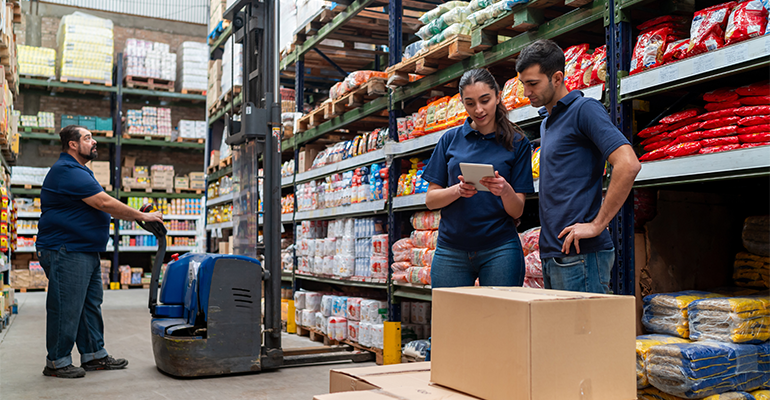
“It is highly commonplace and considered an unavoidable part of the supply chain for manufacturers to receive damaged goods,” Myriam Ertz, Canada research chair and professor of marketing and director of LaboNFC, at Université du Québec, told Ingredients Network.
Food loss during the transportation, storage and processing stages of the value chain has a greater environmental impact and disrupts a sustainable supply chain management model. The European Food Information Council (EUFIC) states that the later along the supply chain food is lost, the higher its carbon footprint. Once food reaches this stage, more energy, water and resources have been invested in production.
The industry dilemma
New technologies can help the global food system reduce damaged goods and the environmental impact of food loss.
Often, it is only a small part of deliveries that are damaged. A single bag on a pallet may be punctured and spill product, or a pallet of packaging may have been bumped, causing damage to items on one side.
“Very often, 90-plus per cent of the delivery is OK, so it is not worth following up,” said Mathew Simpson, sales manager UK & Ireland of CSB-System.
A lack of standardised loading and handling procedures, poor handling, or poor carrier selection and management can cause damage during transit.
Manufacturers therefore often need to weigh up the risks of trying to use compromised goods. “Generally, damaged goods which are a part of a bigger consignment would simply be discarded because it's not worth the time, effort or risk of trying to reuse them,” Simpson added.
Damage risks exist throughout the value chain
Various factors across the supply chain can cause damage to goods, alongside handling practices. Climate and weather events, such as extreme temperatures, natural disasters, or harsh winters, can lead to food loss.
As the number of touchpoints increases throughout the supply chain, so too does the risk of damage. E-commerce, for example, requires several additional touchpoints and carries a higher risk of damage than traditional retail.
“Having many links in a supply chain, with re-packaging or cross-docking operations (where pallets come off one vehicle and go onto another) would increase the incidence of physical damage from stacker trucks and the risk of exposure to weather damage and dust,” Simpson said.
Improper packaging means goods cannot withstand the shifts and bounces that typically occur during transportation. A lack of effective customer packaging design and sustainable options, such as eco-friendly materials that maintain protection levels may result in substandard products.
A lack protective materials such as foam, air pillows, corrugated inserts, or stretch wrap, and a lack of package testing, including International Safe Transit Association (ISTA) and Advancing Standards Transforming Markets (ASTM) protocols can also cause manufacturers and retailers to lose a percentage of their delivery.
Items can be stored incorrectly for their contents or shipped in extreme heat or cold, causing damage. Some items like perishable goods need to be kept in temperature-controlled storage spaces, and others like fruit and vegetables, must be stored in a cold environment to stay fresh.
How advancing technologies reduce food loss
Smart inspection and detection technologies provide solutions to reduce food loss caused by damaged goods. Artificial intelligence (AI)-powered X-ray and vision systems analyse products in real time to identify contaminants, including metal, glass and stone.
“Hyperspectral imaging detects microscopic contaminants and analyses food composition to ensure safety while preventing the disposal of safe, but visually imperfect products,” said Ertz. Automated reject systems remove defective items from the production line without stopping the entire line. Smart indicators utilise sensors or indicators, such as colorimetric reactions, that change colour when products are no longer fresh.
AI-driven process optimisation enables predictive F&B maintenance. “AI monitors equipment in real-time to predict failures before they happen, preventing massive batch losses caused by machinery breakdowns,” said Ertz. Dynamic inventory management, in contrast, uses Internet of Things (IoT) devices and AI to track inventory levels, predict when products are at risk of spoiling, and suggest real-time discounts or redistribution.
“Ingredient accuracy, in turn, involves checkweighers and fill-level scanners that provide instant feedback to filling machines, preventing overfilling and reducing waste in liquid and prepared meal production,” Ertz added.
Implementing an Integrated Quality Management System (IQMS) into manufacturing operations can ensure product consistency. Operations personnel receive an alert to check deliveries for damage or substandard produce. If identified, they can then either reject the delivery or log the damage in the system. Adopting this process gives manufacturers better control over damaged goods, enabling them to monitor supplier performance and order items less frequently.

Get more of our news on Google
Set Ingredients Network as a 'Preferred Source' to get quicker access to the news you value.
Related news

Do the US dietary guidelines put UPFs under pressure?
10 Sep 2026
Will the US dietary guidelines change the way Americans eat, swapping ultra-processed foods for whole foods? We asked Dr Barry Popkin, renowned nutrition and obesity researcher.
Read more
Health and wellness engagement matures across Middle East and Africa
4 Sep 2026
Many consumers in the Middle East and Africa are now proactively engaged in health and wellness, looking to integrate better habits and products into their daily lives, say experts.
Read more
Skimpflation: An ‘unfair’ and risky approach to keeping prices low
2 Sep 2026
Consumers see skimpflation – reducing the quality of ingredients due to rising costs – as more unfair than shrinkflation, making it a risky strategy according to recent research.
Read more
‘Urgent gaps’ in achieving 2030 food system goals
27 Aug 2026
Global food systems are failing to meet 2030 targets across indicators including health, environment, and resilience, according to a report co-authored by the Food and Agriculture Organisation (FAO).
Read more
Seven-Eleven uses microbial testing tech to extend katsudon shelf life
26 Aug 2026
Japanese retail company Seven-Eleven has improved its factory’s microbial environment to keep comfort-food staple, katsudon, fresher for longer.
Read more
Chimac’s fusion sauces bring Korean flavours to Europe
25 Aug 2026
Irish sauce brand Chimac is tapping into Korea’s culinary traditions, bringing its flavours and products to European consumers who want a taste of K-food.
Read more
Global demand for instant noodles continues to rise
24 Aug 2026
Global demand for instant noodles reached 124.21 billion servings last year, representing a 0.7% year-on-year increase – or 900 million extra servings.
Read more
Popular barbecue staples experience sharp price increases
19 Aug 2026
The typical cost of US shoppers’ barbecue baskets has risen by 12% over the past year – the fastest annual rise in a decade, figures from The Economist show.
Read more
Hot NPD: Nissin launches first cold-water Cup Noodles
18 Aug 2026
Nissin is taking one of Japan’s most iconic instant meals in a completely new direction with the launch of the first cold water-only Cup Noodles in the brand’s 55-year history.
Read more
Manam Chocolate aims to bring premium Indian cacao to 'the world stage'
11 Aug 2026
Craft chocolate brand Manam Chocolate is investing in local expansion and supply chain innovation throughout India as it works to build out the premium reputation of its locally produced cacao products.
Read more