
Ingredients Categories
Finished Products
Finished Food Categories
- Bakery
- Beverages / Juices
- Cereal and grain products
- Confectionery
- Cooking Fats & Oils
- Dairy
- Egg products
- Fruits & Vegetables
- Infant & Baby food
- Meat, Poultry & Fish
- Nuts & Seeds products
- Other Finished Food Categories
- Pet Food
- Plant-based foods
- Prepared foods
- Sauces & Seasonings
- Sweet & Savoury Spreads
Specialised Finished Products
- Bee products
- Biotic products
- Dietary supplements
- Energy drinks
- Functional beverages
- Functional confectionery
- Functional food
- Functional powders
- Meal replacement products
- Nutricosmetics
- Other Specialised Finished Products
- Pet Dietary Supplements
- Pharma and OTC products
- Protein products
- Sugar replacers / Sweeteners
Health & Wellness Areas
Delivery Formats
Operations & Services
- 3D printing
- Analysis/ Testing
- Auditing & certifications
- Blending & mixing
- Bottling
- Certification
- Clinical trials
- Co-packing
- Coating
- Consulting
- Contract manufacturing
- Drying
- Electrospinning
- Encapsulating
- Enzymatic processing
- Extracting
- Extrusion
- Fat structuring
- Fermentation
- Filling
- Flavour development
- Freeze drying
- Granulating/ grinding/ milling / mixing
- High-pressure processing
- Labelling
- Other Operations & Services
- Packaging
- Packet filling
- Pasturising
- Quality assurance
- Saccharification
- Shear cell processing
- Spray drying
- Sterilisation
- Storage & Logistics
- Tabletting
- Toasting / roasting
- Ultra-high temperature processing
News
Coca-Cola is spreading itself outside beverages to expand its market
Katja Knox, Editorial Account Manager 28 Feb 2022With 130 years of experience behind the brand Coca-Cola, it would be easy to imagine that the brand would be comfortably reliant on one of its 15 billion-dollar brands that make up the portfolio of one of the largest beverage companies in the world.
However, Coca-Cola has remained an innovative company throughout its history and is now looking to align itself more closely with cultural pillars — sports, gaming and music — by leaping into web3 applications, alternative reality experiences and modern enhanced ingredients.
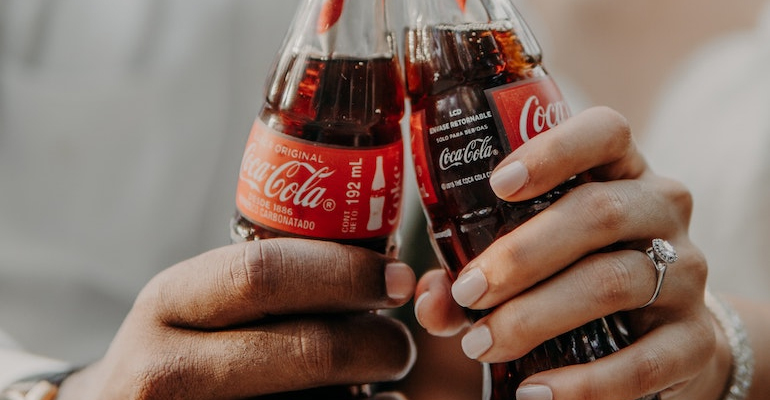
Coke’s new playbook for innovation coincides with its first global brand refresh in five years, called Real Magic. Not only is the typography of the company’s logo updated, but the established corporation is leaning into disparate segments of popular culture through the development of films featuring well-known gamers and the debut of its Coca-Cola Creations hub.
The Creations platform is the newest innovation station for Coke, and its first release is Starlight, a limited-edition flavour that focuses on embodying the idea of space travel through the use of a cooling sensation in the beverage. The beverage will be available for about six months in North America, Europe and key markets in Asia. By stepping into sensations rather than taste, Coca-Cola is breaking with its innovation tradition of emulating flavours such as cherry and vanilla.
But this is not the only way that the Atlanta-based company has shaken things up recently. Last year, the marketing arm of the company dabbled in NFTs (non-fungible tokens) when it auctioned a 'loot box' of four collectibles through the OpenSea online marketplace. The auction of its first one-of-a-kind digital tokens to exist in the metaverse fetched $575,883.61 (€515430.23), and the sale coincided with an event in Decentraland. However, despite an initial foray into the new digital frontier, Coca-Cola has not since reentered the space.
Killing off no-growth 'zombie' brands
As the beverage segment becomes increasingly segmented by brands offering hyper-specific functional benefits in their drinks, many legacy brands have fallen out of favour with consumers. Coca-Cola responded to the changing headwinds of consumer demand by jettisoning many of its 'zombie' brands such as Odwalla and Zico coconut water. It defines so-called 'zombie brands' as products that have not grown over a three-year period.
Meanwhile, it has been cultivating rising stars like Topo Chico. Topo Chico has been a star brand for the company, not only thanks to the growing popularity of sparkling water but also because the brand marked Coke’s first foray into the alcohol space. Last year, the company partnered with Molson Coors to lunch Topo Chico Hard Seltzer. While initially this partnership with Molson Coors was limited, the American beer brewer announced in September that it would roll the beverage out across the US in 2022.
Like many other major beverage companies, Coke is straddling the line between alcoholic and non-alcoholic beverages. And like many other companies, it has seen success in doing so. Earlier this year, it announced another partnership with the Corona brewer Constellation Brands to produce and distribute ready-to-drink cocktails based on the Fresca soda line. Moving into the alcohol space allows the company to expand the number of occasions at which consumers will reach for its products depending on their need or preference.
Streamlining the supply chain
Outside of innovation within its own portfolio, Coke is also using some of its funds to invest in its supply chain technology. Through its venture capital arm of Coca-Cola Amatil Indonesia, the beverage giant invested an undisclosed sum into Kargo Technologies, an Indonesian startup that digitizes the trucking supply chain.
It seems as if its strategy is paying off. In the fourth quarter of 2021, the company exceeded expectations, posting net sales figures that were up 10% year-on-year to $9.46 billion (€8.46 billion). According to the company, that means even as beverage trends continue to change, its offerings remain in-demand with over 1.9 billion servings of drinks from Coca-Cola’s portfolio are consumed daily across 200 countries.

Get more of our news on Google
Set Ingredients Network as a 'Preferred Source' to get quicker access to the news you value.
Related news

Do the US dietary guidelines put UPFs under pressure?
10 Sep 2026
Will the US dietary guidelines change the way Americans eat, swapping ultra-processed foods for whole foods? We asked Dr Barry Popkin, renowned nutrition and obesity researcher.
Read more
Food fraud costs UK economy £2bn each year
9 Sep 2026
Food fraud is costing the UK economy up to £2 billion (€2.3 billion) every year although the food sector is more “resilient” than others, according to a recent study.
Read more
Skimpflation: An ‘unfair’ and risky approach to keeping prices low
2 Sep 2026
Consumers see skimpflation – reducing the quality of ingredients due to rising costs – as more unfair than shrinkflation, making it a risky strategy according to recent research.
Read more
NielsenIQ’s EU barometer shows Britain leading in grocery inflation
31 Aug 2026
Britain was the only country to record grocery inflation above 2%, according to NielsenIQ data that compared Europe’s five biggest grocery markets from February to May 2026.
Read more
‘Urgent gaps’ in achieving 2030 food system goals
27 Aug 2026
Global food systems are failing to meet 2030 targets across indicators including health, environment, and resilience, according to a report co-authored by the Food and Agriculture Organisation (FAO).
Read more
China beverages: Is herbal innovation the future?
20 Aug 2026
Herbal and botanical innovation in China's drinks market continues to grow, with ingredients like astragalus root, ginger, and ginseng in the spotlight – and focus shifting far beyond refreshment.
Read more
Popular barbecue staples experience sharp price increases
19 Aug 2026
The typical cost of US shoppers’ barbecue baskets has risen by 12% over the past year – the fastest annual rise in a decade, figures from The Economist show.
Read more
Beyond 'nice to have': A spotlight on US functional beverages
12 Aug 2026
Functional beverage interest in the US is gaining important ground as consumers now expect function rather than see it as "nice to have", and there are clear market gaps for growth, according to Spate.
Read more
Manam Chocolate aims to bring premium Indian cacao to 'the world stage'
11 Aug 2026
Craft chocolate brand Manam Chocolate is investing in local expansion and supply chain innovation throughout India as it works to build out the premium reputation of its locally produced cacao products.
Read more
Digital twin technology gains ground in food manufacturing
6 Aug 2026
Food and beverage companies are increasingly turning to digital twins to optimise and automate manufacturing processes, but opportunities stretch far beyond this, say experts.
Read more