
Ingredients Categories
Finished Products
Finished Food Categories
- Bakery
- Beverages / Juices
- Cereal and grain products
- Confectionery
- Cooking Fats & Oils
- Dairy
- Egg products
- Fruits & Vegetables
- Infant & Baby food
- Meat, Poultry & Fish
- Nuts & Seeds products
- Other Finished Food Categories
- Pet Food
- Plant-based foods
- Prepared foods
- Sauces & Seasonings
- Sweet & Savoury Spreads
Specialised Finished Products
- Bee products
- Biotic products
- Dietary supplements
- Energy drinks
- Functional beverages
- Functional confectionery
- Functional food
- Functional powders
- Meal replacement products
- Nutricosmetics
- Other Specialised Finished Products
- Pet Dietary Supplements
- Pharma and OTC products
- Protein products
- Sugar replacers / Sweeteners
Health & Wellness Areas
Delivery Formats
Operations & Services
- 3D printing
- Analysis/ Testing
- Auditing & certifications
- Blending & mixing
- Bottling
- Certification
- Clinical trials
- Co-packing
- Coating
- Consulting
- Contract manufacturing
- Drying
- Electrospinning
- Encapsulating
- Enzymatic processing
- Extracting
- Extrusion
- Fat structuring
- Fermentation
- Filling
- Flavour development
- Freeze drying
- Granulating/ grinding/ milling / mixing
- High-pressure processing
- Labelling
- Other Operations & Services
- Packaging
- Packet filling
- Pasturising
- Quality assurance
- Saccharification
- Shear cell processing
- Spray drying
- Sterilisation
- Storage & Logistics
- Tabletting
- Toasting / roasting
- Ultra-high temperature processing
News
Cross-industry AI initiative hoped to slash food waste
David Burrows, Freelance Journalist 12 Jun 2025An artificial intelligence (AI) tool pilot involving Nestlé is hoped to reduce food waste and ensure surplus products find a home quickly.
The UK wastes 10.7 million tonnes (Mt) of food every year – 25% of all food purchased, government statistics show. Most food waste (60%) comes from households, followed by farms (15%), manufacturing (13%), hospitality and foodservice (10%), and retail (2%).
Efforts to reduce this waste – saving billions of pounds and millions of tonnes of greenhouse gas emissions – have faltered in recent years. Too few food businesses have started measuring, reporting, and acting on their food waste, according to Wrap, a charity that runs the UK food waste reduction roadmap.
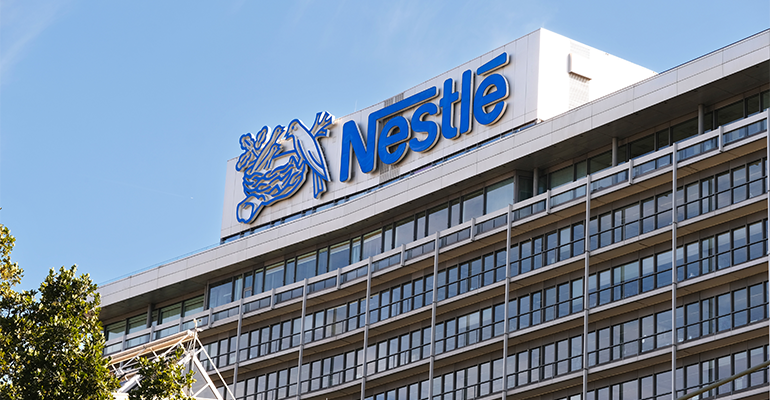
But can AI help accelerate progress? Absolutely, according to a new project involving Nestlé, the world’s largest food manufacturer, and the food redistribution charity FareShare.
The AI food redistribution pilot will use Zest’s (formerly The Wonki Collective) integrated AI-powered platform to connect food manufacturers, logistics providers, and charities in a bid to “streamline” and “accelerate” the process of matching available surplus food, including products and ingredients, to where there is demand.
Some 700 tonnes – the equivalent of 1.5 million meals – is expected to be redistributed, saving up to 1,400 tCO2e (tonnes of carbon dioxide equivalent) and £14 million. Earlier trials delivered an 87% reduction in edible food waste at a single Nestlé factory over a two-week period.
“This exciting cross-industry initiative builds on work we have undertaken over the last decade to tackle food waste and will enable us to further optimise surplus within our operations,” explained Emma Keller, head of sustainability at Nestlé UK and Ireland.
Over 8,000 charities and community groups across the UK already rely on food redistributed by FareShare.
“By unlocking new efficiencies in systems, we will be able to get more food to those groups and create greater social impact,” said the charity’s director of food, Simon Millard.
Surplus food supply must be streamlined
Once tested, the new tech-led solution could be applied at scale across the food supply chain, and offers commercial and charitable opportunities for the entire sector.
This pioneering project is “just the start, laying the foundation for future innovations that will drive circular economy models and advance sustainability efforts”, added Esra Kasapoglu, director of AI and data economy Innovate UK, which is part-funding the initiative.
Streamlining of the process is crucial if surplus food is to make it to charities and other businesses (which upcycle unwanted ingredients) in time.
Indeed, in March, a Feedback and Foodrise report detailed how UK supermarkets were dumping damaged, out-of-date, and nutritionally inadequate food to aid organisations.
“We need to stop kidding ourselves that food poverty can be solved by food waste and vice-versa, and start addressing the root causes of both to the benefit of people and planet,” said Foodrise deputy director Jessica Sinclair Taylor at the time.
Food industry support for food waste reports
Pressure is mounting on food businesses to clearly report their food waste tonnages. Laws to enforce mandatory reporting have been in limbo for years in the UK, with the government currently mulling over the idea following consultations.
In October, more than 30 food and drink businesses including Tesco, Danone, Prices, Quorn, Yoplait, and Nestlé publicly called on ministers to introduce mandatory reporting laws.
“At the heart of the delay is political will,” wrote Adam Isaacs, public affairs manager UK and Ireland at surplus food marketplace Too Good to Go, which coordinated the open letter.
Indeed, when the government consulted on the idea in 2022, two-thirds of large businesses backed it. Businesses that do report on food waste have cited various benefits, both environmental and economic from their work.
Nestlé is in the process of formalising how it quantifies food waste in its reporting, according to its 2025 non-financial
report. Total “biomass” wasted globally by the company is almost 1.2 Mt, up from just over 1 Mt in 2023.
“The increase in total weight of waste generated is mainly driven by the change in product portfolio mix,” the owner of KitKat, Nesquik, and Maggi explained.

Get more of our news on Google
Set Ingredients Network as a 'Preferred Source' to get quicker access to the news you value.
Related news

Food fraud costs UK economy £2bn each year
9 Sep 2026
Food fraud is costing the UK economy up to £2 billion (€2.3 billion) every year although the food sector is more “resilient” than others, according to a recent study.
Read more
EU's ban on Brazilian meat expected to raise prices
7 Sep 2026
Around 25% of the EU’s imported chicken and beef comes from Brazil. From September, products that fail to meet the EU antimicrobial resistance rules will be banned.
Read more
Kellogg accelerates work to remove artificial colours from all US cereals
3 Sep 2026
WK Kellogg has announced an accelerated timeline to eliminate all artificial colours and the chemical preservative, BHT, across its full US portfolio of cereals and cereal packaging.
Read more
‘Urgent gaps’ in achieving 2030 food system goals
27 Aug 2026
Global food systems are failing to meet 2030 targets across indicators including health, environment, and resilience, according to a report co-authored by the Food and Agriculture Organisation (FAO).
Read more
Seven-Eleven uses microbial testing tech to extend katsudon shelf life
26 Aug 2026
Japanese retail company Seven-Eleven has improved its factory’s microbial environment to keep comfort-food staple, katsudon, fresher for longer.
Read more
Global demand for instant noodles continues to rise
24 Aug 2026
Global demand for instant noodles reached 124.21 billion servings last year, representing a 0.7% year-on-year increase – or 900 million extra servings.
Read more
Critics slam ‘chaotic’ response to cyclosporiasis outbreak after first deaths reported
7 Aug 2026
Questions have been raised over the “chaotic” response to the cyclosporiasis outbreak in the US after two deaths were reported.
Read more
Digital twin technology gains ground in food manufacturing
6 Aug 2026
Food and beverage companies are increasingly turning to digital twins to optimise and automate manufacturing processes, but opportunities stretch far beyond this, say experts.
Read more
Codex sets global thresholds for ‘may contain’ labels
3 Aug 2026
Codex Alimentarius has adopted its first global guidance on when to use “may contain” allergen warnings, setting thresholds intended to stop the label being used as blanket legal cover.
Read more
EU sets maximum MOAH levels to protect human health
28 Jul 2026
The EU will adopt maximum levels for mineral oil aromatic hydrocarbons (MOAH) in food to protect human health. What do manufacturers need to know?
Read more