
Ingredients Categories
Finished Products
Finished Food Categories
- Bakery
- Beverages / Juices
- Cereal and grain products
- Confectionery
- Cooking Fats & Oils
- Dairy
- Egg products
- Fruits & Vegetables
- Infant & Baby food
- Meat, Poultry & Fish
- Nuts & Seeds products
- Other Finished Food Categories
- Pet Food
- Plant-based foods
- Prepared foods
- Sauces & Seasonings
- Sweet & Savoury Spreads
Specialised Finished Products
- Bee products
- Biotic products
- Dietary supplements
- Energy drinks
- Functional beverages
- Functional confectionery
- Functional food
- Functional powders
- Meal replacement products
- Nutricosmetics
- Other Specialised Finished Products
- Pet Dietary Supplements
- Pharma and OTC products
- Protein products
- Sugar replacers / Sweeteners
Health & Wellness Areas
Delivery Formats
Operations & Services
- 3D printing
- Analysis/ Testing
- Auditing & certifications
- Blending & mixing
- Bottling
- Certification
- Clinical trials
- Co-packing
- Coating
- Consulting
- Contract manufacturing
- Drying
- Electrospinning
- Encapsulating
- Enzymatic processing
- Extracting
- Extrusion
- Fat structuring
- Fermentation
- Filling
- Flavour development
- Freeze drying
- Granulating/ grinding/ milling / mixing
- High-pressure processing
- Labelling
- Other Operations & Services
- Packaging
- Packet filling
- Pasturising
- Quality assurance
- Saccharification
- Shear cell processing
- Spray drying
- Sterilisation
- Storage & Logistics
- Tabletting
- Toasting / roasting
- Ultra-high temperature processing
News
Ingredient transparency key to success in European natural health market
Rik Moors 12 Dec 2025Europe’s $40.7 billion supplements market is growing fast, fuelled by demand for products that support healthy ageing, mental wellbeing, and preventive health, say experts.
For exporters of natural ingredients, success depends on aligning with European buyers’ evolving expectations on efficacy, regulation, and sustainability.

These were the key takeaways from a December webinar, entitled “Aligning ingredients with innovation: How European market trends shape product development in natural health”, aimed at helping exporters and business support organisations navigate the European market.
The session, held by CBI – a Dutch government agency that supports sustainable economic growth in low- and middle-income countries by helping their small and medium businesses export to Europe – explored how suppliers can position natural health ingredients to meet the needs of manufacturers and retailers. It covered topics such as product development cycles, scientific validation, and sourcing requirements.
With over half of European consumers using supplements to maintain general health, demand for botanicals and functional ingredients continues to rise. The $40.7 billion European food supplements market is projected to grow by 7% annually to 2030, while the herbal supplements segment, valued at $7.5 billion last year, is expanding at 5.2% a year.
But alongside this growth, European buyers are placing more emphasis on targeted health benefits, robust safety data, and long-term sourcing security, according to CBI.
Healthy ageing, stress, and gut health drive development
Product development in the sector is increasingly shaped by Europe’s ageing population and shifting consumer priorities.
Healthy ageing has become a dominant platform for innovation, spanning mobility, cognitive function, and metabolic health. This overlaps with demand for stress relief, mood support and gut health, particularly among younger demographics seeking daily wellness tools.
Botanicals remain at the centre of these formulations, but buyers now expect more than a general wellness positioning.
“We see a strong focus on ingredients that offer targeted effects and are backed by data,” said Jolanda van Hal, senior journalist at Nutrition Insight.
She noted a growing use of standardised extracts and blended formulations that include minerals or probiotics to enable health claims under EU regulation.
Formats evolve – and so do technical demands
European consumers are embracing new delivery formats, particularly gummies, infusions and functional beverages.
These formats support convenience and consumer appeal but introduce new technical challenges. Ingredients must remain stable under heat, processing and storage conditions, while also maintaining bioavailability.
“An ingredient used in a gummy must deliver the same benefits as it would in a capsule, and that means it has to withstand manufacturing conditions and still be effective,” said van Hal.
Ingredient suppliers must demonstrate compatibility with the chosen format, especially when used for targeted health outcomes.
Regulatory pressure heightens scrutiny of botanicals
Regulatory expectations for natural ingredients have intensified in recent years. The EU has prioritised consumer safety, launching studies to assess potential toxicity risks in well-known botanicals such as turmeric, cinnamon, and St John’s wort.
These assessments are part of a broader move to protect consumers from misleading claims and adulterated products.
Gustavo Ferro, international trade consultant and author of CBI’s natural ingredient market studies, said that even longstanding ingredients are now subject to higher compliance burdens.
“It’s not easy to introduce new ingredients to the market,” he said. “Consumer safety is the top priority, and the documentation requirements are growing.”
Ferro emphasised that suppliers need to provide clear evidence of safety, efficacy, and sustainability if they want to access or expand in the European market. This includes full traceability of sourcing and robust technical data packages.
Scientific substantiation and supply chain security
Scientific validation is now a key differentiator. Buyers increasingly expect clinical or preclinical data demonstrating how an ingredient works and what benefits it delivers.
“We often see companies partnering with universities or research centres to generate the kind of data needed to support specific claims,” said van Hal.
This is especially important when targeting benefits such as cognitive health, stress management, or energy.
Alongside science, security of supply remains a major consideration. Van Hal pointed out that ingredients with uncertain sourcing or harvesting limitations, such as rhodiola, present a risk to manufacturers, who must be confident in long-term availability before investing in product development.
Sustainability is integral to this equation. Certification may be essential for certain ingredients: for example, there is little market in Europe for non-organic moringa or baobab.
Buyers also assess wild-harvested species against sustainability standards, and expect transparent documentation of sourcing practices.
Innovation and relevance in emerging markets
Emerging market suppliers play a growing role in meeting European demand.
In 2023, Europe imported 87,000 tonnes of botanical extracts and 219,000 tonnes of medicinal and aromatic plants, with a significant share coming from developing countries.
Imports of botanical extracts grew at 6.4% annually between 2019 and 2023, while the proportion sourced from emerging markets increased from 31% to 40% of import value.
Colombian company Bioingred Tech is an example of how suppliers can respond to these demands. CEO Luis Carlos Carrillo Hormaza explained how the company combines local biodiversity with transformation technologies such as nanotech and green chemistry.
Its ingredients, used for stress support, immunity, and healthy ageing, are formulated to be heat-stable, shelf-stable, and functionally enhanced.
“We design ingredients to meet the requirements of European customers: functionality, documentation, and commercial viability,” said Hormaza. He added that innovation alone is not enough – strategic partnerships and regulatory readiness are also crucial to market entry.
Private label is one of the most dynamic categories for food supplements in Europe, and a key channel for botanicals.
Ferro said this creates space for suppliers who can offer tailored, reliable, and well-supported ingredients. But with competition intensifying, especially from biotech and synthetic alternatives, natural ingredient exporters must be able to demonstrate value on multiple fronts: health impact, safety, sustainability, and scalability.

Get more of our news on Google
Set Ingredients Network as a 'Preferred Source' to get quicker access to the news you value.
Related news

M&S launches own-brand pet food range
11 Sep 2026
UK retailer Marks & Spencer has launched its own-brand pet food line Paws & Pals – a well-timed and strategic move that will appeal to loyal shoppers, says a marketing expert.
Read more
Do the US dietary guidelines put UPFs under pressure?
10 Sep 2026
Will the US dietary guidelines change the way Americans eat, swapping ultra-processed foods for whole foods? We asked Dr Barry Popkin, renowned nutrition and obesity researcher.
Read more
Food fraud costs UK economy £2bn each year
9 Sep 2026
Food fraud is costing the UK economy up to £2 billion (€2.3 billion) every year although the food sector is more “resilient” than others, according to a recent study.
Read more
Kellogg accelerates work to remove artificial colours from all US cereals
3 Sep 2026
WK Kellogg has announced an accelerated timeline to eliminate all artificial colours and the chemical preservative, BHT, across its full US portfolio of cereals and cereal packaging.
Read more
‘Urgent gaps’ in achieving 2030 food system goals
27 Aug 2026
Global food systems are failing to meet 2030 targets across indicators including health, environment, and resilience, according to a report co-authored by the Food and Agriculture Organisation (FAO).
Read more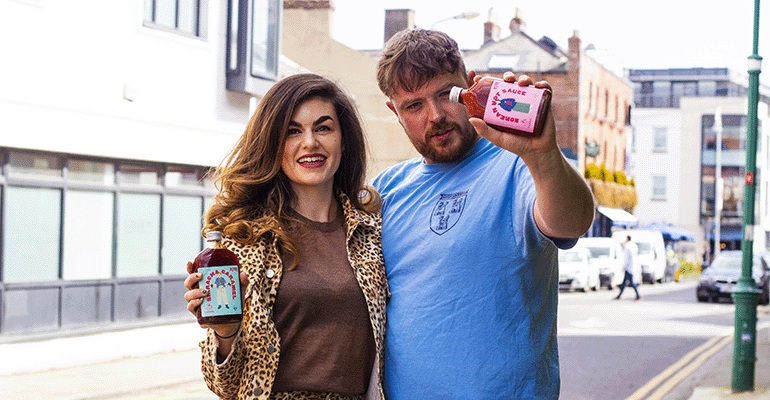
Chimac’s fusion sauces bring Korean flavours to Europe
25 Aug 2026
Irish sauce brand Chimac is tapping into Korea’s culinary traditions, bringing its flavours and products to European consumers who want a taste of K-food.
Read more
Savoury protein snacks shake up the on-the-go market
10 Aug 2026
Sweet flavours have dominated the high-protein snack category but savoury snacks, such as cheese bars and meat sticks, can appeal to health-conscious consumers.
Read more
Nestlé invests in regeneratively farmed wheat for KitKat
5 Aug 2026
Nestlé will pay a premium for Wildfarmed’s regeneratively farmed wheat but the CPG remains reticent to promote the move on packs of its KitKat bars.
Read more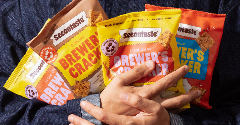
How Secon Taste is putting upcycled snacks on shelves
4 Aug 2026
Hungarian zero-waste startup Secon Taste is turning surplus food into upcycled snacks such as fibre-packed granola, instant porridge, and a circular coffee-tasting box.
Read more
Codex sets global thresholds for ‘may contain’ labels
3 Aug 2026
Codex Alimentarius has adopted its first global guidance on when to use “may contain” allergen warnings, setting thresholds intended to stop the label being used as blanket legal cover.
Read more