
Ingredients Categories
Finished Products
Finished Food Categories
- Bakery
- Beverages / Juices
- Cereal and grain products
- Confectionery
- Cooking Fats & Oils
- Dairy
- Egg products
- Fruits & Vegetables
- Infant & Baby food
- Meat, Poultry & Fish
- Nuts & Seeds products
- Other Finished Food Categories
- Pet Food
- Plant-based foods
- Prepared foods
- Sauces & Seasonings
- Sweet & Savoury Spreads
Specialised Finished Products
- Bee products
- Biotic products
- Dietary supplements
- Energy drinks
- Functional beverages
- Functional confectionery
- Functional food
- Functional powders
- Meal replacement products
- Nutricosmetics
- Other Specialised Finished Products
- Pet Dietary Supplements
- Pharma and OTC products
- Protein products
- Sugar replacers / Sweeteners
Health & Wellness Areas
Delivery Formats
Operations & Services
- 3D printing
- Analysis/ Testing
- Auditing & certifications
- Blending & mixing
- Bottling
- Certification
- Clinical trials
- Co-packing
- Coating
- Consulting
- Contract manufacturing
- Drying
- Electrospinning
- Encapsulating
- Enzymatic processing
- Extracting
- Extrusion
- Fat structuring
- Fermentation
- Filling
- Flavour development
- Freeze drying
- Granulating/ grinding/ milling / mixing
- High-pressure processing
- Labelling
- Other Operations & Services
- Packaging
- Packet filling
- Pasturising
- Quality assurance
- Saccharification
- Shear cell processing
- Spray drying
- Sterilisation
- Storage & Logistics
- Tabletting
- Toasting / roasting
- Ultra-high temperature processing
News
EU pushes ahead on ‘more innovative plant breeding’
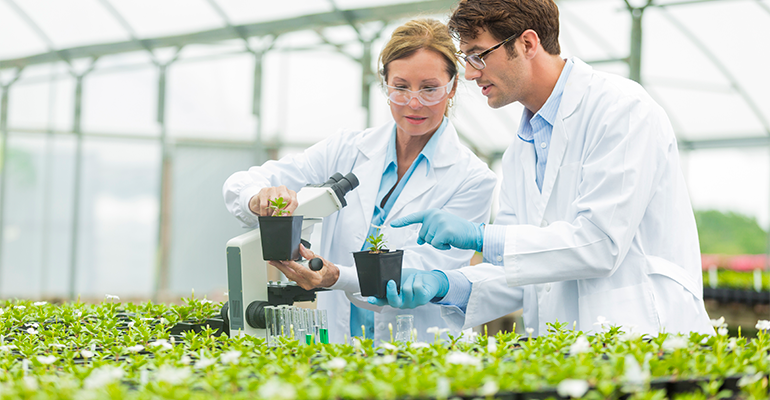
Kacey Culliney, Freelance Journalist 2 Feb 2026The European Union will soon adopt a regulation on new genomic techniques for plants to drive innovation and sustainability – but consumer groups have raised concerns.
The regulation is part of a wider push from the EU to future-proof agri-food.
‘Milestone’ political agreement
In December 2025, the European Commission (EC) welcomed a provisional political agreement on new EU rules for plants obtained using new genomic techniques – set to be formally adopted this year by the European Council and Parliament and implemented in 2028. According to the Commission, the agreed regulatory measures will enable “more innovative plant breeding in the EU” which should help farmers grow more sustainable and resilient plants, remain competitive on the international playing field, and ensure high safety standards for consumers.
Olivér Várhelyi, European commissioner for health and animal welfare, described the agreement as a “milestone” for agricultural innovation, saying the new rules would enable plant breeders, farmers and food companies to compete globally and tackle growing challenges like plant pests and diseases.
Speaking to Ingredients Network, Eva Hrncirova, spokesperson for the European Commission, said the EU needs innovation that responds to the pressing challenges of breeders and farmers in food production. “Farmers in particular have made their voices heard, and they want their activities to remain economically viable and globally competitive,” Hrncirova said. “...New genomic techniques are innovative tools that help increase the resilience and competitiveness of our agriculture and food system.”
New genomic techniques: What are the different categories?
New genomic techniques are more targeted and precise versus conventional breeding techniques, meaning plant producers can develop very specific varieties, such as climate resilience, pest resistance, and even higher yielding.
For food manufacturers, Hrncirova said these techniques help deliver products with improvements around quality, appearance, taste and nutrition, whilst promoting circular use and reducing waste. Certain agronomic traits, such as resistance to pests, can also be of interest to food manufacturers looking to reduce use of pesticides.
“The Commission would invite the food industry to take advantage of the opportunities offered by these techniques to bring benefits to consumers, and to work with breeders and farmers to steer developments to improved plant varieties that can deliver positive social, environmental and economic impact.”
Under the upcoming regulation, new genomic technique (NGT) plants will be categorised into two groups: Category 1 NGT plants and Category 2 NGT plants. The first category covers NGT plants that could also occur naturally or by conventional breeding techniques. Following a verification process to ensure they align with set criteria, Category 1 NGT plants will be treated like conventional plants and exempted from the requirements of the genetically modified organisms (GMO) legislation.
In contrast, the second category of NGT plants will follow requirements of current GMO legislation and be subject to a risk assessment and authorisation procedure before being placed on the market. Category 2 GMT plants must be traceable and labelled as GMOs. Organic and GM-free categories will be able to exclude all NGT plants, relying on the requirement that seeds are labelled–across both categories.
The European Commission said it will oversee transparency and licencing practices related to patents and provide guidance where needed. The implementation of the new regulation will also be supported by a “robust monitoring programme of economic, environmental and social impacts of NGT products”, according to Hrncirova.
Risk concerns? The consumer perspective
The Federation of German Consumer Organisations, VZBV, has raised concerns around the upcoming regulation.
Jutta Jaksche, food officer at VZBV, said the European Commission is “watering down” the risk assessment for these products.
“The Federal Agency for Nature Conservation (BfN) makes it clear that the legally binding precautionary principle of the EU must not be undermined and that NGT plants must therefore be regulated based on their risk. In a study, it analysed the criteria according to which a proposed EU regulation wants to exempt certain plants modified with new genetic engineering techniques (NGT) from genetic engineering law. It concludes that these criteria are not scientificially tenable and that their application can lead to considerable risks,” Jaksche said. “...This lack of transparency and safety is not acceptable from a consumer perspective.”
The majority of German consumers want to see strict criteria and clear labels–maintained along the entire value chain–for genetically modified products, she said. “Labelling and traceability are the prerequisite for freedom of choice and consumer protection. The regulation on new genetic engineering goes against the interests of a large majority of consumers; ignoring consumer interests leads to resentment and a loss of trust.”
Hrncirova said the regulation includes provisions to monitor the social impacts of NGT plants and products, including “aspects related to consumer information and perception”, with findings feeding into final implementation. As it stands, she said consumers wishing to avoid NGT plants can rely on the organic label or any other labels relating to GM-free supply chains.
The future of EU agri-food
The push to regulate NGT plants forms part of the European Commission's wider efforts to future-proof the EU's agri-food sector.
In 2023, the Commission launched a five-year support system for farmers under its common agricultural policy (CAP), representing €300 billion in funding. A year later, it launched a strategic dialogue forum on the future of EU agriculture, bringing together 29 major stakeholders from the European agri-food sectors, civil society, rural communities and academia to discuss the challenges and opportunities ahead. The final report A Shared Prospect for Farming and Food in Europe was published in September 2024 and built on further in February 2025 via a Vision for Agriculture and Food roadmap for agri-food policy until 2040.
This year, the European Commission unveiled a new campaign backed by a record EU fund of €205 million to drive promotion activities for sustainable and high-quality EU agri-food products, within the European Union and globally. This marks the highest allocation ever dedicated to enhancing consumer awareness of European agricultural products and quality schemes.

Get more of our news on Google
Set Ingredients Network as a 'Preferred Source' to get quicker access to the news you value.
Related news

M&S launches own-brand pet food range
11 Sep 2026
UK retailer Marks & Spencer has launched its own-brand pet food line Paws & Pals – a well-timed and strategic move that will appeal to loyal shoppers, says a marketing expert.
Read more
Do the US dietary guidelines put UPFs under pressure?
10 Sep 2026
Will the US dietary guidelines change the way Americans eat, swapping ultra-processed foods for whole foods? We asked Dr Barry Popkin, renowned nutrition and obesity researcher.
Read more
Food fraud costs UK economy £2bn each year
9 Sep 2026
Food fraud is costing the UK economy up to £2 billion (€2.3 billion) every year although the food sector is more “resilient” than others, according to a recent study.
Read more
Kellogg accelerates work to remove artificial colours from all US cereals
3 Sep 2026
WK Kellogg has announced an accelerated timeline to eliminate all artificial colours and the chemical preservative, BHT, across its full US portfolio of cereals and cereal packaging.
Read more
‘Urgent gaps’ in achieving 2030 food system goals
27 Aug 2026
Global food systems are failing to meet 2030 targets across indicators including health, environment, and resilience, according to a report co-authored by the Food and Agriculture Organisation (FAO).
Read more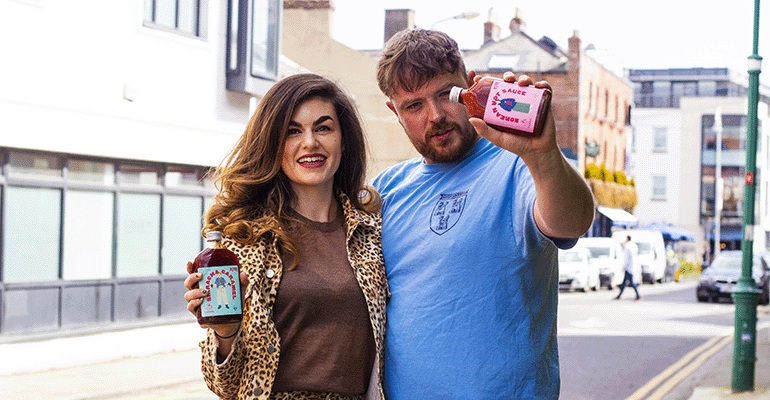
Chimac’s fusion sauces bring Korean flavours to Europe
25 Aug 2026
Irish sauce brand Chimac is tapping into Korea’s culinary traditions, bringing its flavours and products to European consumers who want a taste of K-food.
Read more
Savoury protein snacks shake up the on-the-go market
10 Aug 2026
Sweet flavours have dominated the high-protein snack category but savoury snacks, such as cheese bars and meat sticks, can appeal to health-conscious consumers.
Read more
Nestlé invests in regeneratively farmed wheat for KitKat
5 Aug 2026
Nestlé will pay a premium for Wildfarmed’s regeneratively farmed wheat but the CPG remains reticent to promote the move on packs of its KitKat bars.
Read more
How Secon Taste is putting upcycled snacks on shelves
4 Aug 2026
Hungarian zero-waste startup Secon Taste is turning surplus food into upcycled snacks such as fibre-packed granola, instant porridge, and a circular coffee-tasting box.
Read more
Codex sets global thresholds for ‘may contain’ labels
3 Aug 2026
Codex Alimentarius has adopted its first global guidance on when to use “may contain” allergen warnings, setting thresholds intended to stop the label being used as blanket legal cover.
Read more