
Ingredients Categories
Finished Products
Finished Food Categories
- Bakery
- Beverages / Juices
- Cereal and grain products
- Confectionery
- Cooking Fats & Oils
- Dairy
- Egg products
- Fruits & Vegetables
- Infant & Baby food
- Meat, Poultry & Fish
- Nuts & Seeds products
- Other Finished Food Categories
- Pet Food
- Plant-based foods
- Prepared foods
- Sauces & Seasonings
- Sweet & Savoury Spreads
Specialised Finished Products
- Bee products
- Biotic products
- Dietary supplements
- Energy drinks
- Functional beverages
- Functional confectionery
- Functional food
- Functional powders
- Meal replacement products
- Nutricosmetics
- Other Specialised Finished Products
- Pet Dietary Supplements
- Pharma and OTC products
- Protein products
- Sugar replacers / Sweeteners
Health & Wellness Areas
Delivery Formats
Operations & Services
- 3D printing
- Analysis/ Testing
- Auditing & certifications
- Blending & mixing
- Bottling
- Certification
- Clinical trials
- Co-packing
- Coating
- Consulting
- Contract manufacturing
- Drying
- Electrospinning
- Encapsulating
- Enzymatic processing
- Extracting
- Extrusion
- Fat structuring
- Fermentation
- Filling
- Flavour development
- Freeze drying
- Granulating/ grinding/ milling / mixing
- High-pressure processing
- Labelling
- Other Operations & Services
- Packaging
- Packet filling
- Pasturising
- Quality assurance
- Saccharification
- Shear cell processing
- Spray drying
- Sterilisation
- Storage & Logistics
- Tabletting
- Toasting / roasting
- Ultra-high temperature processing
News
Diageo unveils plans for €200 million carbon-neutral brewery in Ireland
1 Aug 2022
Diageo has unveiled plans for a €200 million carbon-neutral lager and ales brewery in Ireland – the country’s first.
The 2 million hectolitre-capacity facility – set to be built on a greenfield site in Littleconnel, County Kildare – will brew brands such as Rockshore, Harp, Hop House 13, Smithwick’s, Kilkenny and Carlsberg, the London-headquartered drinks giant said in a recent statement.

Besides being powered with 100% renewable energy, the Littleconnel site will meet its carbon-neutral promises by harnessing the latest process technology to minimise overall energy and water consumption, said Diageo. “This will enable the brewery to avoid up to 15,000 metric tons of carbon emissions annually.”
‘Contributing to Ireland’s climate policy goals’
Colin O’Brien, category head of global beer supply for Diageo said: “We are fully committed to embedding sustainability across our business from grain to glass and this announcement represents the next step in our integrated approach towards achieving one of Diageo’s Society 2030: Spirit of Progress commitments by becoming carbon neutral in our direct operations.”
The Littleconnel facility will also contribute to Ireland’s climate policy goals, the company said, which supports the transition to a low carbon economy.
Diageo is yet to submit its planning application to Kildare County Council. If the application – expected to be filed in September 2022 – is successful, the company expects to start brewing at the plant in 2024 following a construction period of “approximately two years”.
Supporting growth beyond the Guinness factory
Beside environmental goals, the investment will support future growth of Diageo Ireland’s beer brands, according to the statement.
The transfer of lagers and ale production to the new facility will also enable its St James’s Gate site in Dublin – home to Guinness – to increase production of the dry black stout to meet global demand.
Recently, in its 2022 interim results presentation, chief executive officer Ivan Menezes marked “production constraints” for Guinness products including the alcohol-free version, Guinness 0.0, adding “demand is way beyond what we expected […] over the course of the next year, we hope to get back into a position of supply”.
He said the Guinness brand as a whole is “well positioned for key growth trends in beer,” contributing to Diageo’s growth predictions for its fiscal year 2023 to 2025 in the range of 5% and 7% on organic net sales, with organic operating profit growth in the 6% to 9% region.
The company is due to release further financial results on Thursday.
Shifting other lagers and ales production to Littleconnel will also support the delivery of another Diageo Society 2030 commitment, “creating the physical space required for the use of renewable technologies at St James’s Gate,” said the company.
St James’s Gate will remain Irelands largest brewing operation, though the new site in Littleconnel will become the second biggest, creating 50 direct jobs and up to 1,000 during construction, Diageo added.
Deputy prime minister and minister for enterprise trade and employment, Leo Varadkar, said the facility is “really great news for the future development of Ireland’s thriving food and drink industry, and also for the wider national economy.”
Varadkar added: “We must leave the planet in a better way than we found it. Industry has a role to play and I’m really pleased to see Diageo taking the lead and investing in this carbon neutral brewery, which I’m sure will be a leading example for others.”
FlavourPrint & Vivanda acquisition
News of Diageo’s Irish investment follows its recent acquisition of ‘FlavourPrint’ flavour matching technology developer Vivanda.
The technology is powered by artificial intelligence, analysing and mapping consumers’ flavour preferences based on a series of “simple questions” against a large sensory database of foods and aromas to distinguish their taste preferences, or “FlavourPrint”.
It can then recommend brands and variants the consumer is most likely to enjoy.
The purchase gives it access to Vivanda’s digital flavour matching platform ‘What’s Your Whisky,’ launched in 2019 and now rolled out across 21 markets in 16 languages.
“It has been integrated into the physical stores and e-commerce platforms of a number of our key customers in Europe and North America, as well as across our direct-to-consumer channels such as malts.com to enable purchase recommendations,” said Diageo.
Diageo also plans to expand FlavorPrint technology to “other categories,” it said, although did not specify what this could entail.
The deal will also support the continued development of the company’s analytics and digital marketing capabilities, “providing a deeper understanding of consumer taste preferences and helping to unlock opportunities in innovation and personalised consumer experiences,” according to the press release.
Vivanda also brings with it the ‘Journey of Flavour’ experience at the Princes Street, Edinburgh attraction for Diageo’s Johnnie Walker.

Get more of our news on Google
Set Ingredients Network as a 'Preferred Source' to get quicker access to the news you value.
Related news

Skimpflation: An ‘unfair’ and risky approach to keeping prices low
2 Sep 2026
Consumers see skimpflation – reducing the quality of ingredients due to rising costs – as more unfair than shrinkflation, making it a risky strategy according to recent research.
Read more
NielsenIQ’s EU barometer shows Britain leading in grocery inflation
31 Aug 2026
Britain was the only country to record grocery inflation above 2%, according to NielsenIQ data that compared Europe’s five biggest grocery markets from February to May 2026.
Read more
‘Urgent gaps’ in achieving 2030 food system goals
27 Aug 2026
Global food systems are failing to meet 2030 targets across indicators including health, environment, and resilience, according to a report co-authored by the Food and Agriculture Organisation (FAO).
Read more
China beverages: Is herbal innovation the future?
20 Aug 2026
Herbal and botanical innovation in China's drinks market continues to grow, with ingredients like astragalus root, ginger, and ginseng in the spotlight – and focus shifting far beyond refreshment.
Read more
Popular barbecue staples experience sharp price increases
19 Aug 2026
The typical cost of US shoppers’ barbecue baskets has risen by 12% over the past year – the fastest annual rise in a decade, figures from The Economist show.
Read more
Beyond 'nice to have': A spotlight on US functional beverages
12 Aug 2026
Functional beverage interest in the US is gaining important ground as consumers now expect function rather than see it as "nice to have", and there are clear market gaps for growth, according to Spate.
Read more
Manam Chocolate aims to bring premium Indian cacao to 'the world stage'
11 Aug 2026
Craft chocolate brand Manam Chocolate is investing in local expansion and supply chain innovation throughout India as it works to build out the premium reputation of its locally produced cacao products.
Read more
Digital twin technology gains ground in food manufacturing
6 Aug 2026
Food and beverage companies are increasingly turning to digital twins to optimise and automate manufacturing processes, but opportunities stretch far beyond this, say experts.
Read more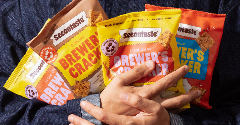
How Secon Taste is putting upcycled snacks on shelves
4 Aug 2026
Hungarian zero-waste startup Secon Taste is turning surplus food into upcycled snacks such as fibre-packed granola, instant porridge, and a circular coffee-tasting box.
Read more
Codex sets global thresholds for ‘may contain’ labels
3 Aug 2026
Codex Alimentarius has adopted its first global guidance on when to use “may contain” allergen warnings, setting thresholds intended to stop the label being used as blanket legal cover.
Read more