
Ingredients Categories
Finished Products
Finished Food Categories
- Bakery
- Beverages / Juices
- Cereal and grain products
- Confectionery
- Cooking Fats & Oils
- Dairy
- Egg products
- Fruits & Vegetables
- Infant & Baby food
- Meat, Poultry & Fish
- Nuts & Seeds products
- Other Finished Food Categories
- Pet Food
- Plant-based foods
- Prepared foods
- Sauces & Seasonings
- Sweet & Savoury Spreads
Specialised Finished Products
- Bee products
- Biotic products
- Dietary supplements
- Energy drinks
- Functional beverages
- Functional confectionery
- Functional food
- Functional powders
- Meal replacement products
- Nutricosmetics
- Other Specialised Finished Products
- Pet Dietary Supplements
- Pharma and OTC products
- Protein products
- Sugar replacers / Sweeteners
Health & Wellness Areas
Delivery Formats
Operations & Services
- 3D printing
- Analysis/ Testing
- Auditing & certifications
- Blending & mixing
- Bottling
- Certification
- Clinical trials
- Co-packing
- Coating
- Consulting
- Contract manufacturing
- Drying
- Electrospinning
- Encapsulating
- Enzymatic processing
- Extracting
- Extrusion
- Fat structuring
- Fermentation
- Filling
- Flavour development
- Freeze drying
- Granulating/ grinding/ milling / mixing
- High-pressure processing
- Labelling
- Other Operations & Services
- Packaging
- Packet filling
- Pasturising
- Quality assurance
- Saccharification
- Shear cell processing
- Spray drying
- Sterilisation
- Storage & Logistics
- Tabletting
- Toasting / roasting
- Ultra-high temperature processing
News
EUDR delay: Palm-oil producing countries react
Natasha Spencer-Jolliffe, Freelance Journalist 29 Oct 2024With the European Council backing a 12-month extension of the EUDR, leading palm oil-producing countries Malaysia and Indonesia are pushing for recommendations and practical guidance.
The European Council confirmed a 12-month delay to the implementation of the European Union Deforestation Regulation (EUDR), which (if confirmed) would enter into force on December 2025 for large companies and 2026 for small-to-medium businesses (SMEs).
A statement issued on 16 October said that the Council would inform the European Parliament of its position in view of the Parliament taking a decision on its position. The Council is aiming to have the regulation formally adopted by both co-legislators and published in the Official Journal of the EU so that it can enter into force by the end of the year.
Palm oil impact
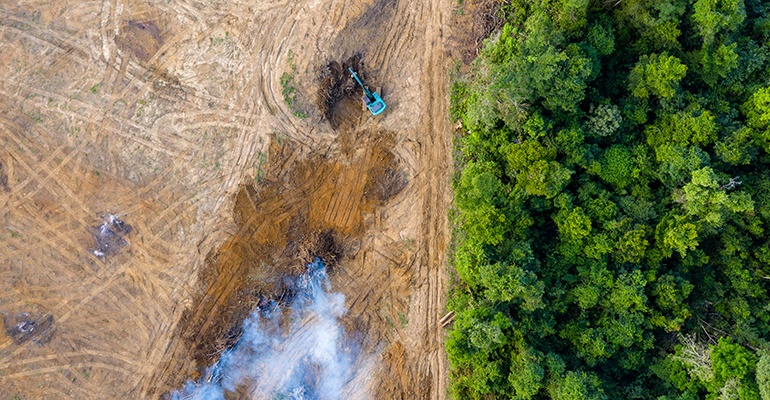
Palm oil is one of the commodities closely linked to deforestation, along with cocoa and coffee, nonprofit policy research organisation, The Center for Strategic and International Studies (CSIS), stated. The vegetable oil is found in 50% of packaged products consumers shop for in supermarkets. According to the international non-governmental organisation WWF, while 42 other countries produce palm oil, Indonesia and Malaysia are responsible for 85% of the globe’s palm oil production.
Delegations of the EU, Malayia and Indonesia have been meeting to discuss how the two markets will work together to plan, prepare and proceed amid the EUDR’s 2025 introduction date.
The 3rd meeting of the Ad Hoc Joint Task Force (JTF), facilitated by the Council of Palm Oil Producing Countries (CPOPC), representing Indonesia and Malaysia, saw over 80 stakeholders gather. The Indonesian and Malaysian governments, the European Commission, the private sector, Civil Society Organisations (CSOs), smallholders and academia were all in attendance.
In the latest JTF meeting, the EU, Indonesia and Malaysia said they would collaborate to create recommendations and a practical guide to be published by November 2024. These will be provided by the respective national traceability tool for smallholders and SMEs in the palm oil, cocoa and coffee sectors. They aim to help operators in these industries prepare for the EUDR.
In addition, the EU and Malaysia confirmed they will organise cross-commodity and private-sector dialogues in Indonesia and Malaysia to understand their needs before they have to enter the EUDR’s application process.
EUDR implementation concerns remain
At the latest meeting between the three markets, Indonesia and Malaysia reiterated their worries that the EU market will become an uncertain market to operate and trade in if it lacks clear implementation guidelines provided in a timely manner. Indonesia and Malaysia urged the EU to offer practical regulatory information before the application process.
Ensuring adequate information technology systems are in place to collect data has been a key issue, which the EU shared at the JTF meeting. It spoke of concerns about potential legal restrictions in both Southeast Asian countries to collect geolocation, which remains a must for operators under the new law.
For now, resolution on this issue remains unclear, as the press release stated that Indonesia and Malaysia highlighted that the privacy and security laws of Indonesia and Malaysia protect the data required by the EUDR.
China has also expressed concerns regarding the IT side of the EUDR about data sharing, as reported by the German timber trade association, GD Holz, in July. As reported, China, which has one of the globe’s largest forest markets, opposed sharing geolocational data with the EU on the grounds of “security concerns”.
The EU has reportedly confirmed that imports without coordinates are not possible and that no exceptions will exist.
How does the EUDR affect non-EU countries?
The EUDR also applies to non-EU companies, therefore having far-reaching global effects. The European Commission says that any company placing a relevant commodity or product on the market or exports it is considered an operator under the EUDR.
Additionally, under the regulation, any company that makes a product available on the market for the purposes of commercial activity, but who is not an operator is considered a trader, and will also need to adhere to the relevant requirements.
Large-scale producers of non-EU-based commodities and food products are therefore seeking updates and guidance from the Commission on how to prepare for the EUDR’s arrival.
Traceability tools
The EU recognised actions to enhance traceability and transparency across supply chains in sustainable commodities with the Indonesian National Dashboard Initiative and Malaysia’s traceability tools such as Sawit Intelligent Management System (SIMS), GeoPalm Portal and MSPO Trace. It stated that national certification schemes like Malaysian Sustainable Palm Oil (MSPO) and Indonesian Sustainable Palm Oil (ISPO) provide a supporting tool for operators and traders.
Indonesia has developed its SatuData platform to enhance traceability, depicting various land use and land change maps that link to a new palm oil traceability web. The platform aims to provide data and methodologies to track land use and change throughout the supply chain, strengthening due diligence and quality assurance.
Ahead of the new EUDR 2025 implementation date, the EU said it will continue to hold consultative meetings with Indonesia and Malaysia on forest cover maps. It will engage in dialogue to “support Indonesia and Malaysia to enhance available scientific data using multilaterally agreed definitions”. Indonesia and Malaysia stated that a national authority-based forest map is vital in detailing legal and sustainable information and ensuring accurate and scientific data.
Discussions between the three markets are ongoing as they strive to work towards achieving the Sustainable Development Goals by 2030 and joint international commitments on climate and biodiversity.

Get more of our news on Google
Set Ingredients Network as a 'Preferred Source' to get quicker access to the news you value.
Related news

Do the US dietary guidelines put UPFs under pressure?
10 Sep 2026
Will the US dietary guidelines change the way Americans eat, swapping ultra-processed foods for whole foods? We asked Dr Barry Popkin, renowned nutrition and obesity researcher.
Read more
Skimpflation: An ‘unfair’ and risky approach to keeping prices low
2 Sep 2026
Consumers see skimpflation – reducing the quality of ingredients due to rising costs – as more unfair than shrinkflation, making it a risky strategy according to recent research.
Read more
‘Urgent gaps’ in achieving 2030 food system goals
27 Aug 2026
Global food systems are failing to meet 2030 targets across indicators including health, environment, and resilience, according to a report co-authored by the Food and Agriculture Organisation (FAO).
Read more
Seven-Eleven uses microbial testing tech to extend katsudon shelf life
26 Aug 2026
Japanese retail company Seven-Eleven has improved its factory’s microbial environment to keep comfort-food staple, katsudon, fresher for longer.
Read more
Chimac’s fusion sauces bring Korean flavours to Europe
25 Aug 2026
Irish sauce brand Chimac is tapping into Korea’s culinary traditions, bringing its flavours and products to European consumers who want a taste of K-food.
Read more
Global demand for instant noodles continues to rise
24 Aug 2026
Global demand for instant noodles reached 124.21 billion servings last year, representing a 0.7% year-on-year increase – or 900 million extra servings.
Read more
China beverages: Is herbal innovation the future?
20 Aug 2026
Herbal and botanical innovation in China's drinks market continues to grow, with ingredients like astragalus root, ginger, and ginseng in the spotlight – and focus shifting far beyond refreshment.
Read more
Popular barbecue staples experience sharp price increases
19 Aug 2026
The typical cost of US shoppers’ barbecue baskets has risen by 12% over the past year – the fastest annual rise in a decade, figures from The Economist show.
Read more
Hot NPD: Nissin launches first cold-water Cup Noodles
18 Aug 2026
Nissin is taking one of Japan’s most iconic instant meals in a completely new direction with the launch of the first cold water-only Cup Noodles in the brand’s 55-year history.
Read more
Manam Chocolate aims to bring premium Indian cacao to 'the world stage'
11 Aug 2026
Craft chocolate brand Manam Chocolate is investing in local expansion and supply chain innovation throughout India as it works to build out the premium reputation of its locally produced cacao products.
Read more