
Ingredients Categories
Finished Products
Finished Food Categories
- Bakery
- Beverages / Juices
- Cereal and grain products
- Confectionery
- Cooking Fats & Oils
- Dairy
- Egg products
- Fruits & Vegetables
- Infant & Baby food
- Meat, Poultry & Fish
- Nuts & Seeds products
- Other Finished Food Categories
- Pet Food
- Plant-based foods
- Prepared foods
- Sauces & Seasonings
- Sweet & Savoury Spreads
Specialised Finished Products
- Bee products
- Biotic products
- Dietary supplements
- Energy drinks
- Functional beverages
- Functional confectionery
- Functional food
- Functional powders
- Meal replacement products
- Nutricosmetics
- Other Specialised Finished Products
- Pet Dietary Supplements
- Pharma and OTC products
- Protein products
- Sugar replacers / Sweeteners
Health & Wellness Areas
Delivery Formats
Operations & Services
- 3D printing
- Analysis/ Testing
- Auditing & certifications
- Blending & mixing
- Bottling
- Certification
- Clinical trials
- Co-packing
- Coating
- Consulting
- Contract manufacturing
- Drying
- Electrospinning
- Encapsulating
- Enzymatic processing
- Extracting
- Extrusion
- Fat structuring
- Fermentation
- Filling
- Flavour development
- Freeze drying
- Granulating/ grinding/ milling / mixing
- High-pressure processing
- Labelling
- Other Operations & Services
- Packaging
- Packet filling
- Pasturising
- Quality assurance
- Saccharification
- Shear cell processing
- Spray drying
- Sterilisation
- Storage & Logistics
- Tabletting
- Toasting / roasting
- Ultra-high temperature processing
News
Food industry unites to tackle FDA’s track and trace requirements for ‘high-risk’ foods
Will Chu, Freelance Journalist 31 Oct 2024Prominent US food industry associations have formed a collaboration to clarify requirements of new Food and Drug Administration (FDA) legislation designed to improve traceability record keeping within the supply chain.
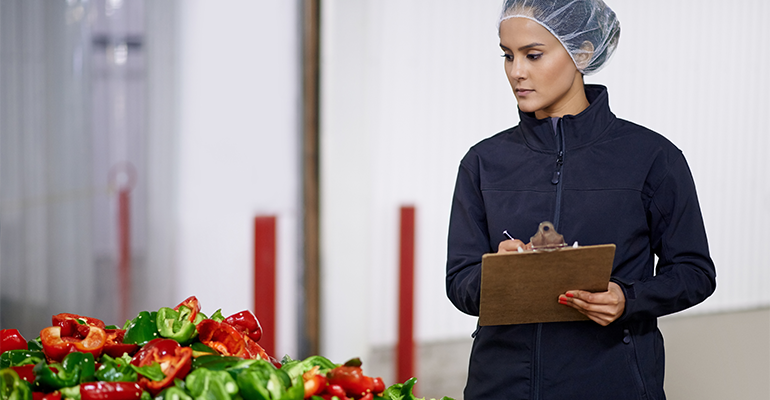
The Food Industry Food Safety Modernization Act (FSMA) 204 collaboration, which counts The Food Industry Association (FMI) and the International Fresh Produce Association (IFPA) as members, will share key information and updates on the FDA’s Food Traceability Rule that requires compliance from industry starting in January 2026.
The group will also set up a forum where businesses and government officials can interact to educate industry and ease the complex compliance process.
The legislation, officially titled FSMA Rule 204, requires a comprehensive tracking and tracing system for high-risk foods that include fresh produce and leafy greens, deli salads, and certain types of seafood, among other produce.
"Food safety is the single most important issue that food retailers, wholesalers, and suppliers focus on every day," said Leslie G. Sarasin, FMI’s President and CEO.
"FDA's FSMA Rule 204 is the most significant regulation the food industry has ever faced and will demand tremendous investments for recordkeeping, data management, and systems changes.
“This collaboration demonstrates our collective commitment to sharing information and working together to ensure the food supply chain has the resources and clarity it needs for compliance."
FSMA Rule 204 encourages detailed records concerning key data elements
The legislation, which was first published in November 2022, implements Section 204(d) of the FDA Food Safety Modernization Act (FSMA).
The key requirements of FSMA Rule 204 include the need for organisations to maintain detailed records that note key data elements linked to critical tracking events along the supply chain.
Also mandated is the need to incorporate traceability lot codes to foods on the FDA’s Food Traceability List during processes like initial packing or transformation to enable accurate linking of traceability records from production to distribution.
The FSMA Rule 204 additionally requires a traceability plan to be devised that includes instructions for recordkeeping, identification of relevant foods, delegation of traceability lot codes, and contact details.
The IFT, IFMA, and the IFDA amongst the organizations that form the FSMA 204 collaboration
"Implementation of FSMA Rule 204 requirements is a cross-industry challenge," said Ed Treacy, Vice President of Supply Chain of IFPA, which is joined in the collaboration by the Association of Food and Drug Officials (AFDO) and not-for-profit global data standards organization GS1 US.
Other members of the collaboration include the Institute of Food Technologists (IFT), International Foodservice Distributors Association (IFDA), International Foodservice Manufacturers Association (IFMA) and National Association of State Departments of Agriculture (NASDA).
"This collaboration will ensure that the resources created and education offered to our collective members are coordinated and aligned," Treacy added.
Despite the FDA’s notification of its plans in 2022, food safety stakeholders continue to flag up issues that concern the supply chain’s readiness in implementing its traceability rule, with calls to stagger or delay the impending deadline.
In anticipation, The National Grocers Association (NGA) and natural and organic food company United Natural Foods (UNFI) recently made available their Step-by-Step Guide to FDA Traceability.
The guide, which attempts to breakdown the 600-page rule into an easy-to-follow resource, is also accompanied by an online Traceability Centre resource, where users can find templates, glossaries, and a mock traceability event exercise.
Helping firms stay ahead as the industry prepares for the new Food Traceability rule
“The new traceability rule is one of the biggest changes in food safety compliance our members have seen in over a decade,” said NGA President & CEO Greg Ferrara.
“Food safety is always a top priority for our members, and we’re incredibly thankful for the support of UNFI in their sponsorship of this easy-to-understand resource that will benefit independent grocers.”
UNFI Chief Corporate Affairs Officer Matt Echols emphasised how important it was for industry members to be able to understand and easily navigate any new rule.
“This guide will be a useful resource as we continue to partner, explore, and assess workable, long-term solutions,” he said.
“We are excited to partner with NGA on this resource to help independent grocers stay ahead as our industry continues preparing for the new Food Traceability rule.”

Get more of our news on Google
Set Ingredients Network as a 'Preferred Source' to get quicker access to the news you value.
Related news

Food fraud costs UK economy £2bn each year
9 Sep 2026
Food fraud is costing the UK economy up to £2 billion (€2.3 billion) every year although the food sector is more “resilient” than others, according to a recent study.
Read more
EU's ban on Brazilian meat expected to raise prices
7 Sep 2026
Around 25% of the EU’s imported chicken and beef comes from Brazil. From September, products that fail to meet the EU antimicrobial resistance rules will be banned.
Read more
Kellogg accelerates work to remove artificial colours from all US cereals
3 Sep 2026
WK Kellogg has announced an accelerated timeline to eliminate all artificial colours and the chemical preservative, BHT, across its full US portfolio of cereals and cereal packaging.
Read more
‘Urgent gaps’ in achieving 2030 food system goals
27 Aug 2026
Global food systems are failing to meet 2030 targets across indicators including health, environment, and resilience, according to a report co-authored by the Food and Agriculture Organisation (FAO).
Read more
Seven-Eleven uses microbial testing tech to extend katsudon shelf life
26 Aug 2026
Japanese retail company Seven-Eleven has improved its factory’s microbial environment to keep comfort-food staple, katsudon, fresher for longer.
Read more
Global demand for instant noodles continues to rise
24 Aug 2026
Global demand for instant noodles reached 124.21 billion servings last year, representing a 0.7% year-on-year increase – or 900 million extra servings.
Read more
Critics slam ‘chaotic’ response to cyclosporiasis outbreak after first deaths reported
7 Aug 2026
Questions have been raised over the “chaotic” response to the cyclosporiasis outbreak in the US after two deaths were reported.
Read more
Digital twin technology gains ground in food manufacturing
6 Aug 2026
Food and beverage companies are increasingly turning to digital twins to optimise and automate manufacturing processes, but opportunities stretch far beyond this, say experts.
Read more
Codex sets global thresholds for ‘may contain’ labels
3 Aug 2026
Codex Alimentarius has adopted its first global guidance on when to use “may contain” allergen warnings, setting thresholds intended to stop the label being used as blanket legal cover.
Read more
EU sets maximum MOAH levels to protect human health
28 Jul 2026
The EU will adopt maximum levels for mineral oil aromatic hydrocarbons (MOAH) in food to protect human health. What do manufacturers need to know?
Read more