
Ingredients Categories
Finished Products
Finished Food Categories
- Bakery
- Beverages / Juices
- Cereal and grain products
- Confectionery
- Cooking Fats & Oils
- Dairy
- Egg products
- Fruits & Vegetables
- Infant & Baby food
- Meat, Poultry & Fish
- Nuts & Seeds products
- Other Finished Food Categories
- Pet Food
- Plant-based foods
- Prepared foods
- Sauces & Seasonings
- Sweet & Savoury Spreads
Specialised Finished Products
- Bee products
- Biotic products
- Dietary supplements
- Energy drinks
- Functional beverages
- Functional confectionery
- Functional food
- Functional powders
- Meal replacement products
- Nutricosmetics
- Other Specialised Finished Products
- Pet Dietary Supplements
- Pharma and OTC products
- Protein products
- Sugar replacers / Sweeteners
Health & Wellness Areas
Delivery Formats
Operations & Services
- 3D printing
- Analysis/ Testing
- Auditing & certifications
- Blending & mixing
- Bottling
- Certification
- Clinical trials
- Co-packing
- Coating
- Consulting
- Contract manufacturing
- Drying
- Electrospinning
- Encapsulating
- Enzymatic processing
- Extracting
- Extrusion
- Fat structuring
- Fermentation
- Filling
- Flavour development
- Freeze drying
- Granulating/ grinding/ milling / mixing
- High-pressure processing
- Labelling
- Other Operations & Services
- Packaging
- Packet filling
- Pasturising
- Quality assurance
- Saccharification
- Shear cell processing
- Spray drying
- Sterilisation
- Storage & Logistics
- Tabletting
- Toasting / roasting
- Ultra-high temperature processing
News
Eco-friendly polymer material advances plastic-free packaging
Natasha Spencer-Jolliffe, Freelance Journalist 16 Mar 2026Aquapak has developed a dissolvable, biodegradable polymer that can undergo thermal processing for various food applications.
The material is a patented hydropol polymer.

“Hydropol is a highly functional, environmentally friendly polymer which has been developed by Aquapak’s scientists and allows product design to support the circular economy by enabling recycling and delivering multiple end-of-life options,” John Williams, chief technical officer at UK manufacturer Aquapak, told Ingredients Network.
The polymer is designed to provide an alternative to traditional plastics, yet offering their versatility and functionality, without harming the environment.
From PVOH to hydropol
The company based its plastic alternative on polyvinyl alcohol (PVOH), which is hydropol’s primary polymer component. It is a water-soluble synthetic polymer that is colourless and odourless.
Aquapak developed the formulation over a 10-year research and development (R&D) process, combining PVOH with other chemicals to stabilise it and retain sought-after environmental properties. Aquapak used a range of PVOH-based formulations in its intellectual property (IP) to ensure its suitability in various applications. As part of its concept stage, the company screened over 180 stabilisers to identify which ones could combine with PVOH.
“PVOH is inert and suitable for ingestion, and due to its water solubility property, it is used in applications such as for tablet casings or coatings; as an example, for vitamins and supplements,” Williams said.
Tests suggest hydropol is non-toxic and marine-safe
The manufacturer wanted to ensure the final formulation could maintain key features, including water solubility, barrier properties, tensile strength, and environmentally-friendly characteristics such as biodegradability while avoiding the production of harmful microplastics.
“Hydropol is non-toxic and does not form harmful microplastics,” said Williams. “If it does escape into the environment, it biodegrades completely, leaving nothing behind, ie no harmful microplastics,” said Williams.
Aquapak has tested its plastic-alternative polymer for biodegradability and to ensure it is marine-safe. After a two-year marine toxicity study on zebrafish larvae, the polymer producer found that hydropol is hydrophilic, so it has no natural tendency to attract toxins or form toxic microplastics, and is itself non-toxic to marine fauna.
“Hydropol will not form harmful microplastics or persist in the environment, unlike conventional plastics, whose long-lasting micro-particles cause major problems to the marine food chain,” Williams added.
Researchers have called for collective action to restore the balance in marine ecosystems, after microplastics have been found to affect the metabolic activities and survival of marine species.
Not suitable for water-rich products
Aquapak recognises that PVOH has its limitations, but that it provides an effective starting point for developing new materials. One limitation of hydropol is its high water vapour transmission rate. It also cannot be used in food production that puts it in direct contact with products with high aqueous content.
“However, this can be overcome by using it in combination with other materials to bring down the rate of transmission and extend the shelf-life protection provided by the packaging,” said Williams.
For example, it can be combined with an ultra-thin metal layer to reduce water transmission in a recyclable crisp packet, while still allowing it to be recycled in standard paper recycling.
“It is also compatible with existing material/packaging production infrastructure, making it scalable and commercially viable,” said Williams.
Ideal for thermal processing
Unlike PVOH, hydropol can undergo thermal processing, which refers to the ability to heat and melt materials. A common preservation method in the food industry, manufacturers use it to eliminate the risk of harmful microorganisms and extend shelf life, ensuring food is safe for consumption.
The current packaging and materials industry relies on thermal processing, so new polymers must also meet this requirement. PVOH, however, cannot be thermally processed as it decomposes when it starts to melt. While some modified PVOH versions have been developed, they are only suitable for niche or low-grade applications.
“It is not suitable for mainstream thermal processing production in which converters and producers have invested millions over the past decades through machines and equipment,” said Williams.
Due to its chemical composition, hydropol is compatible with thermal processing and can be used in standard plastic and material production on existing equipment. “[This makes] it scalable and a viable alternative to conventional plastics because it retains its functionality and is environmentally friendly,” said Williams.
Suitable for crisp, chocolate, and confectionery packaging
Crisp packets, chocolate wrappers and confectionery packaging are among the food categories that use hydropol as a plastic-alternative material.
Sachets, in both food and non-food applications, are widely regarded as consumer-friendly and convenient, enabling controlled portion sizes, reducing transportation weight and preserving contents. However, they are also a major source of plastic pollution and are not typically recycled.
Aquapak has been working to solve this problem by combining hydropol with biomaterials to create unique structures suitable for sachet production that have a safe end-of-life fate. The company is working with several converters to develop paper-based materials that use hydropol in place of conventional plastics. Their aim is to enable fully recyclable packaging to enter numerous food applications, including dried pet food, snacks, cooked meat, and convenience foods.
Designed to develop sustainable food packaging solutions and overcome recyclability barriers, Aquapak has already partnered with several brands to use Evopak hydropol-coated paper, replacing conventional plastic packaging.
Aquapak teamed up with sustainable paper-based flexible packaging manufacturer EvoPak, and primer and coating company Mica to develop new eco-friendly packaging for The British Crisp Co. The savoury snack developer subsequently launched its fully kerbside recyclable paper crisp packet.
Snack brand Awfully Posh Nuts has re-launched its range of peanut products in 100% recyclable paper wrappers, replacing polypropylene plastic packaging. Confectionery brand Walkers Chocolate has updated its Turkish Delight and Mint Cream bars to kerbside-recyclable paper packaging for large retailers Asda and Premier Stores. The switch from plastic to paper means wrappers can be recycled at home rather than returned to stores.

Get more of our news on Google
Set Ingredients Network as a 'Preferred Source' to get quicker access to the news you value.
Related news

Do the US dietary guidelines put UPFs under pressure?
10 Sep 2026
Will the US dietary guidelines change the way Americans eat, swapping ultra-processed foods for whole foods? We asked Dr Barry Popkin, renowned nutrition and obesity researcher.
Read more
Food fraud costs UK economy £2bn each year
9 Sep 2026
Food fraud is costing the UK economy up to £2 billion (€2.3 billion) every year although the food sector is more “resilient” than others, according to a recent study.
Read more
Kellogg accelerates work to remove artificial colours from all US cereals
3 Sep 2026
WK Kellogg has announced an accelerated timeline to eliminate all artificial colours and the chemical preservative, BHT, across its full US portfolio of cereals and cereal packaging.
Read more
Skimpflation: An ‘unfair’ and risky approach to keeping prices low
2 Sep 2026
Consumers see skimpflation – reducing the quality of ingredients due to rising costs – as more unfair than shrinkflation, making it a risky strategy according to recent research.
Read more
NielsenIQ’s EU barometer shows Britain leading in grocery inflation
31 Aug 2026
Britain was the only country to record grocery inflation above 2%, according to NielsenIQ data that compared Europe’s five biggest grocery markets from February to May 2026.
Read more
‘Urgent gaps’ in achieving 2030 food system goals
27 Aug 2026
Global food systems are failing to meet 2030 targets across indicators including health, environment, and resilience, according to a report co-authored by the Food and Agriculture Organisation (FAO).
Read more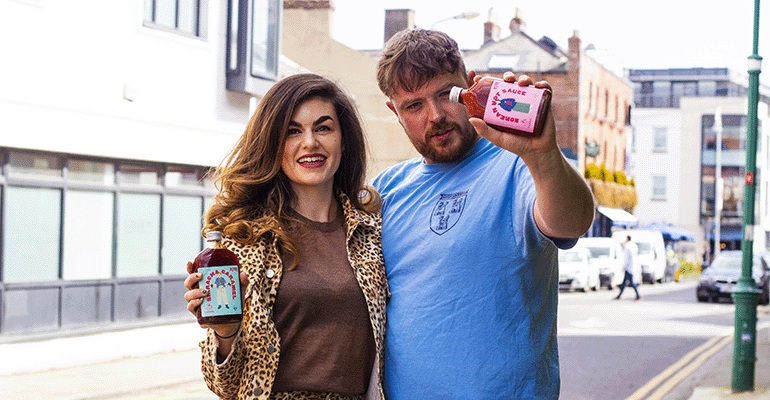
Chimac’s fusion sauces bring Korean flavours to Europe
25 Aug 2026
Irish sauce brand Chimac is tapping into Korea’s culinary traditions, bringing its flavours and products to European consumers who want a taste of K-food.
Read more
Global demand for instant noodles continues to rise
24 Aug 2026
Global demand for instant noodles reached 124.21 billion servings last year, representing a 0.7% year-on-year increase – or 900 million extra servings.
Read more
Popular barbecue staples experience sharp price increases
19 Aug 2026
The typical cost of US shoppers’ barbecue baskets has risen by 12% over the past year – the fastest annual rise in a decade, figures from The Economist show.
Read more
Hot NPD: Nissin launches first cold-water Cup Noodles
18 Aug 2026
Nissin is taking one of Japan’s most iconic instant meals in a completely new direction with the launch of the first cold water-only Cup Noodles in the brand’s 55-year history.
Read more