
Ingredients Categories
Finished Products
Finished Food Categories
- Bakery
- Beverages / Juices
- Cereal and grain products
- Confectionery
- Cooking Fats & Oils
- Dairy
- Egg products
- Fruits & Vegetables
- Infant & Baby food
- Meat, Poultry & Fish
- Nuts & Seeds products
- Other Finished Food Categories
- Pet Food
- Plant-based foods
- Prepared foods
- Sauces & Seasonings
- Sweet & Savoury Spreads
Specialised Finished Products
- Bee products
- Biotic products
- Dietary supplements
- Energy drinks
- Functional beverages
- Functional confectionery
- Functional food
- Functional powders
- Meal replacement products
- Nutricosmetics
- Other Specialised Finished Products
- Pet Dietary Supplements
- Pharma and OTC products
- Protein products
- Sugar replacers / Sweeteners
Health & Wellness Areas
Delivery Formats
Operations & Services
- 3D printing
- Analysis/ Testing
- Auditing & certifications
- Blending & mixing
- Bottling
- Certification
- Clinical trials
- Co-packing
- Coating
- Consulting
- Contract manufacturing
- Drying
- Electrospinning
- Encapsulating
- Enzymatic processing
- Extracting
- Extrusion
- Fat structuring
- Fermentation
- Filling
- Flavour development
- Freeze drying
- Granulating/ grinding/ milling / mixing
- High-pressure processing
- Labelling
- Other Operations & Services
- Packaging
- Packet filling
- Pasturising
- Quality assurance
- Saccharification
- Shear cell processing
- Spray drying
- Sterilisation
- Storage & Logistics
- Tabletting
- Toasting / roasting
- Ultra-high temperature processing
News
GEA join Better Juice to disrupt the global juice industry
2 Feb 2021Better Juice, Ltd., the sugar-reduction FoodTech start-up, has signed a joint venture with GEA Group AG, a world leader in process engineering for the food and beverage sectors, in a push to expand its global footprint. This move comes as part of Better Juice’s commitment to transform the global juice industry through advancing its technology for reducing all sugars in orange juices.
Better Juice and GEA TDS GmbH agreed to collaboratively construct and install the innovative sugar reduction solution to reduce all types of sugars in orange juice and market the system globally.

Under this strategic partnership, GEA will engineer, design, manufacture, and install the bioreactor that reduces sugars via Better Juice’s proprietary enzymatic process. Better Juice will produce the immobilized microorganisms for the enzymatic process. The company’s breakthrough technology effectively solves the sugar-reduction conundrum without negatively impacting the natural nutritional values and prebiotic benefits of fresh orange juice.
The start-up’s enzymatic technology uses all-natural ingredients to convert fructose, glucose, and sucrose into prebiotic dietary fibers and other non-digestible molecules. It can reduce up to 80% of sugars in orange juice. Better Juice’s non-GMO technology is designed to target the specific sugar composition in orange juice to naturally create a low-calorie, reduced-sugar product with a delicate sweetness, without sweeteners or other additives used to replace the sugars.
“This exciting collaboration marks a major milestone in Better Juice’s scale-up plans and advances the commercialization of our technology,” explains Better Juice CEO and founder, Eran Blachinsky. “GEA possesses a sterling reputation in the field of process technology and will be a strong engineering partner. This collaboration will allow for smooth integration of our enzymatic technology into juice production companies seeking to meet the sugar-reduction trend.”
Head of sales management for GEA’s global technology center for non-alcoholic beverages, Colm O’Gorman said: “GEA is constantly seeking to work with companies developing innovative solutions and cutting-edge, sustainable technologies that benefit consumers’ nutrition and lifestyles.”
GEA will design three instruments with small, medium and large production capacities within several months to address various requirements of juice companies. The 200L device will launch within a few months and will be customized to the manufacturer’s needs and limitations.

Get more of our news on Google
Set Ingredients Network as a 'Preferred Source' to get quicker access to the news you value.
Related news

Skimpflation: An ‘unfair’ and risky approach to keeping prices low
2 Sep 2026
Consumers see skimpflation – reducing the quality of ingredients due to rising costs – as more unfair than shrinkflation, making it a risky strategy according to recent research.
Read more
NielsenIQ’s EU barometer shows Britain leading in grocery inflation
31 Aug 2026
Britain was the only country to record grocery inflation above 2%, according to NielsenIQ data that compared Europe’s five biggest grocery markets from February to May 2026.
Read more
‘Urgent gaps’ in achieving 2030 food system goals
27 Aug 2026
Global food systems are failing to meet 2030 targets across indicators including health, environment, and resilience, according to a report co-authored by the Food and Agriculture Organisation (FAO).
Read more
China beverages: Is herbal innovation the future?
20 Aug 2026
Herbal and botanical innovation in China's drinks market continues to grow, with ingredients like astragalus root, ginger, and ginseng in the spotlight – and focus shifting far beyond refreshment.
Read more
Popular barbecue staples experience sharp price increases
19 Aug 2026
The typical cost of US shoppers’ barbecue baskets has risen by 12% over the past year – the fastest annual rise in a decade, figures from The Economist show.
Read more
Beyond 'nice to have': A spotlight on US functional beverages
12 Aug 2026
Functional beverage interest in the US is gaining important ground as consumers now expect function rather than see it as "nice to have", and there are clear market gaps for growth, according to Spate.
Read more
Manam Chocolate aims to bring premium Indian cacao to 'the world stage'
11 Aug 2026
Craft chocolate brand Manam Chocolate is investing in local expansion and supply chain innovation throughout India as it works to build out the premium reputation of its locally produced cacao products.
Read more
Digital twin technology gains ground in food manufacturing
6 Aug 2026
Food and beverage companies are increasingly turning to digital twins to optimise and automate manufacturing processes, but opportunities stretch far beyond this, say experts.
Read more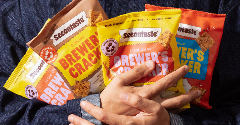
How Secon Taste is putting upcycled snacks on shelves
4 Aug 2026
Hungarian zero-waste startup Secon Taste is turning surplus food into upcycled snacks such as fibre-packed granola, instant porridge, and a circular coffee-tasting box.
Read more
Codex sets global thresholds for ‘may contain’ labels
3 Aug 2026
Codex Alimentarius has adopted its first global guidance on when to use “may contain” allergen warnings, setting thresholds intended to stop the label being used as blanket legal cover.
Read more