
Ingredients Categories
Finished Products
Finished Food Categories
- Bakery
- Beverages / Juices
- Cereal and grain products
- Confectionery
- Cooking Fats & Oils
- Dairy
- Egg products
- Fruits & Vegetables
- Infant & Baby food
- Meat, Poultry & Fish
- Nuts & Seeds products
- Other Finished Food Categories
- Pet Food
- Plant-based foods
- Prepared foods
- Sauces & Seasonings
- Sweet & Savoury Spreads
Specialised Finished Products
- Bee products
- Biotic products
- Dietary supplements
- Energy drinks
- Functional beverages
- Functional confectionery
- Functional food
- Functional powders
- Meal replacement products
- Nutricosmetics
- Other Specialised Finished Products
- Pet Dietary Supplements
- Pharma and OTC products
- Protein products
- Sugar replacers / Sweeteners
Health & Wellness Areas
Delivery Formats
Operations & Services
- 3D printing
- Analysis/ Testing
- Auditing & certifications
- Blending & mixing
- Bottling
- Certification
- Clinical trials
- Co-packing
- Coating
- Consulting
- Contract manufacturing
- Drying
- Electrospinning
- Encapsulating
- Enzymatic processing
- Extracting
- Extrusion
- Fat structuring
- Fermentation
- Filling
- Flavour development
- Freeze drying
- Granulating/ grinding/ milling / mixing
- High-pressure processing
- Labelling
- Other Operations & Services
- Packaging
- Packet filling
- Pasturising
- Quality assurance
- Saccharification
- Shear cell processing
- Spray drying
- Sterilisation
- Storage & Logistics
- Tabletting
- Toasting / roasting
- Ultra-high temperature processing
News
How plant-based milk brands can address taste and texture challenges
12 Aug 2022Today’s consumers want plant-based milk products that mimic the desirable sensorial attributes of their non-dairy alternative counterparts. In response, brands and manufacturers are focusing on taste, texture, education and sustainability.
The sensory attribute is the number one area of improvement for plant-based milk alternatives, as highlighted by over a third (34%) of European consumers in recent research, ‘Understanding the plant-based consumer’, by taste and nutrition company Kerry.
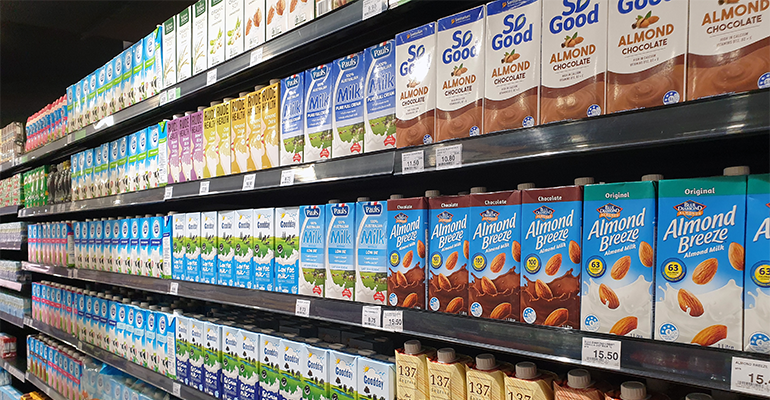
The study also found that 76% of consumers would like “a nice creamy mouthfeel without the dairy”, and 77% of those asked think dairy-free alternatives with “better body and texture” are appealing. “Taste is the number one reason why consumers repurchase a product and overall consumer acquisition,” says John Kelly, strategy director of beverages at Kerry Europe. “[It] is paramount to driving category growth.”
Consumers seek creamy, rich and buttery profiles that dairy delivers. While the benchmark for successful plant-based milk product launches is great taste, it is proving exceptionally challenging to deliver successful dairy taste and mouthfeel in dairy alternative beverages.
Challenges in creating tasty plant-based products
Via its consumer research, Kerry says it has identified four main challenges in achieving consumer demands for taste. Managing off-notes such as reducing bitterness, ‘cardboardness’ and ‘beaniness’ of non-dairy bases is one challenge. Another is that consumers are also looking for signature tastes in plant-based dairy products to address the specific product and local community’s needs.
Mouthfeel, which refers to how a food or beverage feels in the mouth and is a distinct attribute from taste, is also a key consideration when selecting plant-based milk. Consumers want producers to deliver a clean taste experience with less sugar but with the same sought-after sweetness and mouthfeel they would expect from a full-sugar product. Creating a creamy, fatty mouthfeel that emulates real dairy is therefore crucial.
Overcoming off-tastes
Manufacturers can overcome off-tastes by understanding the chemistry of the flavour mechanisms in their formulations. Advanced sensory testing and knowledge of how various characteristics impact plant-based milk’s overall sensory profile allow food scientists to develop solutions that decrease the disturbances to taste.
Examining and understanding the off-note mechanisms and correlating the off-notes to critical flavour compounds is also crucial to enabling brands and formulators to create flavour masking solutions.
Food industry stakeholders are conducting research studies on plant-based milk to keep ahead of dairy consumers' demand in the category and determine what attributes consumers seek when selecting dairy alternatives. Ireland-headquartered Kerry, for example, is currently undertaking a European piece of consumer research to understand consumer drivers and barriers within the plant-based milk space, which will influence future product launches.
What is more important: Product taste or consumer education?
However, it may not be centred entirely on the product’s actual taste but on the importance of education. Dairy alternatives’ taste profile is proving popular with some consumers, with over 20% of French consumers aged between 16-44 saying they prefer the taste of plant-based milk to the dairy equivalent, Mintel reported. Food and beverage brands in today’s plant-based milk space may therefore need to focus on providing education on taste and texture.
Sustainability is also a prevalent factor for consumers during the decision-making process. Brands can use their environmental credentials, namely the lower environmental footprint of their plant-based milk products as an appealing differentiator to non-vegan milk.
“The successful non-dairy manufacturer of the future will build plant-based beverages addressing the significant concerns consumers have around taste, nutrition, functionality and versatility,” says Kelly. Equally, the manufacturer needs to ensure mass appeal and ease of operation.

Get more of our news on Google
Set Ingredients Network as a 'Preferred Source' to get quicker access to the news you value.
Related news

Skimpflation: An ‘unfair’ and risky approach to keeping prices low
2 Sep 2026
Consumers see skimpflation – reducing the quality of ingredients due to rising costs – as more unfair than shrinkflation, making it a risky strategy according to recent research.
Read more
NielsenIQ’s EU barometer shows Britain leading in grocery inflation
31 Aug 2026
Britain was the only country to record grocery inflation above 2%, according to NielsenIQ data that compared Europe’s five biggest grocery markets from February to May 2026.
Read more
‘Urgent gaps’ in achieving 2030 food system goals
27 Aug 2026
Global food systems are failing to meet 2030 targets across indicators including health, environment, and resilience, according to a report co-authored by the Food and Agriculture Organisation (FAO).
Read more
China beverages: Is herbal innovation the future?
20 Aug 2026
Herbal and botanical innovation in China's drinks market continues to grow, with ingredients like astragalus root, ginger, and ginseng in the spotlight – and focus shifting far beyond refreshment.
Read more
Popular barbecue staples experience sharp price increases
19 Aug 2026
The typical cost of US shoppers’ barbecue baskets has risen by 12% over the past year – the fastest annual rise in a decade, figures from The Economist show.
Read more
Beyond 'nice to have': A spotlight on US functional beverages
12 Aug 2026
Functional beverage interest in the US is gaining important ground as consumers now expect function rather than see it as "nice to have", and there are clear market gaps for growth, according to Spate.
Read more
Manam Chocolate aims to bring premium Indian cacao to 'the world stage'
11 Aug 2026
Craft chocolate brand Manam Chocolate is investing in local expansion and supply chain innovation throughout India as it works to build out the premium reputation of its locally produced cacao products.
Read more
Digital twin technology gains ground in food manufacturing
6 Aug 2026
Food and beverage companies are increasingly turning to digital twins to optimise and automate manufacturing processes, but opportunities stretch far beyond this, say experts.
Read more
How Secon Taste is putting upcycled snacks on shelves
4 Aug 2026
Hungarian zero-waste startup Secon Taste is turning surplus food into upcycled snacks such as fibre-packed granola, instant porridge, and a circular coffee-tasting box.
Read more
Codex sets global thresholds for ‘may contain’ labels
3 Aug 2026
Codex Alimentarius has adopted its first global guidance on when to use “may contain” allergen warnings, setting thresholds intended to stop the label being used as blanket legal cover.
Read more