
Ingredients Categories
Finished Products
Finished Food Categories
- Bakery
- Beverages / Juices
- Cereal and grain products
- Confectionery
- Cooking Fats & Oils
- Dairy
- Egg products
- Fruits & Vegetables
- Infant & Baby food
- Meat, Poultry & Fish
- Nuts & Seeds products
- Other Finished Food Categories
- Pet Food
- Plant-based foods
- Prepared foods
- Sauces & Seasonings
- Sweet & Savoury Spreads
Specialised Finished Products
- Bee products
- Biotic products
- Dietary supplements
- Energy drinks
- Functional beverages
- Functional confectionery
- Functional food
- Functional powders
- Meal replacement products
- Nutricosmetics
- Other Specialised Finished Products
- Pet Dietary Supplements
- Pharma and OTC products
- Protein products
- Sugar replacers / Sweeteners
Health & Wellness Areas
Delivery Formats
Operations & Services
- 3D printing
- Analysis/ Testing
- Auditing & certifications
- Blending & mixing
- Bottling
- Certification
- Clinical trials
- Co-packing
- Coating
- Consulting
- Contract manufacturing
- Drying
- Electrospinning
- Encapsulating
- Enzymatic processing
- Extracting
- Extrusion
- Fat structuring
- Fermentation
- Filling
- Flavour development
- Freeze drying
- Granulating/ grinding/ milling / mixing
- High-pressure processing
- Labelling
- Other Operations & Services
- Packaging
- Packet filling
- Pasturising
- Quality assurance
- Saccharification
- Shear cell processing
- Spray drying
- Sterilisation
- Storage & Logistics
- Tabletting
- Toasting / roasting
- Ultra-high temperature processing
News
Indonesia to introduce a front-of-pack nutrition label
Simon Pitman, Freelance Journalist 27 Nov 2024Indonesia’s Food and Drug Authority (BPOM) has announced plans to introduce a traffic light-style front-of-pack nutrition label called Nutri-Level.
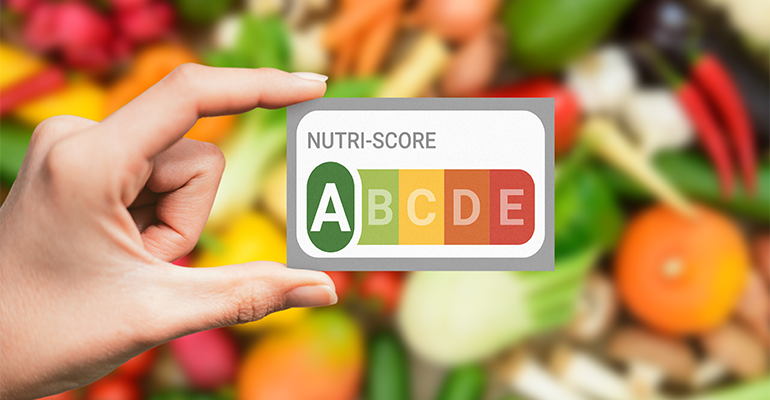
While the Island State of Singapore has already introduced a food and beverage health label policy, a similar move in Indonesia is expected to have significant repercussions in the Asia Pacific region, especially given the fact that the country’s population currently stands at 277 million.
BPOM announced a draft regulation for the new policy in September, seeking to introduce front-of-pack nutritional labelling to indicate the amount of sugar, salt, and fat in any packaged products.
Falling in line with Singaporean regulations
Similar to Singaporean label, the system proposes the adoption of a traffic light warning system, incorporating four warning levels. “A” is dark green and requires that foods carry trace levels of sugar and very low levels of salt and fat, with colourings and no additives.
The other categories are “B” which is light green, “C” which is amber and “D” which is red. Each of these categories can contain progressively higher pre-determined levels of sugar, while category “D” also has no restrictions of additives.
Providing more details on how the implementation of the regulation is likely to unfold, Irene Djalim, manager of regulatory affairs at Asia Pacific law practice Tilleke & Gibbins, clarified that manufacturers must know that sugars also include monosaccharides and disaccharides, but excludes lactose, while liquid milk and plain milk powder are exempt.
“The draft regulation provides Nutri-Level label examples in both full and simplified formats. The simplified format applies to small packages of 30 square centimeters or less, while the full format must be used on other packages,” Djalim said.
Pending regulation applications will have to be amended
While the regulation is still in the draft stage and not expected to be passed until the end of 2024, the proposal outlines that any processed foods that have a pending application with the BPOM once it is passed will have to amend their on-pack labelling within 30 months. For ready-to-drink beverages, liquid content and powdered beverages, that grace period will be 30 months.
The NutriScore food and beverage nutrition label was developed by French researchers and is used on a voluntary basis in many European countries, including France, Belgium, Spain, and the Netherlands.
In Singapore, a similar system was introduced in 2022 as a four-level system known as Nutri-Grade, with level “D” items banned from advertising such products in the media.
In an official statement released at the end of September, Indonesia’s BPOM stated that once the proposal is confirmed, the new regulations would be introduced gradually, and in phases.
“The implementation of the Nutri-Level regulation for processed foods is to be carried out in stages. The first stage will be targeted at ready-to-consume drinks for sugar, salt and fat content that falls between level C and level D. The enforcement of Nutri-Level will also be implemented in line with processed foods determined by BPOM and ready-to-eat processed foods determined by the [Indonesian] Ministry of Health,” the statement read.
Indonesia is likely to take inspiration from Singapore’s implementation
Indonesia’s system is expected to mirror that of Singapore’s, which has been commended by the World Health Organization as helping “to transform food and environments for healthy diets and optimal nutrition,” after being singled out for 2024 WHO Healthy Cities Recognition Award.
In Singapore, the system has been gradually implemented, initially singling out packaged foods and beverages by outlining a minimal level of sugar, salt and additives to comply.
The next level of the Nutri-Grade regulation will target cooking oil, pre-packed salt, sauces and seasonings and instant noodles, in an effort to point consumers to products with lower levels of sodium.

Get more of our news on Google
Set Ingredients Network as a 'Preferred Source' to get quicker access to the news you value.
Related news

Do the US dietary guidelines put UPFs under pressure?
10 Sep 2026
Will the US dietary guidelines change the way Americans eat, swapping ultra-processed foods for whole foods? We asked Dr Barry Popkin, renowned nutrition and obesity researcher.
Read more
Skimpflation: An ‘unfair’ and risky approach to keeping prices low
2 Sep 2026
Consumers see skimpflation – reducing the quality of ingredients due to rising costs – as more unfair than shrinkflation, making it a risky strategy according to recent research.
Read more
‘Urgent gaps’ in achieving 2030 food system goals
27 Aug 2026
Global food systems are failing to meet 2030 targets across indicators including health, environment, and resilience, according to a report co-authored by the Food and Agriculture Organisation (FAO).
Read more
Seven-Eleven uses microbial testing tech to extend katsudon shelf life
26 Aug 2026
Japanese retail company Seven-Eleven has improved its factory’s microbial environment to keep comfort-food staple, katsudon, fresher for longer.
Read more
Chimac’s fusion sauces bring Korean flavours to Europe
25 Aug 2026
Irish sauce brand Chimac is tapping into Korea’s culinary traditions, bringing its flavours and products to European consumers who want a taste of K-food.
Read more
Global demand for instant noodles continues to rise
24 Aug 2026
Global demand for instant noodles reached 124.21 billion servings last year, representing a 0.7% year-on-year increase – or 900 million extra servings.
Read more
China beverages: Is herbal innovation the future?
20 Aug 2026
Herbal and botanical innovation in China's drinks market continues to grow, with ingredients like astragalus root, ginger, and ginseng in the spotlight – and focus shifting far beyond refreshment.
Read more
Popular barbecue staples experience sharp price increases
19 Aug 2026
The typical cost of US shoppers’ barbecue baskets has risen by 12% over the past year – the fastest annual rise in a decade, figures from The Economist show.
Read more
Hot NPD: Nissin launches first cold-water Cup Noodles
18 Aug 2026
Nissin is taking one of Japan’s most iconic instant meals in a completely new direction with the launch of the first cold water-only Cup Noodles in the brand’s 55-year history.
Read more
Manam Chocolate aims to bring premium Indian cacao to 'the world stage'
11 Aug 2026
Craft chocolate brand Manam Chocolate is investing in local expansion and supply chain innovation throughout India as it works to build out the premium reputation of its locally produced cacao products.
Read more