
Ingredients Categories
Finished Products
Finished Food Categories
- Bakery
- Beverages / Juices
- Cereal and grain products
- Confectionery
- Cooking Fats & Oils
- Dairy
- Egg products
- Fruits & Vegetables
- Infant & Baby food
- Meat, Poultry & Fish
- Nuts & Seeds products
- Other Finished Food Categories
- Pet Food
- Plant-based foods
- Prepared foods
- Sauces & Seasonings
- Sweet & Savoury Spreads
Specialised Finished Products
- Bee products
- Biotic products
- Dietary supplements
- Energy drinks
- Functional beverages
- Functional confectionery
- Functional food
- Functional powders
- Meal replacement products
- Nutricosmetics
- Other Specialised Finished Products
- Pet Dietary Supplements
- Pharma and OTC products
- Protein products
- Sugar replacers / Sweeteners
Health & Wellness Areas
Delivery Formats
Operations & Services
- 3D printing
- Analysis/ Testing
- Auditing & certifications
- Blending & mixing
- Bottling
- Certification
- Clinical trials
- Co-packing
- Coating
- Consulting
- Contract manufacturing
- Drying
- Electrospinning
- Encapsulating
- Enzymatic processing
- Extracting
- Extrusion
- Fat structuring
- Fermentation
- Filling
- Flavour development
- Freeze drying
- Granulating/ grinding/ milling / mixing
- High-pressure processing
- Labelling
- Other Operations & Services
- Packaging
- Packet filling
- Pasturising
- Quality assurance
- Saccharification
- Shear cell processing
- Spray drying
- Sterilisation
- Storage & Logistics
- Tabletting
- Toasting / roasting
- Ultra-high temperature processing
News
Kraft Heinz splits after a decade of post-merger underperformance
Rik Moors 4 Sep 2025Kraft Heinz has announced plans to split into two independent businesses by the second half of 2026, a decade after it was created in a mega-merger.
The decision to separate its North American grocery portfolio from its global “taste” brands comes after years of strategic challenges, with the company aiming to simplify operations, prioritise investment, and improve financial performance.
“[T]he complexity of our current structure makes it challenging to allocate capital effectively, prioritise initiatives, and drive scale in our most promising areas,” Miguel Patricio, executive chair of the Kraft Heinz board, said in a statement released on 2 September.
Two new companies with grocery and ‘taste elevation’ portfolios
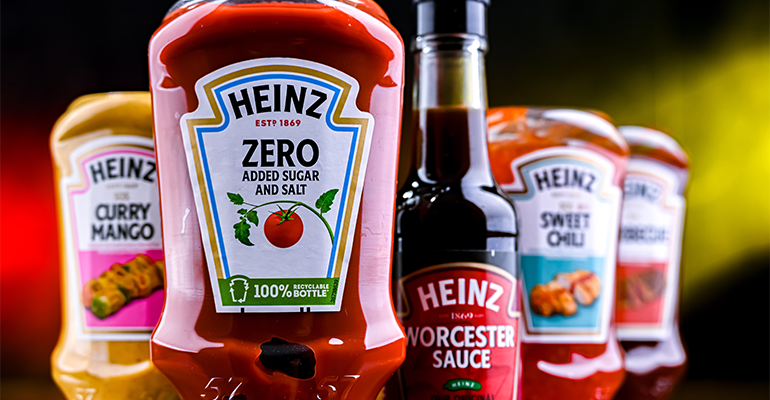
The split will create two businesses: North American Grocery Co, which will oversee US domestic brands such as Oscar Mayer, Kraft Singles, and Lunchables; and Global Taste Elevation Co, which will manage brands like Heinz Ketchup, Philadelphia Cream Cheese, and Kraft Mac & Cheese.
Carlos Abrams-Rivera, the current CEO of Kraft Heinz, will lead North American Grocery Co after the separation. Leadership for the global business is yet to be announced.
Kraft Heinz said there are no plans to change headquarters, which will remain in Chicago and Pittsburgh.
The new structure is intended to provide each company with sharper commercial focus and clearer investment priorities.
Diana Frost, chief growth officer at Kraft Heinz, wrote on LinkedIn: “The creation of these two companies will truly unleash the power of our iconic brands and will unlock new opportunities for innovation and expansion in all the markets we serve.”
Kraft Heinz: Share price buffeted
The decision marks a significant reset nearly a decade after the 2015 merger that created Kraft Heinz.
That $49 billion deal, backed by Warren Buffett’s Berkshire Hathaway and Brazilian private equity firm 3G Capital, combined Kraft Foods Group with HJ Heinz to form one of the world’s largest food manufacturers. The intention was to expand Heinz’s global reach and apply 3G’s cost-cutting model across Kraft’s portfolio.
However, the combined company struggled to keep pace with shifting consumer preferences away from processed foods.
Cost reduction strategies came under fire for weakening product innovation, and in 2019, Kraft Heinz wrote down the value of its Kraft and Oscar Mayer brands by $15.4 billion. According to reporting by Reuters, the company’s share price has declined by 60% since the merger.
In recent years, Kraft Heinz has shifted towards higher-growth categories, selling off its Planters and natural cheese businesses to reinvest in brands like P3 protein snacks and Lunchables. The split is positioned as the next stage in this transformation.
However, investor reaction has not been positive thus far. Shares fell by more than 7% following the announcement, after Buffett told CNBC he was “disappointed” with the decision and did not believe a breakup would solve the company’s structural issues.
Spinoffs, splits, and restructuring
Kraft Heinz joins a growing number of major food and beverage manufacturers streamlining their corporate structures to focus on product category performance.
In 2023, Kellogg finalised its separation into Kellanova – which now manages global snacks including Pringles and Cheez-It – and WK Kellogg Co, which focuses on North American cereals. Both companies gained investor traction following their debut on the New York Stock Exchange.
Other multinationals have followed suit. Unilever is preparing to spin off its global ice cream division, including brands such as Magnum and Ben & Jerry’s, into a standalone listed business.
And in late August, Keurig Dr Pepper and JDE Peet’s announced plans to merge and then separate into dedicated coffee and cold beverage companies called Beverage Co and Global Coffee Co.

Get more of our news on Google
Set Ingredients Network as a 'Preferred Source' to get quicker access to the news you value.
Related news

Do the US dietary guidelines put UPFs under pressure?
10 Sep 2026
Will the US dietary guidelines change the way Americans eat, swapping ultra-processed foods for whole foods? We asked Dr Barry Popkin, renowned nutrition and obesity researcher.
Read more
Food fraud costs UK economy £2bn each year
9 Sep 2026
Food fraud is costing the UK economy up to £2 billion (€2.3 billion) every year although the food sector is more “resilient” than others, according to a recent study.
Read more
Kellogg accelerates work to remove artificial colours from all US cereals
3 Sep 2026
WK Kellogg has announced an accelerated timeline to eliminate all artificial colours and the chemical preservative, BHT, across its full US portfolio of cereals and cereal packaging.
Read more
Skimpflation: An ‘unfair’ and risky approach to keeping prices low
2 Sep 2026
Consumers see skimpflation – reducing the quality of ingredients due to rising costs – as more unfair than shrinkflation, making it a risky strategy according to recent research.
Read more
NielsenIQ’s EU barometer shows Britain leading in grocery inflation
31 Aug 2026
Britain was the only country to record grocery inflation above 2%, according to NielsenIQ data that compared Europe’s five biggest grocery markets from February to May 2026.
Read more
‘Urgent gaps’ in achieving 2030 food system goals
27 Aug 2026
Global food systems are failing to meet 2030 targets across indicators including health, environment, and resilience, according to a report co-authored by the Food and Agriculture Organisation (FAO).
Read more
Chimac’s fusion sauces bring Korean flavours to Europe
25 Aug 2026
Irish sauce brand Chimac is tapping into Korea’s culinary traditions, bringing its flavours and products to European consumers who want a taste of K-food.
Read more
Global demand for instant noodles continues to rise
24 Aug 2026
Global demand for instant noodles reached 124.21 billion servings last year, representing a 0.7% year-on-year increase – or 900 million extra servings.
Read more
Popular barbecue staples experience sharp price increases
19 Aug 2026
The typical cost of US shoppers’ barbecue baskets has risen by 12% over the past year – the fastest annual rise in a decade, figures from The Economist show.
Read more
Hot NPD: Nissin launches first cold-water Cup Noodles
18 Aug 2026
Nissin is taking one of Japan’s most iconic instant meals in a completely new direction with the launch of the first cold water-only Cup Noodles in the brand’s 55-year history.
Read more