
News
Liposomal women’s health supplement takes on tablets
16 Feb 2026Entrepreneur-led Valerie has elected to power its peri/menopause supplement with liposomal nanotechnology in the name of bioavailability and efficacy.
In a sea of soft gels, tablets and capsules, Valerie’s decision to swim against the tide and go with a spoonable liquid format for its women’s health supplement is a bold one. But then again, this brand is no shrinking violet. Its taboo-smashing manifesto is all about “dragging the perimenopause kicking and screaming out into the open” and liberating women from a gender gap that has been “shrouded in shame and secrecy”, and the language it employs to convey its messaging is explicit.
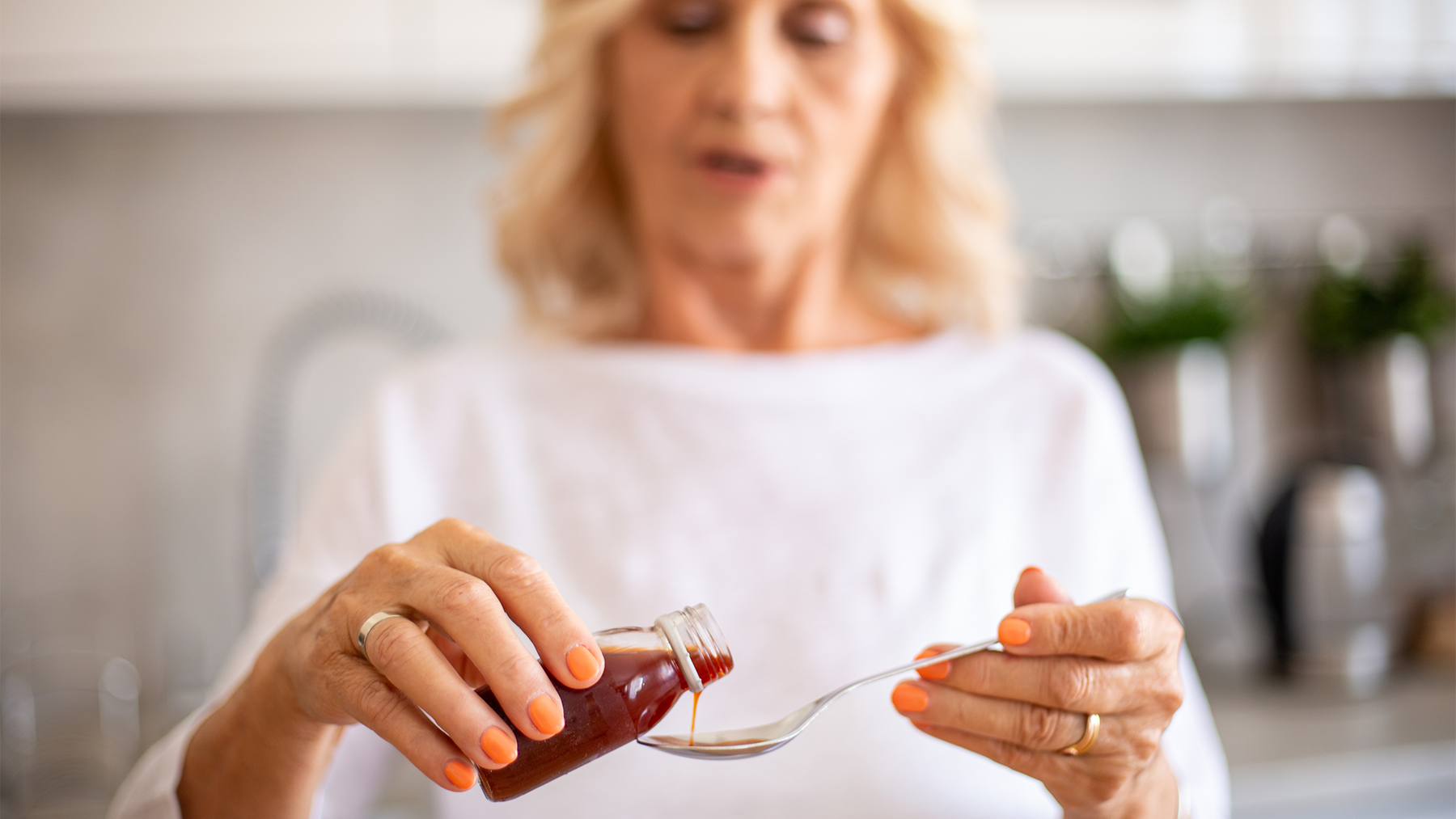
“When launching any new product in any category or market, you need to have a clear USP. Our brand is founded on two pillars - one being the science and technology, and the other being our brand marketing and positioning, and the way we talk to consumers in an unflinchingly real way,” Wizz Selvey, founder of Valerie, told this publication.
Liposomal nanotechnology is integral to the science that underpins the brand’s proposition. This cutting-edge technique delivers the supplement’s dose of 12 active nutrients in a way the body can absorb, Selvey explained.
“We chose liposomal nanotechnology because when nutrients are delivered in this way they are much more bioavailable then when in pills and powders. We knew that the supplement would be much more effective and that the women taking it would see the results,” she said.
Protective nutrient delivery system
Explaining how it works, Selvey said: “The nutrients are encapsulated in nano-sized fat soluble cells made from sunflower phospholipids, which means they are protected as they pass through the body’s digestive system and can get safely into the bloodstream.”
She continued: “The problem with formats like pills, powders, gummies, and non-liposomal liquids, is that they get processed by the digestive and liver enzymes as they pass through your system, so as a result, your body is only absorbing about 10-20% of the nutrients.”
In contrast, the body absorbs about 98% of a liposomal supplement, so none of the nutrients are wasted, Selvey said.
And these are not just arbitrary figures - Valerie is able to back its claims about bioavailability with science. The company has invested in independent third party studies to evaluate the efficacy of its liposomal formulation. In these studies, the bioavailability of liposomal magnesium, iron and curcumin (three of the ingredients in Valerie’s Daily Essential formulation) was compared to non-liposomal powder forms of these ingredients.
The results showed that liposomal iron is 398 more bioavailable than non-liposomal powder iron, liposomal curcumin is 46 times more bioavailable than its non-liposomal counterpart, and magnesium is 5.2 times more bioavailable than when in non-liposomal powder form.
“We haven’t yet done a study on the full formulation, but these studies demonstrate the increase in bioavailability - otherwise known as nutrient absorption rate - when using our patent-pending liposomes versus other traditional supplement formats like tablet and powders,” said Selvey.
This level of efficacy comes at a cost - the formulation itself is expensive to produce, requiring specialist expertise and advanced equipment, resulting in an end user price that is at the higher end of the category spectrum. Consumers can subscribe to receive a 30-day supply of Valerie Daily Essential for £38.35 or a 90-day supply for £106.20. The company also offers an AM:PM bundle of Daily and Evening Essential, which provides 17 active nutrients in a dual phase system, for £89 per month.
One shot, no more supplement stacking
However, Selvey is unapologetic about the cost of the supplement, pointing out that it provides 12 nutrients in one shot, and that once people look into the science behind Valerie, they understand why it costs what it does.
“I think particularly among the demographic we are targeting, which is women who are 35+, there is a lot of mistrust, because they have taken supplements before, usually a powder or pill, and haven’t really felt the difference. People want proof - they want to know that what they are spending their money on is worth it.
“So yes - we might be at a higher price point, but customers are getting value for money because they are getting all their supplements in one shot, and then there’s the bioavailability… Some people are spending hundreds a month on supplement stacking, and if they aren’t absorbing them, it’s a waste of money.”
Not content with relying on lab studies alone for proof of efficacy, Valerie commissioned a 12-week consumer trial to evaluate the impact of Daily Essential in perimenopausal women. After four weeks of taking the supplement daily, 80% reported feeling a difference in their symptoms, and after 12 weeks, 96% reported sharper focus and a clearer mind, 88% felt a boost in energy, and 92% felt calmer and more relaxed.
In conjunction with a raft of positive Trustpilot reviews, this consumer study has contributed to a growing user evidence base for Valerie.
“We developed this product in this format because we were confident it would work, but the impact it has had on women’s lives is incredible,” said Selvey.
Valerie is currently on sale in the UK in Revital and Liberty stores, and online via Holland & Barrett.
Related news

Griddle Bakery makes pastries without preservatives
12 Feb 2026
UK brand Griddle Bakery makes frozen, clean-label pastries without UPF ingredients. “Frozen often means fresher, cleaner, and less wasteful,” it says.
Read more
Digital energy management will fuel food production in 2026
9 Feb 2026
Using AI to manage digital energy consumption in factories is the latest strategy in manufacturers’ toolbox for sustainable operations and efficient energy use.
Read more
How industry can future-proof food procurement
5 Feb 2026
Global food supply chains must adapt procurement strategies to remain resilient and sustainable, according to a World Economic Forum paper.
Read more
Hybrid milk and cheese: The perfect blend of familiarity and low footprints?
4 Feb 2026
Hybrid blends of dairy and plant-based milk and cheese may be emerging as a credible growth space, according to experts.
Read more
Upcycled veggie promise: IKEA launches broccoli leaf soup
3 Feb 2026
IKEA is launching a soup made with upcycled broccoli leaves, following a partnership with non-profit Axfoundation.
Read more
EU pushes ahead on ‘more innovative plant breeding’
2 Feb 2026
The European Union will soon adopt a regulation on new genomic techniques for plants to drive innovation and sustainability – but consumer groups have raised concerns.
Read more
Nestlé blames sustainability slowdown on Trump
30 Jan 2026
Nestlé is not as vocal as it could be about its sustainability programmes– in part due to US president Trump’s opposition to tackling climate change, Nestlé CEO has said.
Read more
Big deals catapult big food into new M&A era for 2026
29 Jan 2026
As global players, including Mars, Ferrero and Keurig Dr Pepper, secure major merger and acquisition deals, we look at the 2026 trends shaping the landscape.
Read more
EU Parliament stalls Mercosur trade deal, delaying agriculture tariff cuts
28 Jan 2026
The vote underscores ongoing concerns over the impact on EU farming sectors, especially beef, and deepens uncertainty around the agreement’s timeline.
Read more
Commodity outlook 2026: Prices stable but key crops have sourcing risks
27 Jan 2026
Ingredient costs should remain stable in 2026 due to soft commodity prices and record-high stocks – although geopolitical uncertainty may cause disruptions.
Read more