
Ingredients Categories
Finished Products
Finished Food Categories
- Bakery
- Beverages / Juices
- Cereal and grain products
- Confectionery
- Cooking Fats & Oils
- Dairy
- Egg products
- Fruits & Vegetables
- Infant & Baby food
- Meat, Poultry & Fish
- Nuts & Seeds products
- Other Finished Food Categories
- Pet Food
- Plant-based foods
- Prepared foods
- Sauces & Seasonings
- Sweet & Savoury Spreads
Specialised Finished Products
- Bee products
- Biotic products
- Dietary supplements
- Energy drinks
- Functional beverages
- Functional confectionery
- Functional food
- Functional powders
- Meal replacement products
- Nutricosmetics
- Other Specialised Finished Products
- Pet Dietary Supplements
- Pharma and OTC products
- Protein products
- Sugar replacers / Sweeteners
Health & Wellness Areas
Delivery Formats
Operations & Services
- 3D printing
- Analysis/ Testing
- Auditing & certifications
- Blending & mixing
- Bottling
- Certification
- Clinical trials
- Co-packing
- Coating
- Consulting
- Contract manufacturing
- Drying
- Electrospinning
- Encapsulating
- Enzymatic processing
- Extracting
- Extrusion
- Fat structuring
- Fermentation
- Filling
- Flavour development
- Freeze drying
- Granulating/ grinding/ milling / mixing
- High-pressure processing
- Labelling
- Other Operations & Services
- Packaging
- Packet filling
- Pasturising
- Quality assurance
- Saccharification
- Shear cell processing
- Spray drying
- Sterilisation
- Storage & Logistics
- Tabletting
- Toasting / roasting
- Ultra-high temperature processing
News
Big deals catapult big food into new M&A era for 2026
Natasha Spencer-Jolliffe, Freelance Journalist 29 Jan 2026As global players, including Mars, Ferrero and Keurig Dr Pepper, secure major merger and acquisition deals, we look at the 2026 trends shaping the landscape.
In 2025, a wave of shake-up deals swept the global food and beverage (F&B) industry. Acquisitions, consolidations, and a focus on divestments and portfolio reshaping signal key trends that are evolving to reflect consumer and market demands.

Global M&A activity in the food and beverage sector remains resilient with deals up in 2025 to an estimated $4.8 trillion (€4.1 tn), a rise of 36% compared to 2024. Premiumisation, health and wellness trends, and sustainability priorities underpin these deal volumes.
“Across global food & beverage, M&A activity is increasingly being used as a portfolio-shaping and capability-building tool, rather than purely for scale,” Nandini Roy Choudhury, senior research manager at Future Market Insights, told Ingredients Network.
Expansion is attractive, but caution persists
Consolidation remains a trend in corporate finance in 2026, with numerous independent, standalone businesses being acquired by larger players seeking to expand their groups.
Large-scale platform consolidation in snacking and packaged foods has shaped the sector. “Select megadeals are still occurring where there is a compelling global brand and distribution rationale,” said Choudhury.
Mars acquired Kellanova – the company that makes Pop-Tarts and Pringles – in a $35.9 billion (€31 bn) deal. Another major confectionery and snacking name, Ferrero, bought WK Kellogg in a $3.1 billion (€2.7 bn) deal to expand its presence in the US cereals market. The deals illustrate how leading players are doubling down on global platforms with strong brand equity and manufacturing scale.
In the drinks sphere, Keurig Dr Pepper (KDP) took over JDE Peet’s for $18 million in a move designed to support and lift KDP’s coffee sales. Bringing together beverage brands Dr Pepper with Peet’s Coffee and JDE, it marked Europe’s largest acquisition. Carlsberg also acquired Britvic, strengthening its soft drinks presence.
Associated British Foods (ABF) acquired Hovis Group to consolidate the market and expand product offerings. Italy-based Newlat Food bought Princes in a €807 million purchase and Waitrose acquired premium meal-kit provider Dishpatch, highlighting the growing appetite for convenience and experiential dining.
Companies are structuring deals to secure manufacturing capabilities, optimise footprints and strengthen distribution reach, focusing on operational resilience and supply-chain logic.
While accessible finance for deals was up in 2025, valuations for these companies remain reserved.
“Investors and corporate acquirers alike have displayed cautious confidence,” David Wilson, corporate finance partner at Armstrong Watson LLP, told this publication. Macroeconomic uncertainties with inflation, interest rates, supply chain issues and increases in the minimum wage/living wage are behind these reservations.
Health, wellness and functionality drive deals
Functional food and beverages, snacking categories, convenient buys, and on-the-go nutrition that support conscious shoppers are expected to spur significant financial moves for global F&B companies in 2026.
“Strategic buyers and private equity firms are actively reshaping portfolios, focusing on high-growth niches such as non-alcoholic beverages, plant-based products, and functional foods,” Alexei Garan, partner at Shaw & Co, said.
Appealing to consumers’ demands for finished products that support health and wellness, better-for-you lifestyle choices, and turning one-off purchases into daily rituals, functional products are an attractive prospect for big-name, legacy brands.
“Private equity has been a large factor in the sustained deal flow, with plenty of roll-up opportunities within the consumer and more health-focused sectors,” Wilson said.
With financial backing, robust supply chains and extensive distribution networks, large players can actively support the growth of functional startups and scaling SMEs. Their household-name status and branding expertise allow them to position functional consumer packaged goods (CPGs) into both wellness-specific segments and the mass market.
Buyers want ideal portfolio picks
Purchasers are increasingly selective, looking for companies that build resilience into their supply chains. “We have noticed that acquirers have been prioritising buy and build strategies with more emphasis on portfolio suitability and not on opportunistic acquisitions,” Wilson said.
There has been a shift to optimising portfolios and creating carve-outs. “Large multinationals are simplifying portfolios and exiting structurally complex or lower-synergy businesses,” said Choudhury. Unilever’s separation of its Ice Cream business (Magnum, Ben & Jerry’s, Walls) was an example of this, driven by the category's different capital intensity and cold-chain dynamics. Similarly, Kraft Heinz announced plans to split into two standalone businesses, indicating a broader push toward strategic clarity.
Food and drink companies are also moving upstream into ingredients and solutions. There is rising interest in ingredients and specialty components, where defensibility stems from formulation expertise, customer stickiness and pricing power. Transactions such as Tate & Lyle’s acquisition of CP Kelco and ADM’s acquisition of Fuerst Day Lawson highlight this shift toward higher-margin, solutions-led ingredient portfolios.
Anticipated M&A trends in 2026
“We expect M&A activity to remain active but more disciplined and thesis-driven,” said Choudhury. Consolidation, innovation and sustainability are expected to drive M&A deals.
Corporates are likely to prioritise strategic portfolio optimisation, focusing on high-growth niches rather than transformative megadeals. Health-conscious brands, plant-based products, and premium offerings, alongside sustainability-driven acquisitions will be notable. “Consolidation in high-growth verticals, especially for premium beverage companies and wellness brands and those that are linked to consumer trends, will be more attractive,” said Wilson.
“Despite economic headwinds and cost pressures, quality assets continue to command strong valuations, with deal-making increasingly centred on ESG alignment and supply chain resilience,” said Garan.
Technology will also play a pivotal role in 2026, with businesses seeking AI capabilities and digital tools to enhance efficiency and consumer engagement.
Private equity firms are expected to dominate mid-market transactions, deploying significant dry powder through bolt-on acquisitions and platform investments. Portfolio rationalisations, including carve-outs and divestments of non-core assets that do not strategically fit with their future vision, reiterate themes of value-driven deal flow.

Get more of our news on Google
Set Ingredients Network as a 'Preferred Source' to get quicker access to the news you value.
Related news

Do the US dietary guidelines put UPFs under pressure?
10 Sep 2026
Will the US dietary guidelines change the way Americans eat, swapping ultra-processed foods for whole foods? We asked Dr Barry Popkin, renowned nutrition and obesity researcher.
Read more
Health and wellness engagement matures across Middle East and Africa
4 Sep 2026
Many consumers in the Middle East and Africa are now proactively engaged in health and wellness, looking to integrate better habits and products into their daily lives, say experts.
Read more
Skimpflation: An ‘unfair’ and risky approach to keeping prices low
2 Sep 2026
Consumers see skimpflation – reducing the quality of ingredients due to rising costs – as more unfair than shrinkflation, making it a risky strategy according to recent research.
Read more
‘Urgent gaps’ in achieving 2030 food system goals
27 Aug 2026
Global food systems are failing to meet 2030 targets across indicators including health, environment, and resilience, according to a report co-authored by the Food and Agriculture Organisation (FAO).
Read more
Seven-Eleven uses microbial testing tech to extend katsudon shelf life
26 Aug 2026
Japanese retail company Seven-Eleven has improved its factory’s microbial environment to keep comfort-food staple, katsudon, fresher for longer.
Read more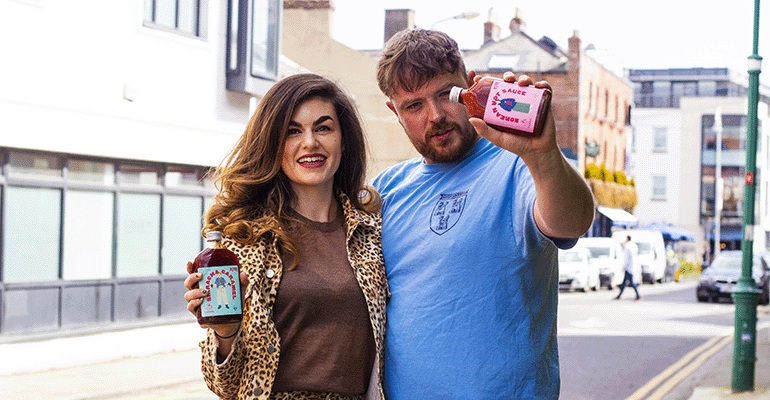
Chimac’s fusion sauces bring Korean flavours to Europe
25 Aug 2026
Irish sauce brand Chimac is tapping into Korea’s culinary traditions, bringing its flavours and products to European consumers who want a taste of K-food.
Read more
Global demand for instant noodles continues to rise
24 Aug 2026
Global demand for instant noodles reached 124.21 billion servings last year, representing a 0.7% year-on-year increase – or 900 million extra servings.
Read more
Popular barbecue staples experience sharp price increases
19 Aug 2026
The typical cost of US shoppers’ barbecue baskets has risen by 12% over the past year – the fastest annual rise in a decade, figures from The Economist show.
Read more
Hot NPD: Nissin launches first cold-water Cup Noodles
18 Aug 2026
Nissin is taking one of Japan’s most iconic instant meals in a completely new direction with the launch of the first cold water-only Cup Noodles in the brand’s 55-year history.
Read more
Manam Chocolate aims to bring premium Indian cacao to 'the world stage'
11 Aug 2026
Craft chocolate brand Manam Chocolate is investing in local expansion and supply chain innovation throughout India as it works to build out the premium reputation of its locally produced cacao products.
Read more