
Ingredients Categories
Finished Products
Finished Food Categories
- Bakery
- Beverages / Juices
- Cereal and grain products
- Confectionery
- Cooking Fats & Oils
- Dairy
- Egg products
- Fruits & Vegetables
- Infant & Baby food
- Meat, Poultry & Fish
- Nuts & Seeds products
- Other Finished Food Categories
- Pet Food
- Plant-based foods
- Prepared foods
- Sauces & Seasonings
- Sweet & Savoury Spreads
Specialised Finished Products
- Bee products
- Biotic products
- Dietary supplements
- Energy drinks
- Functional beverages
- Functional confectionery
- Functional food
- Functional powders
- Meal replacement products
- Nutricosmetics
- Other Specialised Finished Products
- Pet Dietary Supplements
- Pharma and OTC products
- Protein products
- Sugar replacers / Sweeteners
Health & Wellness Areas
Delivery Formats
Operations & Services
- 3D printing
- Analysis/ Testing
- Auditing & certifications
- Blending & mixing
- Bottling
- Certification
- Clinical trials
- Co-packing
- Coating
- Consulting
- Contract manufacturing
- Drying
- Electrospinning
- Encapsulating
- Enzymatic processing
- Extracting
- Extrusion
- Fat structuring
- Fermentation
- Filling
- Flavour development
- Freeze drying
- Granulating/ grinding/ milling / mixing
- High-pressure processing
- Labelling
- Other Operations & Services
- Packaging
- Packet filling
- Pasturising
- Quality assurance
- Saccharification
- Shear cell processing
- Spray drying
- Sterilisation
- Storage & Logistics
- Tabletting
- Toasting / roasting
- Ultra-high temperature processing
News
Opportunities grow for lower-caffeine coffee
23 Dec 2022
Many consumers want the mental focus of caffeine without the jitters, prompting a wave of product development such as “half caffeine” ground coffee or ready-to-drink (RTD) cold brew blended with relaxing botanicals.
According to a consumer survey by market research company Mintel, 66% of Italian coffee drinkers agree drinking a lot of coffee is bad for them.
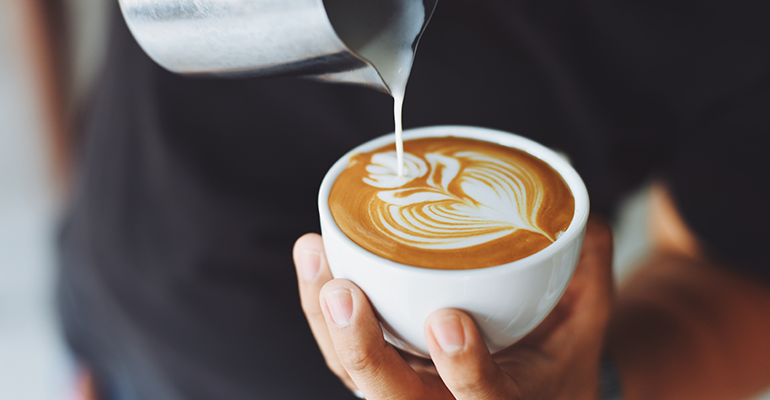
While this is not necessarily the case - one meta-analysis looked at the association between drinking coffee and mortality found an 18% reduction in risk of death among US and European men who drank two or three cups a day – heavy coffee consumption has long been regarded as a vice by many people due to the caffeine content and ‘jittery’ feeling it can provoke.
A growing number of people are therefore looking for lower caffeine coffee, notes Mintel – and this is creating opportunities for product innovation.
Sustained energy without the caffeine crash
“Moderate caffeine levels can help consumers prolong their productivity,” it says in its top food and drink trend predictions for 2023. “Consumers value coffee’s mental energy boost but can express concerns about its health impact. Lower-caffeine coffee can communicate ‘sustained energy’ without over-caffeination.”
The market research company recommends brands expand lower-caffeine coffee products, using strategies such as blended ingredients and naturally low-caffeine coffee beans.
UK company Café Libre makes “half-caff” and “quarter-caff” coffee that is decaffeinated using the chemical-free Swiss Water method. According to the company, because the process uses only water, it is able to extract the caffeine while retaining the flavour.
Brands could also explore new sources of moderate caffeine. Laurina coffee, for instance, is a variety of Arabica that contains around half the amount of caffeine as other Arabicas.
Originating from Réunion Island, it has a fruity flavour, according to Maison du Laurina, which grows the low-caffeine variety on the island. According to Mintel, Laurina coffee beans “have future potential” and Berlin roaster The Barn has launched a ‘naturally low-caffeine Laurina varietal’.
Reducing the caffeine content of coffee or using lower caffeine varieties may not reduce its health benefits. According to the same meta-analysis cited previously, the reduced mortality association was present regardless of the caffeine content, prompting the researchers to conclude the health benefit may be linked to other healthy compounds, such as flavonoids and polyphenols.
Coffee blended with soothing botanicals
Some brands blend conventional coffee with botanical ingredients to soften the effect of caffeine. Four Sigmatic is a US-Finnish brand that adds the adaptogenic mushroom, chaga, to ground coffee.
“Our Finnish grandparents brewed mushrooms when they couldn’t get coffee. Turns out those mushrooms—chaga—are a powerful, immune-supporting […] food,” it says on its website.
According to the company, chaga balances out the nervous, ‘jittery’ feeling that caffeine can cause as well as providing immune health benefits, without overpowering the flavour of the coffee.
US brand Quokka Brew markets its ready-to-drink coffee as “the caffeinated jitter-less coffee” that “contains more caffeine than a cup and a half of coffee with no jitters or crash”. The company says it has a patent-pending blend of calming ingredients found in green tea that, when blended with the energy-boosting caffeine of cold brew coffee, results in an “elevated state of focus and energy”. It uses botanicals such as L-theanine, ginseng, and green tea leaf extract.

Get more of our news on Google
Set Ingredients Network as a 'Preferred Source' to get quicker access to the news you value.
Related news

Skimpflation: An ‘unfair’ and risky approach to keeping prices low
2 Sep 2026
Consumers see skimpflation – reducing the quality of ingredients due to rising costs – as more unfair than shrinkflation, making it a risky strategy according to recent research.
Read more
NielsenIQ’s EU barometer shows Britain leading in grocery inflation
31 Aug 2026
Britain was the only country to record grocery inflation above 2%, according to NielsenIQ data that compared Europe’s five biggest grocery markets from February to May 2026.
Read more
‘Urgent gaps’ in achieving 2030 food system goals
27 Aug 2026
Global food systems are failing to meet 2030 targets across indicators including health, environment, and resilience, according to a report co-authored by the Food and Agriculture Organisation (FAO).
Read more
China beverages: Is herbal innovation the future?
20 Aug 2026
Herbal and botanical innovation in China's drinks market continues to grow, with ingredients like astragalus root, ginger, and ginseng in the spotlight – and focus shifting far beyond refreshment.
Read more
Popular barbecue staples experience sharp price increases
19 Aug 2026
The typical cost of US shoppers’ barbecue baskets has risen by 12% over the past year – the fastest annual rise in a decade, figures from The Economist show.
Read more
Beyond 'nice to have': A spotlight on US functional beverages
12 Aug 2026
Functional beverage interest in the US is gaining important ground as consumers now expect function rather than see it as "nice to have", and there are clear market gaps for growth, according to Spate.
Read more
Manam Chocolate aims to bring premium Indian cacao to 'the world stage'
11 Aug 2026
Craft chocolate brand Manam Chocolate is investing in local expansion and supply chain innovation throughout India as it works to build out the premium reputation of its locally produced cacao products.
Read more
Digital twin technology gains ground in food manufacturing
6 Aug 2026
Food and beverage companies are increasingly turning to digital twins to optimise and automate manufacturing processes, but opportunities stretch far beyond this, say experts.
Read more
How Secon Taste is putting upcycled snacks on shelves
4 Aug 2026
Hungarian zero-waste startup Secon Taste is turning surplus food into upcycled snacks such as fibre-packed granola, instant porridge, and a circular coffee-tasting box.
Read more
Codex sets global thresholds for ‘may contain’ labels
3 Aug 2026
Codex Alimentarius has adopted its first global guidance on when to use “may contain” allergen warnings, setting thresholds intended to stop the label being used as blanket legal cover.
Read more