
Ingredients Categories
Finished Products
Finished Food Categories
- Bakery
- Beverages / Juices
- Cereal and grain products
- Confectionery
- Cooking Fats & Oils
- Dairy
- Egg products
- Fruits & Vegetables
- Infant & Baby food
- Meat, Poultry & Fish
- Nuts & Seeds products
- Other Finished Food Categories
- Pet Food
- Plant-based foods
- Prepared foods
- Sauces & Seasonings
- Sweet & Savoury Spreads
Specialised Finished Products
- Bee products
- Biotic products
- Dietary supplements
- Energy drinks
- Functional beverages
- Functional confectionery
- Functional food
- Functional powders
- Meal replacement products
- Nutricosmetics
- Other Specialised Finished Products
- Pet Dietary Supplements
- Pharma and OTC products
- Protein products
- Sugar replacers / Sweeteners
Health & Wellness Areas
Delivery Formats
Operations & Services
- 3D printing
- Analysis/ Testing
- Auditing & certifications
- Blending & mixing
- Bottling
- Certification
- Clinical trials
- Co-packing
- Coating
- Consulting
- Contract manufacturing
- Drying
- Electrospinning
- Encapsulating
- Enzymatic processing
- Extracting
- Extrusion
- Fat structuring
- Fermentation
- Filling
- Flavour development
- Freeze drying
- Granulating/ grinding/ milling / mixing
- High-pressure processing
- Labelling
- Other Operations & Services
- Packaging
- Packet filling
- Pasturising
- Quality assurance
- Saccharification
- Shear cell processing
- Spray drying
- Sterilisation
- Storage & Logistics
- Tabletting
- Toasting / roasting
- Ultra-high temperature processing
News
PAN calls for ban after ‘forever chemicals’ found in UK food
Natasha Spencer-Jolliffe, Freelance Journalist 26 Apr 2024Campaign group Pesticide Action Network (PAN) found PFAS pesticides, or ‘forever chemicals’, in over half of the samples of British produce it tested – but the UK government says strict limits are in place.
Pesticide Action Network (PAN) UK, a charity advocating for safe and sustainable alternatives to hazardous pesticides, identified polyfluoroalkyl substances (PFAS) pesticides in many everyday UK food items. With concerns for human health as a result of the new research, PAN is urging the UK government to stop the use of 25 pesticides in food production.
The charity analysed the latest results from the UK government’s residue testing programme, published in The Expert Committee on Pesticide Residues in Food (PRiF) Annual Report 2022. PAN identified 10 different PFAS pesticides, known as ‘forever chemicals’ in spices and fruits and vegetables. The 10 pesticides found comprise five types of insecticide and five kinds of pesticide.
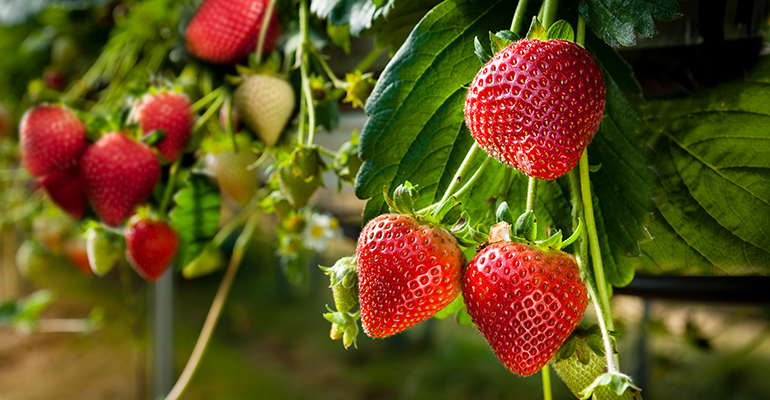
Strawberries were the biggest carriers of PFAS pesticides, PAN’s research found, with 95% of the 120 samples tested by the UK government in 2022. Grapes, cherries, spinach, and tomatoes were also among the worst offenders, with 61% (109), 56% (121), 42% (96) and 38% (96) of the samples found to contain PFAS pesticides.
UK government argues within legal limits
However, the Department for Environment, Food and Rural Affairs (Defra), which published the PRiF report, indicates that its 2022 results show that nearly all (over 98%) of the food samples tested complied with legal limits for pesticides in that food, otherwise known as Maximum Residue Levels (MRLs). Under 2% of samples contain residues over legal maximum residue levels, Defra said.
“We set strict limits on the pesticide residue levels in both food for consumers and feed for animals,” a Defra spokesperson told Ingredients Network. “These limits are set to protect public health and are set below the level considered safe for people to eat as well as applying to both food produced in the UK and those imported from other countries,” the spokesperson added.
Food samples are tested for various pesticides, including PFAS chemicals, each year. While samples with residues over the legal MRLs are assessed, Defra said this only amounts to a small minority of these samples. Where necessary, the UK body, the Food Standards Agency (FSA), may take further action. Furthermore, in these instances, Defra said that it rarely finds any likely risk to the health of people who have eaten the associated food.
Worrying questions over health impact
PFAS refer to a family of approximately 12,000 chemicals. They are typically present in household products, such as non-stick pans, and some pesticides contain PFAS that can make their way into human bodies via diet.
They have been branded forever chemicals due to their ability to remain in the environment and gather in the blood, bones and tissue of living organisms, including humans, a 2017 research study indicated. While PAN said there is evidence to suggest these ‘forever chemicals’ are already present in most people’s blood, limited research exists in the UK exploring how they are linked to health problems. “A situation often used by the government and chemicals industry to delay action,” PAN said in its release.
Concerns are high as peer-reviewed studies carried out in other countries have drawn an association with PFAS exposure to various serious health problems, including a raised risk of cancer and reduction in fertility and the immune system’s ability to fight infections, a 2023 scientific article in The Lancet, suggested.
“Given the growing body of evidence linking PFAS to serious diseases such as cancer, it is deeply worrying that UK consumers are being left with no choice but to ingest these chemicals, some of which may remain in their bodies long into the future,” said Nick Mole, policy officer at PAN UK.
The campaigners express worries over the risk of childhood exposure to PFAS pesticides as they have been connected in a 2017 study to behavioural changes and developmental effects or delays in children, such as low birth weight and accelerated puberty.
“With some plastic food packaging also contaminated with PFAS, and PFAS present in UK drinking water and soil, we urgently need to better understand the health risks associated with ingesting these ‘forever chemicals’ and do everything we can to exclude them from the food chain,” added Mole.
In line with Defra’s 25-Year Environment Plan, the UK government department says its forthcoming National Action Plan on the Sustainable Use of Pesticides (NAP) will seek to support pesticide users in maximising non-chemical control approaches. “The NAP will be published in due course,” Defra’s spokesperson said.
Achieving a PFAS-free economy
In the UK, there are 25 PFAS pesticides currently in use, six of which are classified as ‘Highly Hazardous’. Farmers are typically unaware they are spraying ‘forever chemicals’ on their crops because labelling on packaging lacks information indicating as such.
Furthermore, the Environment Agency does not actively sample rivers for any of these 25 PFAS pesticides. Therefore, the UK does not know how much of these chemicals travel from agricultural fields to contaminate rivers and other water sources.
“PFAS pesticides are absolutely unnecessary for growing food and are an easily avoidable source of PFAS pollution. Getting rid of them would be a massive win for consumers, farmers and the environment,” Mole added.
PAN UK is calling on the UK government to urgently ban these 25 PFAS pesticides. It also urges for an increase in support for farmers to help them end their reliance on chemicals and adopt safer and more sustainable alternatives. The organisation is also behind health and environment non-government organisations (NGOs) calling for the UK to work towards achieving a PFAS-free economy by 2035.
In April 2023, Defra saw the arrival of the Health and Safety Executive’s publication of the PFAS Regulatory Management Options Analysis (RMOA). Defra has accepted RMOA’s recommendations, it says, which include work under UK REACH to reduce PFAS emissions by considering restrictions.

Get more of our news on Google
Set Ingredients Network as a 'Preferred Source' to get quicker access to the news you value.
Related news

M&S launches own-brand pet food range
11 Sep 2026
UK retailer Marks & Spencer has launched its own-brand pet food line Paws & Pals – a well-timed and strategic move that will appeal to loyal shoppers, says a marketing expert.
Read more
Do the US dietary guidelines put UPFs under pressure?
10 Sep 2026
Will the US dietary guidelines change the way Americans eat, swapping ultra-processed foods for whole foods? We asked Dr Barry Popkin, renowned nutrition and obesity researcher.
Read more
Food fraud costs UK economy £2bn each year
9 Sep 2026
Food fraud is costing the UK economy up to £2 billion (€2.3 billion) every year although the food sector is more “resilient” than others, according to a recent study.
Read more
Kellogg accelerates work to remove artificial colours from all US cereals
3 Sep 2026
WK Kellogg has announced an accelerated timeline to eliminate all artificial colours and the chemical preservative, BHT, across its full US portfolio of cereals and cereal packaging.
Read more
‘Urgent gaps’ in achieving 2030 food system goals
27 Aug 2026
Global food systems are failing to meet 2030 targets across indicators including health, environment, and resilience, according to a report co-authored by the Food and Agriculture Organisation (FAO).
Read more
Chimac’s fusion sauces bring Korean flavours to Europe
25 Aug 2026
Irish sauce brand Chimac is tapping into Korea’s culinary traditions, bringing its flavours and products to European consumers who want a taste of K-food.
Read more
Savoury protein snacks shake up the on-the-go market
10 Aug 2026
Sweet flavours have dominated the high-protein snack category but savoury snacks, such as cheese bars and meat sticks, can appeal to health-conscious consumers.
Read more
Nestlé invests in regeneratively farmed wheat for KitKat
5 Aug 2026
Nestlé will pay a premium for Wildfarmed’s regeneratively farmed wheat but the CPG remains reticent to promote the move on packs of its KitKat bars.
Read more
How Secon Taste is putting upcycled snacks on shelves
4 Aug 2026
Hungarian zero-waste startup Secon Taste is turning surplus food into upcycled snacks such as fibre-packed granola, instant porridge, and a circular coffee-tasting box.
Read more
Codex sets global thresholds for ‘may contain’ labels
3 Aug 2026
Codex Alimentarius has adopted its first global guidance on when to use “may contain” allergen warnings, setting thresholds intended to stop the label being used as blanket legal cover.
Read more