
Ingredients Categories
Finished Products
Finished Food Categories
- Bakery
- Beverages / Juices
- Cereal and grain products
- Confectionery
- Cooking Fats & Oils
- Dairy
- Egg products
- Fruits & Vegetables
- Infant & Baby food
- Meat, Poultry & Fish
- Nuts & Seeds products
- Other Finished Food Categories
- Pet Food
- Plant-based foods
- Prepared foods
- Sauces & Seasonings
- Sweet & Savoury Spreads
Specialised Finished Products
- Bee products
- Biotic products
- Dietary supplements
- Energy drinks
- Functional beverages
- Functional confectionery
- Functional food
- Functional powders
- Meal replacement products
- Nutricosmetics
- Other Specialised Finished Products
- Pet Dietary Supplements
- Pharma and OTC products
- Protein products
- Sugar replacers / Sweeteners
Health & Wellness Areas
Delivery Formats
Operations & Services
- 3D printing
- Analysis/ Testing
- Auditing & certifications
- Blending & mixing
- Bottling
- Certification
- Clinical trials
- Co-packing
- Coating
- Consulting
- Contract manufacturing
- Drying
- Electrospinning
- Encapsulating
- Enzymatic processing
- Extracting
- Extrusion
- Fat structuring
- Fermentation
- Filling
- Flavour development
- Freeze drying
- Granulating/ grinding/ milling / mixing
- High-pressure processing
- Labelling
- Other Operations & Services
- Packaging
- Packet filling
- Pasturising
- Quality assurance
- Saccharification
- Shear cell processing
- Spray drying
- Sterilisation
- Storage & Logistics
- Tabletting
- Toasting / roasting
- Ultra-high temperature processing
News
PepsiCo and Starbucks partner to launch energy drink
Katja Knox, Editorial Account Manager 7 Feb 2022Starbucks is launching a branded energy drink called Baya through its partnership with PepsiCo, according to a press release from the coffee chain. The 12-ounce ready-to-drink cans of liquid energy will come in three fruity flavors: Mango Guava, Raspberry Lime and Pineapple Passionfruit.
Each 90-calorie can will have 160 mg of caffeine and will retail for $2.89. Currently, these energy beverages are available in U.S. grocery stores, national retailers, convenience stores and gas stations as well as online grocery marketplaces. Beginning March 1, customers can also purchase Starbucks Baya Energy at Starbucks stores in the U.S.
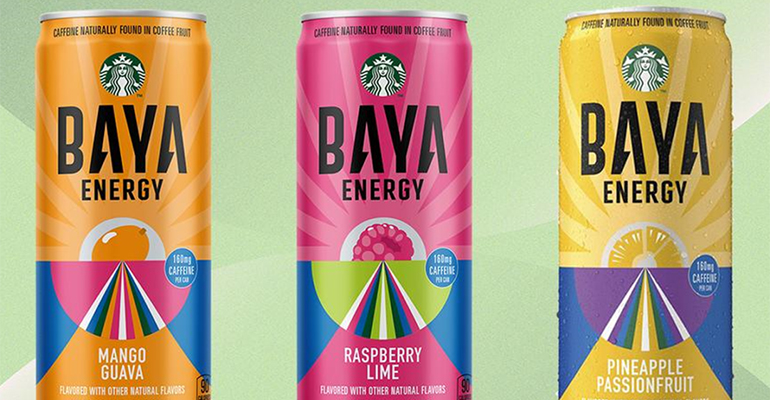
Starbucks and PepsiCo have long been partners in developing ready-to-drink beverages. Since 1994, the two corporations have worked under the umbrella of the North American Coffee Partnership (NACP) to develop and distribute beverages like the bottled Starbucks Frappuccino. Their success has been staggering, and the partnership is now responsible for 80% of sales in the RTD coffee category, according to IRI data cited by Starbucks. Baya is the first time that the duo has stepped into energy drinks.
However, while Starbucks is new to the segment, PepsiCo is familiar with dreaming up energy beverages. The soda conglomerate has previously teamed up with Bang energy to be the brand's exclusive distributor until October 2023, purchased Rockstar in 2020 for $3.85 billion and, most recently, it launched its own re-branded line of energy drinks called Mtn Dew Energy. Looking at the popularity of these beverages, it is no surprise that the beverage giant wants to move deeper into the energy drink space.
In the nonalcoholic beverage space, energy drinks are performing strongly. In 2020, sales rose 9.2%, an increase of 37.4% from 2015, according to Mintel data cited by Starbucks. Not only are people looking for energy widely purchasing these beverages, but often these RTD options come with additional functional benefits to appeal to consumers who are progressively searching for their drinks to do more than just hydrate.
Baya is playing to consumers who are interested in functional beverages. The new energy beverage is loaded with caffeine that is naturally found in coffee fruit as well as antioxidant vitamin C for immune support.
This entrance into a new category is complemented by Starbucks’ launch of a slew of new products this year containing oat milk. Thanks to the popularity of this plant-based milk and Starbucks’ commitment to reducing its carbon emissions by 50% by 2030 — in part through expanding plant-based menu choices around the world — the coffee chain is launching versions of its cold brew and Frappuccinos with oat milk.

Get more of our news on Google
Set Ingredients Network as a 'Preferred Source' to get quicker access to the news you value.
Related news

Do the US dietary guidelines put UPFs under pressure?
10 Sep 2026
Will the US dietary guidelines change the way Americans eat, swapping ultra-processed foods for whole foods? We asked Dr Barry Popkin, renowned nutrition and obesity researcher.
Read more
Food fraud costs UK economy £2bn each year
9 Sep 2026
Food fraud is costing the UK economy up to £2 billion (€2.3 billion) every year although the food sector is more “resilient” than others, according to a recent study.
Read more
Skimpflation: An ‘unfair’ and risky approach to keeping prices low
2 Sep 2026
Consumers see skimpflation – reducing the quality of ingredients due to rising costs – as more unfair than shrinkflation, making it a risky strategy according to recent research.
Read more
NielsenIQ’s EU barometer shows Britain leading in grocery inflation
31 Aug 2026
Britain was the only country to record grocery inflation above 2%, according to NielsenIQ data that compared Europe’s five biggest grocery markets from February to May 2026.
Read more
‘Urgent gaps’ in achieving 2030 food system goals
27 Aug 2026
Global food systems are failing to meet 2030 targets across indicators including health, environment, and resilience, according to a report co-authored by the Food and Agriculture Organisation (FAO).
Read more
China beverages: Is herbal innovation the future?
20 Aug 2026
Herbal and botanical innovation in China's drinks market continues to grow, with ingredients like astragalus root, ginger, and ginseng in the spotlight – and focus shifting far beyond refreshment.
Read more
Popular barbecue staples experience sharp price increases
19 Aug 2026
The typical cost of US shoppers’ barbecue baskets has risen by 12% over the past year – the fastest annual rise in a decade, figures from The Economist show.
Read more
Beyond 'nice to have': A spotlight on US functional beverages
12 Aug 2026
Functional beverage interest in the US is gaining important ground as consumers now expect function rather than see it as "nice to have", and there are clear market gaps for growth, according to Spate.
Read more
Manam Chocolate aims to bring premium Indian cacao to 'the world stage'
11 Aug 2026
Craft chocolate brand Manam Chocolate is investing in local expansion and supply chain innovation throughout India as it works to build out the premium reputation of its locally produced cacao products.
Read more
Digital twin technology gains ground in food manufacturing
6 Aug 2026
Food and beverage companies are increasingly turning to digital twins to optimise and automate manufacturing processes, but opportunities stretch far beyond this, say experts.
Read more