
Ingredients Categories
Finished Products
Finished Food Categories
- Bakery
- Beverages / Juices
- Cereal and grain products
- Confectionery
- Cooking Fats & Oils
- Dairy
- Egg products
- Fruits & Vegetables
- Infant & Baby food
- Meat, Poultry & Fish
- Nuts & Seeds products
- Other Finished Food Categories
- Pet Food
- Plant-based foods
- Prepared foods
- Sauces & Seasonings
- Sweet & Savoury Spreads
Specialised Finished Products
- Bee products
- Biotic products
- Dietary supplements
- Energy drinks
- Functional beverages
- Functional confectionery
- Functional food
- Functional powders
- Meal replacement products
- Nutricosmetics
- Other Specialised Finished Products
- Pet Dietary Supplements
- Pharma and OTC products
- Protein products
- Sugar replacers / Sweeteners
Health & Wellness Areas
Delivery Formats
Operations & Services
- 3D printing
- Analysis/ Testing
- Auditing & certifications
- Blending & mixing
- Bottling
- Certification
- Clinical trials
- Co-packing
- Coating
- Consulting
- Contract manufacturing
- Drying
- Electrospinning
- Encapsulating
- Enzymatic processing
- Extracting
- Extrusion
- Fat structuring
- Fermentation
- Filling
- Flavour development
- Freeze drying
- Granulating/ grinding/ milling / mixing
- High-pressure processing
- Labelling
- Other Operations & Services
- Packaging
- Packet filling
- Pasturising
- Quality assurance
- Saccharification
- Shear cell processing
- Spray drying
- Sterilisation
- Storage & Logistics
- Tabletting
- Toasting / roasting
- Ultra-high temperature processing
News
PetPax develops supplement delivery system for dogs
Daniel Searle, Freelance Journalist 12 Mar 2026PetPax has developed a fast-dissolving, thin-film delivery method designed to make supplements easier to give to dogs.
US startup PetPax’s flagship product line, SupplaMelts, includes ZenMelts for calming and DentalMelts for oral health. The patent-pending delivery method – in which the strips dissolves in the dog’s mouth – is designed to improve absorption as it bypasses the pet’s stomach acid, while reducing stress for both owner and animal.

The innovation attracted the attention of Nestlé, which awarded the startup a prize as part of its Purina Pet Care Innovation Prize 2026, a global pet industry competition.
Co-founder and chief marketing officer Nathan Ruff explained the development process, starting with the inspiration for the product.
“The inspiration was actually our own dogs,” said Ruff. “My co-founder, Anthony [Gatti], has an anxious goldendoodle, and I have two anxious pups myself. Their anxiety was becoming a problem for me as my building was threatening fines from the neighbours complaining.
“We tried everything, which was expensive, and we had mixed reactions with our dogs. Some things worked and others didn’t, some gave my dog hives form the low-grade ingredients, so Anthony and I set out to make better products for dogs. We had seen the success of Listerine strips in the 90s and early 2000s and researched that oral thin film technology has been used for human products before.
“We then worked to see if we could use the technology for dogs. We consulted a friend who is a veterinarian and she helped with the formulation that we put onto the strips, and found a manufacturer who could make them for us. Once we had finalised and tested the product, we started production and started selling in January 2024.”
Dissolvable strips: Lower doses have a higher impact
As well as being easy for the owner to apply, the strips are not swallowed, which produces further benefits, said Ruff.
“There is a huge advantage here, as most foods and products have to be digested and processed before they reach the intestine, where their nutrients are absorbed. With this, typically 80%-plus of ingredients get burnt up in the stomach acid; so, if you gave a dog a 100mg pill, they might absorb 10-15mg of it.
“With our products we can include a lower dose that actually has a higher impact, because it absorbs directly into the bloodstream through the lining of the mouth, known as the oral mucosa.
SupplaMelts bypass the need for thick capsule coatings or chew matrices, eliminate unnecessary excipients and may also reduce digestive burden, especially in sensitive dogs. So, SupplaMelts bypass the traditional metabolism, by entering the blood stream, meaning that we use less ingredients, for a higher impact on your dog as none of the ingredients are wasted.”
Dog-friendly flavour combinations ensure palatability
The new delivery method did create one challenge – without a capsule around them, the unwelcome taste of the active ingredients could potentially be detected by the dog.
“We don’t have problems with getting product onto our strips as our ingredients are microencapsulated – but the more ingredients you add, the more bitter the taste, so palatability was something highly important to us,” said Ruff.
“We wanted to make products that make the lives of pets and their parents easier, and if a dog hates the taste, it’s not easy. So we spent time working on flavour combinations to help mask ingredient profiles, and to increase overall palatability for our end consumer: the dogs!”
Further opportunities
There is now scope to further expand the product range, said Ruff.
“The SupplaMelts platform was intentionally designed as a delivery system rather than a single-product concept. Any category where administration and compliance are meaningful barriers – such as digestive health, skin and coat support, mobility, or even multivitamin supplementation – represents potential opportunity.
“The thin-film format is particularly compelling in categories requiring consistent daily use or fast-acting situational support. We are taking a pretty disciplined approach to expansion, prioritising use cases where delivery innovation provides a clear functional advantage over traditional formats.”
Commenting on winning the Purina Pet Care Innovation Prize, Ruff explained his reaction: “Honestly, ecstatic! This is a huge honour for a small brand like ours. Anthony and I have been working on this non-stop for two years now, we’ve gone through Babson, the number one school for entrepreneurship and SKU, the nation’s number one CPG [consumer packaged goods] accelerator. Now to be recognised by Purina is amazing. It shows that our hard work is paying off, and bigger brands are noticing.
“Our innovation was born from necessity, as many great products are, and we are so excited at the opportunity to reach more pet parents who want and need healthier, faster-acting options that fit into easy daily routines.

Get more of our news on Google
Set Ingredients Network as a 'Preferred Source' to get quicker access to the news you value.
Related news

Do the US dietary guidelines put UPFs under pressure?
10 Sep 2026
Will the US dietary guidelines change the way Americans eat, swapping ultra-processed foods for whole foods? We asked Dr Barry Popkin, renowned nutrition and obesity researcher.
Read more
Food fraud costs UK economy £2bn each year
9 Sep 2026
Food fraud is costing the UK economy up to £2 billion (€2.3 billion) every year although the food sector is more “resilient” than others, according to a recent study.
Read more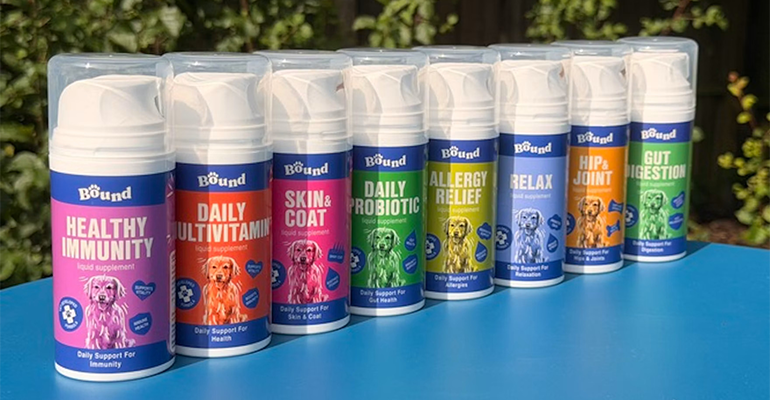
Pump-based liquid pet supplement focuses on health and convenience
8 Sep 2026
Prefera Pet Food uses a plastic pump-based packaging to make administering its liquid supplements for cats and dogs easier, healthier, and more accurate.
Read more
Health and wellness engagement matures across Middle East and Africa
4 Sep 2026
Many consumers in the Middle East and Africa are now proactively engaged in health and wellness, looking to integrate better habits and products into their daily lives, say experts.
Read more
Kellogg accelerates work to remove artificial colours from all US cereals
3 Sep 2026
WK Kellogg has announced an accelerated timeline to eliminate all artificial colours and the chemical preservative, BHT, across its full US portfolio of cereals and cereal packaging.
Read more
Royal Canin launches ‘freshly-cooked’ therapeutic dog food
1 Sep 2026
Mars-owned Royal Canin has moved into the therapeutic diet sector with the launch of its Fresh Veterinary Diets range for dogs with health conditions. We asked a veterinary nutritionist for her opinion.
Read more
‘Urgent gaps’ in achieving 2030 food system goals
27 Aug 2026
Global food systems are failing to meet 2030 targets across indicators including health, environment, and resilience, according to a report co-authored by the Food and Agriculture Organisation (FAO).
Read more
Seven-Eleven uses microbial testing tech to extend katsudon shelf life
26 Aug 2026
Japanese retail company Seven-Eleven has improved its factory’s microbial environment to keep comfort-food staple, katsudon, fresher for longer.
Read more
Chimac’s fusion sauces bring Korean flavours to Europe
25 Aug 2026
Irish sauce brand Chimac is tapping into Korea’s culinary traditions, bringing its flavours and products to European consumers who want a taste of K-food.
Read more
China beverages: Is herbal innovation the future?
20 Aug 2026
Herbal and botanical innovation in China's drinks market continues to grow, with ingredients like astragalus root, ginger, and ginseng in the spotlight – and focus shifting far beyond refreshment.
Read more