
Ingredients Categories
Finished Products
Finished Food Categories
- Bakery
- Beverages / Juices
- Cereal and grain products
- Confectionery
- Cooking Fats & Oils
- Dairy
- Egg products
- Fruits & Vegetables
- Infant & Baby food
- Meat, Poultry & Fish
- Nuts & Seeds products
- Other Finished Food Categories
- Pet Food
- Plant-based foods
- Prepared foods
- Sauces & Seasonings
- Sweet & Savoury Spreads
Specialised Finished Products
- Bee products
- Biotic products
- Dietary supplements
- Energy drinks
- Functional beverages
- Functional confectionery
- Functional food
- Functional powders
- Meal replacement products
- Nutricosmetics
- Other Specialised Finished Products
- Pet Dietary Supplements
- Pharma and OTC products
- Protein products
- Sugar replacers / Sweeteners
Health & Wellness Areas
Delivery Formats
Operations & Services
- 3D printing
- Analysis/ Testing
- Auditing & certifications
- Blending & mixing
- Bottling
- Certification
- Clinical trials
- Co-packing
- Coating
- Consulting
- Contract manufacturing
- Drying
- Electrospinning
- Encapsulating
- Enzymatic processing
- Extracting
- Extrusion
- Fat structuring
- Fermentation
- Filling
- Flavour development
- Freeze drying
- Granulating/ grinding/ milling / mixing
- High-pressure processing
- Labelling
- Other Operations & Services
- Packaging
- Packet filling
- Pasturising
- Quality assurance
- Saccharification
- Shear cell processing
- Spray drying
- Sterilisation
- Storage & Logistics
- Tabletting
- Toasting / roasting
- Ultra-high temperature processing
News
Plant-based energy shots experience buzz in the market
16 Nov 2020Plant-based options are making inroads into a variety of categories within the food and beverage market. Go Big and Proper Wild are two new entrants into the space that are taking aim at a small category that has yet to experience significant innovation from plant-based producers: energy shots.
Both brands launched during the same period that the pandemic was unfurling, which resulted in both brands opting for a direct-to-consumer sales platform to roll out their products to consumers in the United States. As part of their launch, both companies focused primarily on their plant-based attributes of the energy shot brands and the better-for-you halo that these characteristics impart in order to appeal to consumers that have increasingly searched for functional products that can contribute to their overall well-being.

Go Big offers its plant-based shots in three flavors – Blood Orange Ginger, Blueberry Açaì and Raspberry Pomegranate – that are energized with 200 mg of caffeine and guarana, a Brazilian nootropic plant native to the Amazon basin. Proper Wild similarly has three flavors – blackberry, peach mango and ginger – but instead of an Amazonian nootropic, the brand opts for green tea-based caffeine and L-Theanine to boost its beverage.
By lowering the sugar profile and focusing on energy sources that are plant-based, both brands have appealed to consumers and have grown successfully through their DTC approach. Go Big said, “Fifty percent of customers made a second purchase within a month of the initial purchase,” and Proper Wild said its sales have grown 700% since March.
Although it is clear that there is a demand for these plant-based energy shots, these two newcomers are not the only competitors on the scene. Energy beverages are a big and growing segment. Mintel data showed that sales of energy drinks and energy shots grew by nearly 30% from 2013 to 2018, and total sales in the U.S. market are expected to reach $16.9 billion by 2022, according to data from Market Research Hub.
As a result of this growth, beverage giants like PepsiCo, with its recent purchase of Rockstar Energy and Amazon, that released a private-label energy drink brand called Solimo last year, have edged into the space looking for growth to boost their bottom lines. There is also a plethora of smaller, startup brands that are competing for consumers looking to be energized.
However, energy shots are only a portion of this multi-billion dollar energy drink category. For the 52 weeks ending in May 2020, energy shots generated $978 million in the United States, according to Statista data, but the category has experienced a downward trend in recent years. In addition to only representing a small portion of overall energy drink sales, the shots category is dominated by one brand: 5-Hour Energy. Statista data show 5-Hour Energy accounted for the lion’s share of sales with $867.67 sold between May 2019 and May 2020.
Not to be daunted, both Go Big and Proper Wild called out the leading energy shot brand as their primary focus for targeting consumers and building their own market share. Though energy shots remain less popular than other energized beverages, with plant-based products continuing to gain popularity, there is a good chance that consumers will give these brands a second look when they appear on store shelves.

Get more of our news on Google
Set Ingredients Network as a 'Preferred Source' to get quicker access to the news you value.
Related news

Skimpflation: An ‘unfair’ and risky approach to keeping prices low
2 Sep 2026
Consumers see skimpflation – reducing the quality of ingredients due to rising costs – as more unfair than shrinkflation, making it a risky strategy according to recent research.
Read more
NielsenIQ’s EU barometer shows Britain leading in grocery inflation
31 Aug 2026
Britain was the only country to record grocery inflation above 2%, according to NielsenIQ data that compared Europe’s five biggest grocery markets from February to May 2026.
Read more
‘Urgent gaps’ in achieving 2030 food system goals
27 Aug 2026
Global food systems are failing to meet 2030 targets across indicators including health, environment, and resilience, according to a report co-authored by the Food and Agriculture Organisation (FAO).
Read more
China beverages: Is herbal innovation the future?
20 Aug 2026
Herbal and botanical innovation in China's drinks market continues to grow, with ingredients like astragalus root, ginger, and ginseng in the spotlight – and focus shifting far beyond refreshment.
Read more
Popular barbecue staples experience sharp price increases
19 Aug 2026
The typical cost of US shoppers’ barbecue baskets has risen by 12% over the past year – the fastest annual rise in a decade, figures from The Economist show.
Read more
Beyond 'nice to have': A spotlight on US functional beverages
12 Aug 2026
Functional beverage interest in the US is gaining important ground as consumers now expect function rather than see it as "nice to have", and there are clear market gaps for growth, according to Spate.
Read more
Manam Chocolate aims to bring premium Indian cacao to 'the world stage'
11 Aug 2026
Craft chocolate brand Manam Chocolate is investing in local expansion and supply chain innovation throughout India as it works to build out the premium reputation of its locally produced cacao products.
Read more
Digital twin technology gains ground in food manufacturing
6 Aug 2026
Food and beverage companies are increasingly turning to digital twins to optimise and automate manufacturing processes, but opportunities stretch far beyond this, say experts.
Read more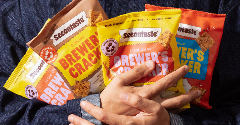
How Secon Taste is putting upcycled snacks on shelves
4 Aug 2026
Hungarian zero-waste startup Secon Taste is turning surplus food into upcycled snacks such as fibre-packed granola, instant porridge, and a circular coffee-tasting box.
Read more
Codex sets global thresholds for ‘may contain’ labels
3 Aug 2026
Codex Alimentarius has adopted its first global guidance on when to use “may contain” allergen warnings, setting thresholds intended to stop the label being used as blanket legal cover.
Read more