
Ingredients Categories
Finished Products
Finished Food Categories
- Bakery
- Beverages / Juices
- Cereal and grain products
- Confectionery
- Cooking Fats & Oils
- Dairy
- Egg products
- Fruits & Vegetables
- Infant & Baby food
- Meat, Poultry & Fish
- Nuts & Seeds products
- Other Finished Food Categories
- Pet Food
- Plant-based foods
- Prepared foods
- Sauces & Seasonings
- Sweet & Savoury Spreads
Specialised Finished Products
- Bee products
- Biotic products
- Dietary supplements
- Energy drinks
- Functional beverages
- Functional confectionery
- Functional food
- Functional powders
- Meal replacement products
- Nutricosmetics
- Other Specialised Finished Products
- Pet Dietary Supplements
- Pharma and OTC products
- Protein products
- Sugar replacers / Sweeteners
Health & Wellness Areas
Delivery Formats
Operations & Services
- 3D printing
- Analysis/ Testing
- Auditing & certifications
- Blending & mixing
- Bottling
- Certification
- Clinical trials
- Co-packing
- Coating
- Consulting
- Contract manufacturing
- Drying
- Electrospinning
- Encapsulating
- Enzymatic processing
- Extracting
- Extrusion
- Fat structuring
- Fermentation
- Filling
- Flavour development
- Freeze drying
- Granulating/ grinding/ milling / mixing
- High-pressure processing
- Labelling
- Other Operations & Services
- Packaging
- Packet filling
- Pasturising
- Quality assurance
- Saccharification
- Shear cell processing
- Spray drying
- Sterilisation
- Storage & Logistics
- Tabletting
- Toasting / roasting
- Ultra-high temperature processing
News
Prebiotic sodas: Over-promising but under-delivering the health benefits?
Lynda Searby, Freelance Journalist 27 Apr 2026Prebiotic soda brands must make sure their ingredients and health claims are substantiated – or risk litigation, warns a microbiome expert.
In recent years, prebiotic sodas have taken the market by storm, bringing a ‘better for you’ option to a category that has long been a target for health lobbies and governments.
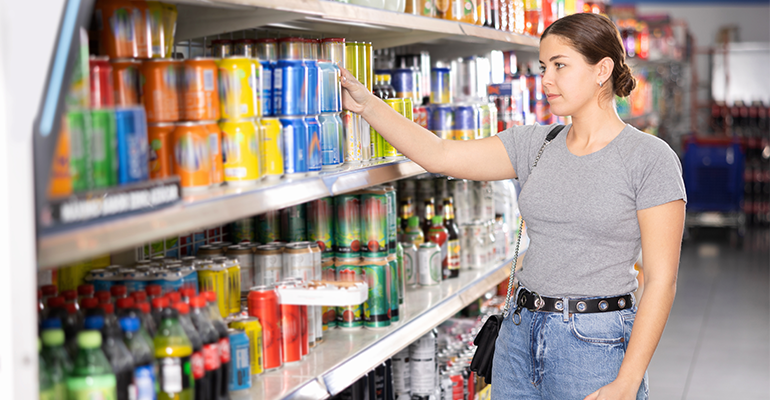
The trend first took off in the US, with Olipop, Poppi, and, latterly, Coca-Cola’s Simply Pop leading the charge. Now prebiotic drinks are also gaining traction in Europe, with Living Things, Squishy Pop, Fibe, Xoxo, and The Gut Stuff among the brands vying for market share.
However, not all of the noise around prebiotic sodas has been good vibes. In 2024, they hit the headlines for the wrong reasons, when a lawsuit was brought against Poppi.
The class action lawsuit, filed in May 2024, accused the company of misleading consumers by claiming that its sodas are gut-friendly when the amount of prebiotic fibre in one can (2g) was “too low to deliver meaningful health benefits”.
The suit alleged that a consumer would need to drink four cans a day to glean any benefit from the fibre, but that the amount of sugar consumed would counteract any health benefit.
Poppi denied wrongdoing but agreed to an $8.9m settlement last year.
Industry impact: Clinical validation is key
According to functional ingredient and gut health claims strategist Soledad Gurovic, the main implication of this case for the industry is a clear realisation that health claims must be supported by robust clinical data.
“With functional ingredients, adding fibre is not enough. The type of fibre, the dose, the daily intake, and how the overall formulation – especially added sugars – supports the intended benefit, are critical,” Gurovic told this publication.
“Clinical validation is now becoming part of brand development. Science is no longer limited to R&D; it is diffusing across the entire process, including marketing and post-market monitoring.”
Gurovic doesn’t see the lawsuit as a challenge to the science behind prebiotics, rather to how products were formulated and communicated.
“In many cases, products did not deliver effective doses per serving, or required additional sugar intake to reach those levels,” she said.
“In short, the message is clear: formulation and communication must be aligned. Consumers are increasingly aware and will challenge brands that overpromise or lack transparency.”
Europe: Legality hinges on substantiation and communication
But given that Europe is far less litigious than the US, and that it operates the strictest regulatory framework in the world with regard to claims, how relevant is the Poppi case in the context of the European market?
Most of the brands mentioned above use the term ‘prebiotic’, often as a product descriptor such as ‘prebiotic soda’.
Gurovic advised that even in this context, the term can imply a health benefit, placing it in a regulatory “grey area” depending on how it is substantiated and communicated.
This is because, at the present time, the EU has not authorised use of the term ‘prebiotic’ in connection with an approved health claim. EU member states have issued varying advice regarding their tolerance of this term.
‘Prebiotic’ is an implied health claim in the EU
While this has led to a lack of harmonisation, most member states agree with the European Commission that the use of ‘prebiotic’ in the labelling or advertising of foods and food supplements is an implied health claim and not permitted unless used in conjunction with an authorised health claim.
“While fibre is broadly accepted based on safety and traditional use, the term ‘prebiotic’ is only used in practice in some countries such as Italy and Spain for specific ingredients, although it remains subject to regulatory interpretation,” said Gurovic.
In the UK, for example, the Advertising Standards Agency (ASA) has previously ruled that ‘prebiotic’ is a general health claim, which would then need to be accompanied by a relevant authorised specific health claim.
Several prebiotics, namely inulin, lactulose, sugar beet fibre, and rye fibre, have attained EU-authorised health claim status within the area of digestive health.
Inulin – often in the form of chicory fibre or Jerusalem artichoke – is the prebiotic that most commonly features in sodas.
Not all fibres are prebiotic
Gurovic noted that not all fibres qualify as prebiotics – defined by the International Scientific Association for Probiotics and Prebiotics (ISAPP) as “a substrate that is selectively utilised by host microorganisms, conferring a health benefit”.
“This is not because they lack potential, but because the level of clinical validation is not always sufficient. A true prebiotic effect not only requires changes in the gut microbiota, but is also generally expected to be associated with a measurable clinical benefit,” she said.
With this in mind, she said it is important to distinguish between fibre and a prebiotic effect.
“A product is not prebiotic because it contains five grams of fibre; it is a prebiotic because it contains a substantiated ingredient, such as inulin, at an effective dose,” she said.
In this respect, Gurovic said that she is seeing “varying levels of regulatory exposure” across prebiotic soda brands on the European market.
“Clear communication is still missing in many cases. Consumers are rarely told what dose is needed to experience an effect, what the effect is, or how consumption should be managed over time.”
Prebiotic sodas: Over-promising and under-delivering?
Overall, she said there is clear progress in formulation, with many products reaching 5-10 grams of fibre per serving, but that communication and substantiation still need to catch up.
The most visible risk associated with overpromising and underdelivering on health benefits is regulatory action or litigation, but, in Gurovic’s view, the more profound risk is loss of consumer trust.
“This is now a crowded category and consumers have many alternatives. Brands that fail to deliver on their promise will struggle with repeat purchase and long-term adoption.”
She believes the next stage for the category is to not just be a “less unhealthy” option, but to deliver “meaningful health benefits”.
“The brands that succeed will be those that combine taste, functionality, and real impact on health.”

Get more of our news on Google
Set Ingredients Network as a 'Preferred Source' to get quicker access to the news you value.
Related news

Do the US dietary guidelines put UPFs under pressure?
10 Sep 2026
Will the US dietary guidelines change the way Americans eat, swapping ultra-processed foods for whole foods? We asked Dr Barry Popkin, renowned nutrition and obesity researcher.
Read more
Food fraud costs UK economy £2bn each year
9 Sep 2026
Food fraud is costing the UK economy up to £2 billion (€2.3 billion) every year although the food sector is more “resilient” than others, according to a recent study.
Read more
Skimpflation: An ‘unfair’ and risky approach to keeping prices low
2 Sep 2026
Consumers see skimpflation – reducing the quality of ingredients due to rising costs – as more unfair than shrinkflation, making it a risky strategy according to recent research.
Read more
NielsenIQ’s EU barometer shows Britain leading in grocery inflation
31 Aug 2026
Britain was the only country to record grocery inflation above 2%, according to NielsenIQ data that compared Europe’s five biggest grocery markets from February to May 2026.
Read more
‘Urgent gaps’ in achieving 2030 food system goals
27 Aug 2026
Global food systems are failing to meet 2030 targets across indicators including health, environment, and resilience, according to a report co-authored by the Food and Agriculture Organisation (FAO).
Read more
China beverages: Is herbal innovation the future?
20 Aug 2026
Herbal and botanical innovation in China's drinks market continues to grow, with ingredients like astragalus root, ginger, and ginseng in the spotlight – and focus shifting far beyond refreshment.
Read more
Popular barbecue staples experience sharp price increases
19 Aug 2026
The typical cost of US shoppers’ barbecue baskets has risen by 12% over the past year – the fastest annual rise in a decade, figures from The Economist show.
Read more
Beyond 'nice to have': A spotlight on US functional beverages
12 Aug 2026
Functional beverage interest in the US is gaining important ground as consumers now expect function rather than see it as "nice to have", and there are clear market gaps for growth, according to Spate.
Read more
Manam Chocolate aims to bring premium Indian cacao to 'the world stage'
11 Aug 2026
Craft chocolate brand Manam Chocolate is investing in local expansion and supply chain innovation throughout India as it works to build out the premium reputation of its locally produced cacao products.
Read more
Digital twin technology gains ground in food manufacturing
6 Aug 2026
Food and beverage companies are increasingly turning to digital twins to optimise and automate manufacturing processes, but opportunities stretch far beyond this, say experts.
Read more