
Ingredients Categories
Finished Products
Finished Food Categories
- Bakery
- Beverages / Juices
- Cereal and grain products
- Confectionery
- Cooking Fats & Oils
- Dairy
- Egg products
- Fruits & Vegetables
- Infant & Baby food
- Meat, Poultry & Fish
- Nuts & Seeds products
- Other Finished Food Categories
- Pet Food
- Plant-based foods
- Prepared foods
- Sauces & Seasonings
- Sweet & Savoury Spreads
Specialised Finished Products
- Bee products
- Biotic products
- Dietary supplements
- Energy drinks
- Functional beverages
- Functional confectionery
- Functional food
- Functional powders
- Meal replacement products
- Nutricosmetics
- Other Specialised Finished Products
- Pet Dietary Supplements
- Pharma and OTC products
- Protein products
- Sugar replacers / Sweeteners
Health & Wellness Areas
Delivery Formats
Operations & Services
- 3D printing
- Analysis/ Testing
- Auditing & certifications
- Blending & mixing
- Bottling
- Certification
- Clinical trials
- Co-packing
- Coating
- Consulting
- Contract manufacturing
- Drying
- Electrospinning
- Encapsulating
- Enzymatic processing
- Extracting
- Extrusion
- Fat structuring
- Fermentation
- Filling
- Flavour development
- Freeze drying
- Granulating/ grinding/ milling / mixing
- High-pressure processing
- Labelling
- Other Operations & Services
- Packaging
- Packet filling
- Pasturising
- Quality assurance
- Saccharification
- Shear cell processing
- Spray drying
- Sterilisation
- Storage & Logistics
- Tabletting
- Toasting / roasting
- Ultra-high temperature processing
News
Red Bull’s ex-head of marketing shares strategies for social branding success [Interview]
21 Oct 2022
Ex-head of marketing at Red Bull Europe and current CEO of energy drink TENZING, Huib van Bockel, shares his top tips for cutting through the marketing noise and creating a socially relevant brand.
Nature-lover and outdoor sports fan, Huib Van Bockel was chief marketing officer for Europe at energy drink giant Red Bull for over seven years. He left Red Bull In 2016 and set up TENZING Natural Energy, a B-Corp-certified, plant-based energy drink that is outpacing traditional synthetic energy drinks five-fold in terms of growth.
Ingredients Network caught up with the CMO-turned-CEO to find out his top tips for being a socially relevant and successful brand today. His one piece of advice can be summarised in five words: Be unique, focused, and patient.
![Red Bull’s ex-head of marketing shares strategies for social branding success [Interview]](/47/pdcnewsitem/11/91/47/FiE22%20Speaker%20Interview_Huib%20van%20Bockel.png)
For a successful product launch, be unique, focused, and patient
“When I was at Red Bull, thousands of brands started in the energy drink space and they were just exactly the same: same taste, same look, and same feel. They had names like ‘Devil’, and they all had a very cheap price, and they all failed. You have to have a unique product,” said van Bockel, who will be delivering a keynote talk at Fi Europe in Paris this December.
“From a brand perspective, a product also [needs to be] really focused. Now that sounds obviously very logical, but I think no one does it well.”
To do so well, brands must first identify which community they want to focus on with a highly targeted approach and product,” van Bockel said.
“One of the best examples out there is Strava, the app for outdoor sports that maps your [itinerary] and tells you how fast you’ve gone. There are lots now, but Strava was one of the first ones. It could have been used for anything - running, cycling, walking, everything - but they decided only to focus on cycling for about six or seven years.
“And that was one of their big debates internally: when should we open it to runners? But for years they said no, they wanted to stick to cycling to really make a rich [experience] and allow that community to talk to each other.”
While Strava eventually did expand to other activities, it only did so when it was sure it had a loyal base in the cycling community.
Fever Tree and Deliveroo created the ‘halo effect’ with consumers
“I think that's a great example of really sticking to one community and making it very successful there. In the food and drink space, Fever Tree also did it really well. They focused on getting into the best restaurants and, for a very long time, their slogan was, ‘We're available in the seven of the 10 best restaurants in the world.’ This kind of had a halo effect to a larger audience.”
Another food sector example is the food delivery company Deliveroo, which focused initially on serving just one postcode in London.
“They nailed that one postcode and, when they did that really well, they added a second postcode. [From] there, you can go quickly all of a sudden, but every successful business has done an extreme focus in the beginning,” he said. “Too often, people launch a product and want to [start selling] in Tesco. But you can never market to that big audience straight away.”
A final piece of advice is – perhaps the most frustrating for an entrepreneur – take your time.
“A lot of people want to exit or make a lot of money quick. But I think every new business takes a long time to really get into its own.”
How to be a social brand in an era of social noise
According to van Bockel, most businesses are too focused on selling more products to stop and ask themselves how they could serve their consumers better and more meaningfully.
However, the core message of his book, The Social Brand, is about the importance of being social and purpose-driven – something that was not necessarily on most big businesses’ radars over one decade ago.
“If I give you something that [has value], something that you enjoy, you'll be more inclined to like me back. True loyalty is given by being really social,” he said.
Brands should also be willing to simply give to their community, without necessarily expecting something immediate in return. The multinational sportswear company, Nike, leverages this successfully by organising runs and marathons that are open to people of the running community – not just those who wear Nike trainers, he said.
“[If you give people] a chance to win something, that's not giving. That's effectively bribery! But if you say, ‘Come and run because it's good for your health, and you can even come to the runs with your Adidas shoes on, [...] you'll build loyalty because people will think, ‘That was amazing. Thank you, Nike, for making that happen’.”
He added: “And of course, if people run more, they will tend to buy more shoes and as a big market, share [will grow]. That makes a lot of sense as well.”
Huib van Bockel will be delivering a keynote speech on 8th December. Click here to register for Fi Europe to hear him and dozens of other leading industry experts talk in person.

Get more of our news on Google
Set Ingredients Network as a 'Preferred Source' to get quicker access to the news you value.
Related news

Skimpflation: An ‘unfair’ and risky approach to keeping prices low
2 Sep 2026
Consumers see skimpflation – reducing the quality of ingredients due to rising costs – as more unfair than shrinkflation, making it a risky strategy according to recent research.
Read more
NielsenIQ’s EU barometer shows Britain leading in grocery inflation
31 Aug 2026
Britain was the only country to record grocery inflation above 2%, according to NielsenIQ data that compared Europe’s five biggest grocery markets from February to May 2026.
Read more
‘Urgent gaps’ in achieving 2030 food system goals
27 Aug 2026
Global food systems are failing to meet 2030 targets across indicators including health, environment, and resilience, according to a report co-authored by the Food and Agriculture Organisation (FAO).
Read more
China beverages: Is herbal innovation the future?
20 Aug 2026
Herbal and botanical innovation in China's drinks market continues to grow, with ingredients like astragalus root, ginger, and ginseng in the spotlight – and focus shifting far beyond refreshment.
Read more
Popular barbecue staples experience sharp price increases
19 Aug 2026
The typical cost of US shoppers’ barbecue baskets has risen by 12% over the past year – the fastest annual rise in a decade, figures from The Economist show.
Read more
Beyond 'nice to have': A spotlight on US functional beverages
12 Aug 2026
Functional beverage interest in the US is gaining important ground as consumers now expect function rather than see it as "nice to have", and there are clear market gaps for growth, according to Spate.
Read more
Manam Chocolate aims to bring premium Indian cacao to 'the world stage'
11 Aug 2026
Craft chocolate brand Manam Chocolate is investing in local expansion and supply chain innovation throughout India as it works to build out the premium reputation of its locally produced cacao products.
Read more
Digital twin technology gains ground in food manufacturing
6 Aug 2026
Food and beverage companies are increasingly turning to digital twins to optimise and automate manufacturing processes, but opportunities stretch far beyond this, say experts.
Read more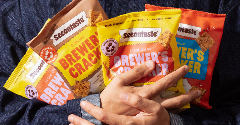
How Secon Taste is putting upcycled snacks on shelves
4 Aug 2026
Hungarian zero-waste startup Secon Taste is turning surplus food into upcycled snacks such as fibre-packed granola, instant porridge, and a circular coffee-tasting box.
Read more
Codex sets global thresholds for ‘may contain’ labels
3 Aug 2026
Codex Alimentarius has adopted its first global guidance on when to use “may contain” allergen warnings, setting thresholds intended to stop the label being used as blanket legal cover.
Read more