
Ingredients Categories
Finished Products
Finished Food Categories
- Bakery
- Beverages / Juices
- Cereal and grain products
- Confectionery
- Cooking Fats & Oils
- Dairy
- Egg products
- Fruits & Vegetables
- Infant & Baby food
- Meat, Poultry & Fish
- Nuts & Seeds products
- Other Finished Food Categories
- Pet Food
- Plant-based foods
- Prepared foods
- Sauces & Seasonings
- Sweet & Savoury Spreads
Specialised Finished Products
- Bee products
- Biotic products
- Dietary supplements
- Energy drinks
- Functional beverages
- Functional confectionery
- Functional food
- Functional powders
- Meal replacement products
- Nutricosmetics
- Other Specialised Finished Products
- Pet Dietary Supplements
- Pharma and OTC products
- Protein products
- Sugar replacers / Sweeteners
Health & Wellness Areas
Delivery Formats
Operations & Services
- 3D printing
- Analysis/ Testing
- Auditing & certifications
- Blending & mixing
- Bottling
- Certification
- Clinical trials
- Co-packing
- Coating
- Consulting
- Contract manufacturing
- Drying
- Electrospinning
- Encapsulating
- Enzymatic processing
- Extracting
- Extrusion
- Fat structuring
- Fermentation
- Filling
- Flavour development
- Freeze drying
- Granulating/ grinding/ milling / mixing
- High-pressure processing
- Labelling
- Other Operations & Services
- Packaging
- Packet filling
- Pasturising
- Quality assurance
- Saccharification
- Shear cell processing
- Spray drying
- Sterilisation
- Storage & Logistics
- Tabletting
- Toasting / roasting
- Ultra-high temperature processing
News
South Korea launches campaign to correct mistranslated food
Natasha Spencer-Jolliffe, Freelance Journalist 6 Dec 2024The Seoul city government has created a new campaign to promote standardised foreign-language names for Korean food to overcome translation errors.
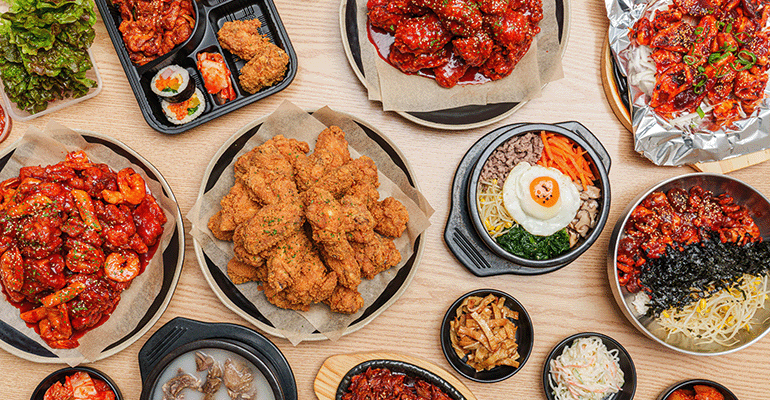
The initiative aims to promote traditional Korean dishes and correct mistranslations from literal translations or automated-based wording in order to enhance culinary tourism by attaching accurate translations to its food for international visitors.
Updating and correcting mistranslated descriptions
“Bear tang” for gomtang (beef bone soup), “six times” for yukhoe (beef tartare), “chicken a–hole house” for stir-fried chicken gizzards, “lifestyle meat” for raw meat and “dynamic stew” for pollack stew are among some of the notable mistranslations that tourists may encounter when surveying Korean cuisine on menus, The Korea Herald gave as examples.
According to the Seoul Metropolitan Government, errors in Korean food translations like these result from literal translations or automated services. As such, these incorrect translations lack the authenticity behind these traditional dishes.
Another common problem is that multiple translations of prevalent Korean dishes may also be present. The Seoul city government also noted that the Ministry of Culture, Sports and Tourism introduced “shinchi” as the official Chinese translation for “kimchi”. However, while this has been adopted, the incorrect translation “pao cai” is still used in Korea. Through its latest campaign, South Korea aims to highlight the correct, singular translations for menus that include the common ingredient, “kimchi”.
In July 2024, South Korea announced the launch of its ‘Taste Your Korea’ initiative designed to boost gastronomic tourism. The Ministry of Culture, Sports and Tourism (KTO) announced its new food tourism campaign slogan, Taste Your Korea, designed to appeal to tourists and position the country as a leading food destination. Alongside its slogan, South Korea also introduced 33 representative regional dishes, seasonal ingredients and alcohol types as core campaign components.
Restaurants play an active role
As part of its current campaign, Seoul’s city government highlights that the correct translations are available online via the Seoul Foreign Language Dictionary. The dictionary includes 30,253 English entries, 28,900 Chinese entries and 29,610 Japanese entries. The city officials said these entries can be a reliable guide for restaurateurs. As such, they can refer to these to ensure their menus accurately represent Korean cuisine when translated into other languages.
The campaign has seen the government reach out to restaurants in tourist-heavy destinations within the capital. The city also announced its plan to create multilingual digital menu boards for 400 select restaurants visited by tourists.
“Accurate naming is vital for introducing our cuisine to the world,” said Kim Young-hwan, director general of the tourism bureau of the city government, cited in The Korea Herald/ANN. “We urge restaurants to play an active role in advancing Seoul’s culinary tourism by adopting standardised translations from the Seoul Foreign Language Dictionary and ensuring their menus accurately represent Korean dishes to international visitors,” added Young-hwan.
A long-term campaign for international growth
Sitting in the backdrop to South Korea’s current campaigns is its $40 million Korean Cuisine to the World 2009 initiative, which saw the country pledge the multi-million cash injection to appeal to international visitors. The Asian food hub saw its then-president Lee Myang-bak strive to grow the country’s culinary footprint overseas.
In the 15 years since its launch, the investment seemingly worked. Data shows that the number of Korean restaurants in China increased from 2,024 in 2009 to 15,989 in 2017. Over the same period, Korean restaurants in Japan rose from 4,916 to 9,388 and went from 1,046 to 2,247 in the US food scene.
However, while satisfaction with Korean food was growing internationally, a poll showed that awareness of Korean dishes and ingredients was lacking. In 2018, the Korean Food Promotion Institute found that while 88% of the US population was satisfied with the country’s cuisine, only 63% were aware of them. This figure was even lower in Europe, with 85% finding South Korean food satisfying but only 57% aware of the country’s culinary dishes.
The Anholt-Ipsos Nation Brands Index (NBI) 2023 which recognises countries around the globe for their investment and travel popularity, placed South Korea at 24 out of 60. The country dropped one place from its 2022 figure and was nine away from South Korea’s goal of making it to the top 15.
A 2022 Korea Chamber of Commerce & Industry awareness survey found that half (50.7%) of respondents said Korean Cuisine is well-rooted internationally. However, only a quarter (25.7%) believed these restaurants had positive business potential. To increase the prevalence of South Korean food around the world, the country’s cuisine is homing in on creating a global image and branding.

Get more of our news on Google
Set Ingredients Network as a 'Preferred Source' to get quicker access to the news you value.
Related news

Do the US dietary guidelines put UPFs under pressure?
10 Sep 2026
Will the US dietary guidelines change the way Americans eat, swapping ultra-processed foods for whole foods? We asked Dr Barry Popkin, renowned nutrition and obesity researcher.
Read more
Skimpflation: An ‘unfair’ and risky approach to keeping prices low
2 Sep 2026
Consumers see skimpflation – reducing the quality of ingredients due to rising costs – as more unfair than shrinkflation, making it a risky strategy according to recent research.
Read more
‘Urgent gaps’ in achieving 2030 food system goals
27 Aug 2026
Global food systems are failing to meet 2030 targets across indicators including health, environment, and resilience, according to a report co-authored by the Food and Agriculture Organisation (FAO).
Read more
Seven-Eleven uses microbial testing tech to extend katsudon shelf life
26 Aug 2026
Japanese retail company Seven-Eleven has improved its factory’s microbial environment to keep comfort-food staple, katsudon, fresher for longer.
Read more
Chimac’s fusion sauces bring Korean flavours to Europe
25 Aug 2026
Irish sauce brand Chimac is tapping into Korea’s culinary traditions, bringing its flavours and products to European consumers who want a taste of K-food.
Read more
Global demand for instant noodles continues to rise
24 Aug 2026
Global demand for instant noodles reached 124.21 billion servings last year, representing a 0.7% year-on-year increase – or 900 million extra servings.
Read more
China beverages: Is herbal innovation the future?
20 Aug 2026
Herbal and botanical innovation in China's drinks market continues to grow, with ingredients like astragalus root, ginger, and ginseng in the spotlight – and focus shifting far beyond refreshment.
Read more
Popular barbecue staples experience sharp price increases
19 Aug 2026
The typical cost of US shoppers’ barbecue baskets has risen by 12% over the past year – the fastest annual rise in a decade, figures from The Economist show.
Read more
Hot NPD: Nissin launches first cold-water Cup Noodles
18 Aug 2026
Nissin is taking one of Japan’s most iconic instant meals in a completely new direction with the launch of the first cold water-only Cup Noodles in the brand’s 55-year history.
Read more
Manam Chocolate aims to bring premium Indian cacao to 'the world stage'
11 Aug 2026
Craft chocolate brand Manam Chocolate is investing in local expansion and supply chain innovation throughout India as it works to build out the premium reputation of its locally produced cacao products.
Read more