
Ingredients Categories
Finished Products
Finished Food Categories
- Bakery
- Beverages / Juices
- Cereal and grain products
- Confectionery
- Cooking Fats & Oils
- Dairy
- Egg products
- Fruits & Vegetables
- Infant & Baby food
- Meat, Poultry & Fish
- Nuts & Seeds products
- Other Finished Food Categories
- Pet Food
- Plant-based foods
- Prepared foods
- Sauces & Seasonings
- Sweet & Savoury Spreads
Specialised Finished Products
- Bee products
- Biotic products
- Dietary supplements
- Energy drinks
- Functional beverages
- Functional confectionery
- Functional food
- Functional powders
- Meal replacement products
- Nutricosmetics
- Other Specialised Finished Products
- Pet Dietary Supplements
- Pharma and OTC products
- Protein products
- Sugar replacers / Sweeteners
Health & Wellness Areas
Delivery Formats
Operations & Services
- 3D printing
- Analysis/ Testing
- Auditing & certifications
- Blending & mixing
- Bottling
- Certification
- Clinical trials
- Co-packing
- Coating
- Consulting
- Contract manufacturing
- Drying
- Electrospinning
- Encapsulating
- Enzymatic processing
- Extracting
- Extrusion
- Fat structuring
- Fermentation
- Filling
- Flavour development
- Freeze drying
- Granulating/ grinding/ milling / mixing
- High-pressure processing
- Labelling
- Other Operations & Services
- Packaging
- Packet filling
- Pasturising
- Quality assurance
- Saccharification
- Shear cell processing
- Spray drying
- Sterilisation
- Storage & Logistics
- Tabletting
- Toasting / roasting
- Ultra-high temperature processing
News
Strategies to create category-winning plant-based meat alternatives
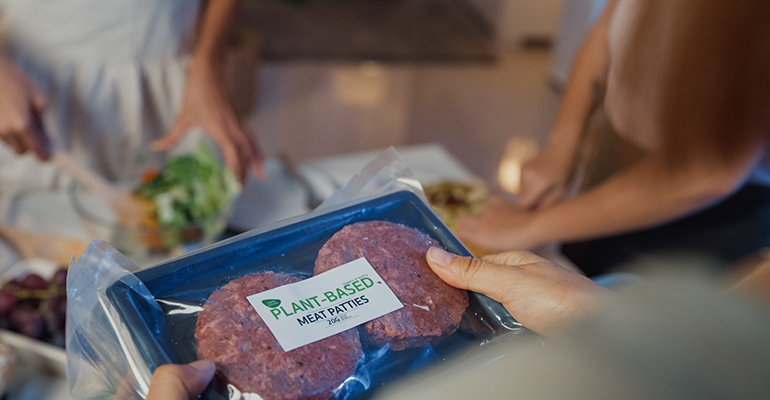
Anthony Fletcher, Freelance Journalist 3 May 2024Keep an eye on emerging categories like breakfast products; offer vegan options in meal kits; and consider ingredient blends to stand out in the increasingly crowded plant-based meat alternative category, says market research experts from Frost & Sullivan.
Keep an eye on emerging categories
When it comes to market segmentation, the whole cuts category is one of the fastest growing, while there is also growing demand for breakfast, snacks, and premium products, says Dr Véronique Scordia from Frost & Sullivan’s chemical, material, and nutrition advisory team. In this particular category, where consumers are really looking for meat alternatives, it is all about visual impact. A slice of plant-based bacon needs to look like bacon.
Innovate with ingredient blends
Having a focus on only one protein source is not the way forward, says Dr Smriti Sharma, programme manager at Frost & Sullivan. She stresses the need for suppliers and manufacturers to take a hybrid approach, and to take into consideration both a range of ingredients and processing technologies. A combination of these could lead to more cost-effective, better-tasting and better-looking plant-based products.
Climate change is global; the solution may be local
Climate change is affecting protein sources. This is also something to keep an eye out for, says Sharma. For example, the price of pea protein has risen sharply in recent months. This is another reason why relying on one plant protein source is not the way forward. With this in mind, favouring locally sourced protein could also be a desirable strategy. There is potential here with mycelium, which is sustainable, flexible, and relatively easy to produce.
The future is nuanced (and not all consumers want a meat replica)
The future for plant-based will be broader than just the development of products that look like meat. Many consumers looking for plant-based products because of nutritional and ethical reasons are not interested in products that look like meat.
With this in mind, the targeted end consumer should inform how a product is positioned. While meat eaters might indeed be looking for a plant-based alternative to meat, a vegan consumer will most likely be looking for a product that offers nutrition density. They will not be interested in comparing a product to something else. The market is becoming more stratified and nuanced.
Plant-based will always be different – instead of presenting as a meat alternative, manufacturers could think about developing plant-based products that stand up by themselves. Some brands are working with chefs to come up with exciting new products that are not trying to mimic meat.
Cater to the culinary curious and home-cooking fans
Vegan options in meal kit providers like Hello Fresh are exploding. People interested in cooking are often interested in replacing meat. A meal based around plants, rather than a meat alternative, is one market area for expansion.
Support your claims with sustainable credentials
Consumers are changing. Younger generations increasingly want to know that products are sustainable. More and more manufacturers are putting their carbon footprint on products. This is likely to be a key aspect of plant-based moving forward.

Get more of our news on Google
Set Ingredients Network as a 'Preferred Source' to get quicker access to the news you value.
Related news

Do the US dietary guidelines put UPFs under pressure?
10 Sep 2026
Will the US dietary guidelines change the way Americans eat, swapping ultra-processed foods for whole foods? We asked Dr Barry Popkin, renowned nutrition and obesity researcher.
Read more
Food fraud costs UK economy £2bn each year
9 Sep 2026
Food fraud is costing the UK economy up to £2 billion (€2.3 billion) every year although the food sector is more “resilient” than others, according to a recent study.
Read more
Health and wellness engagement matures across Middle East and Africa
4 Sep 2026
Many consumers in the Middle East and Africa are now proactively engaged in health and wellness, looking to integrate better habits and products into their daily lives, say experts.
Read more
Kellogg accelerates work to remove artificial colours from all US cereals
3 Sep 2026
WK Kellogg has announced an accelerated timeline to eliminate all artificial colours and the chemical preservative, BHT, across its full US portfolio of cereals and cereal packaging.
Read more
Skimpflation: An ‘unfair’ and risky approach to keeping prices low
2 Sep 2026
Consumers see skimpflation – reducing the quality of ingredients due to rising costs – as more unfair than shrinkflation, making it a risky strategy according to recent research.
Read more
‘Urgent gaps’ in achieving 2030 food system goals
27 Aug 2026
Global food systems are failing to meet 2030 targets across indicators including health, environment, and resilience, according to a report co-authored by the Food and Agriculture Organisation (FAO).
Read more
Global demand for instant noodles continues to rise
24 Aug 2026
Global demand for instant noodles reached 124.21 billion servings last year, representing a 0.7% year-on-year increase – or 900 million extra servings.
Read more
Savoury protein snacks shake up the on-the-go market
10 Aug 2026
Sweet flavours have dominated the high-protein snack category but savoury snacks, such as cheese bars and meat sticks, can appeal to health-conscious consumers.
Read more
How Secon Taste is putting upcycled snacks on shelves
4 Aug 2026
Hungarian zero-waste startup Secon Taste is turning surplus food into upcycled snacks such as fibre-packed granola, instant porridge, and a circular coffee-tasting box.
Read more
EU sets maximum MOAH levels to protect human health
28 Jul 2026
The EU will adopt maximum levels for mineral oil aromatic hydrocarbons (MOAH) in food to protect human health. What do manufacturers need to know?
Read more