
Ingredients Categories
Finished Products
Finished Food Categories
- Bakery
- Beverages / Juices
- Cereal and grain products
- Confectionery
- Cooking Fats & Oils
- Dairy
- Egg products
- Fruits & Vegetables
- Infant & Baby food
- Meat, Poultry & Fish
- Nuts & Seeds products
- Other Finished Food Categories
- Pet Food
- Plant-based foods
- Prepared foods
- Sauces & Seasonings
- Sweet & Savoury Spreads
Specialised Finished Products
- Bee products
- Biotic products
- Dietary supplements
- Energy drinks
- Functional beverages
- Functional confectionery
- Functional food
- Functional powders
- Meal replacement products
- Nutricosmetics
- Other Specialised Finished Products
- Pet Dietary Supplements
- Pharma and OTC products
- Protein products
- Sugar replacers / Sweeteners
Health & Wellness Areas
Delivery Formats
Operations & Services
- 3D printing
- Analysis/ Testing
- Auditing & certifications
- Blending & mixing
- Bottling
- Certification
- Clinical trials
- Co-packing
- Coating
- Consulting
- Contract manufacturing
- Drying
- Electrospinning
- Encapsulating
- Enzymatic processing
- Extracting
- Extrusion
- Fat structuring
- Fermentation
- Filling
- Flavour development
- Freeze drying
- Granulating/ grinding/ milling / mixing
- High-pressure processing
- Labelling
- Other Operations & Services
- Packaging
- Packet filling
- Pasturising
- Quality assurance
- Saccharification
- Shear cell processing
- Spray drying
- Sterilisation
- Storage & Logistics
- Tabletting
- Toasting / roasting
- Ultra-high temperature processing
News
Supplements: Interest in named ingredients grows while categories shrink
Tessa Wiles, Content Editor - Food 19 Oct 2026US shoppers are buying named ingredients, like magnesium, while the overarching categories they are often found in, like sleep aids, are shrinking, according to Spate.
Under the umbrella category “sleep aid”, magnesium presence in the US grew 78% in value to $74.2 million over the year ending 25 July 2026, while the category itself fell 1.2%, according to Nielsen IQ data presented at a webinar titled “What Supplement Shoppers Actually Want”.
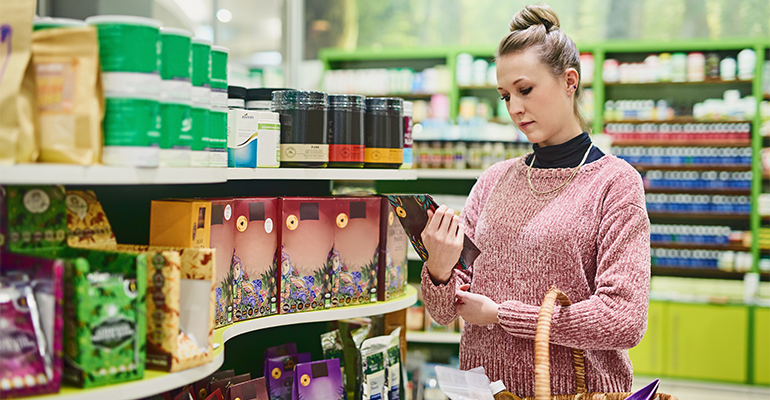
At a glance:
- In the year ending July 2026, the US sleep aid category fell 3.9% while consumers searching for magnesium supplements grew 49.2%.
- This pattern was seen in the weight management category too; interest fell 7.4% YoY, while the ingredient berberine grew 66.4%.
- Alongside named ingredients, supplement shoppers are paying close attention to labels, dosage, and form.
The webinar, co-presented by Spate, an agency that uses AI to track consumer trends across Google, TikTok, and Instagram, and Nielsen IQ (NIQ), a global consumer intelligence and market research company, paired US consumer search data with retail sales.
“Instead of searching generic terms like sleep aid, we're seeing consumers increasingly turning to more specific mechanisms or ingredients [...] like magnesium supplements,” Alyssa Atkinson, category insights manager for food, beverage, and wellness at Spate, told the audience.
“That's also really indicating that consumers are becoming more and more educated, and they know more about these specific ingredients and how they can help meet the goals and benefits that they're looking for,” she added.
Sherry Frey, vice president of total wellness at NIQ, agreed with Atkinson, pointing to the growing pattern of demand moving from broad health categories and towards named ingredients.
“I think it really does tell you that there's this consumer, a health-literate consumer, an intentional consumer, who is discovering something and investing in it really rapidly,” Frey said.
Named ingredient growth is hidden in category totals
Spate's popularity index, which combines Google, TikTok, and Instagram searches into a single measure of consumer interest, found that while the sleep aid category fell 3.9% YoY (ending 25 July 2026), consumers were searching for magnesium supplement and L-theanine supplement, which were up 49.2% and 148.8% YoY, respectively.
“Even in a declining overall category, these two ingredients are seeing strong double-digit growth, which really reinforces that theme running through today, where we see category levels can mask real ingredient-level momentum,” Atkinson said.
This pattern is not confined to the sleep aid category. Within weight management supplements, interest in the category as a whole fell 7.4% YoY according to Spate’s popularity index, while the ingredient berberine grew 66.4% YoY.
Elemental vs compound: Not all magnesium supplements are equal
While there is growing demand for named ingredients, shoppers are also paying close attention to the ingredient labels of their supplements and are interested in dosage and form.
Spate analysed 1,084 posts and 15,708 comments between August 2025 and August 2026 posted on the online message board Reddit. It found that the majority of content about magnesium concerned elemental vs compound magnesium on labels, form-specific efficacy, and use cases related to anxiety regulation and digestive health.
“There is some real scepticism surfacing as well around different things like buffered formulas cut with cheap magnesium oxide, which we have seen users are pretty bluntly dismissing,” Atkinson said.
Reddit users described these buffered formulations “as little more than a laxative with a magnesium label on it”, referencing magnesium oxide’s poor absorption.
A vocal subset of Reddit users reported heightened anxiety, vivid nightmares, and a “wired but tired” feeling concerning magnesium glycinate. These reactions pushed them toward malate and threonate.
Spate found similar sentiments from Reddit users about berberine. Berberine gained popularity in 2023-2024, being touted on social media as 'Nature's Ozempic' due to its role in lowering blood sugar.
Users, however, are sceptical about GI tolerance and have raised concerns about self-medicating without professional oversight, reporting hypoglycaemia, dizziness, and interactions with drugs like Zoloft and levothyroxine.
When it comes to Spate’s popularity index, top berberine-related queries include “weight loss”, “benefits”, and “doctors preferred clinical grade”, ahead of searches related to side effects.
“When we look specifically at top search theories and top social content here, we see that consumers are actively looking for legitimacy signals in a pretty unregulated category or ingredient at the moment,” Atkinson said.
Shopper scepticism is holding back spending
Frey, speaking on long-term opportunities, discussed what she called “the trust gap”.
She pointed to a finding from NIQ’s 2025 Global Consumer Wellness Study, in which 25% of consumers said they didn’t believe the health products and services they purchased would be effective and said this was a major barrier to them making healthier choices.
“That’s a real barrier to [shoppers] actually buying more,” she said.

Get more of our news on Google
Set Ingredients Network as a 'Preferred Source' to get quicker access to the news you value.
Related news

Brazil pushes forward on restricting ultra-processed foods
14 Oct 2026
The Brazilian government is pushing ahead with its proposal calling on the World Health Organization (WHO) to restrict the marketing of ultra-processed foods – a move causing a mixed response.
Read more
EU considers extending mandatory country-of-origin labelling
13 Oct 2026
The EU is considering expanding mandatory country-of-origin labelling to more food categories, but the scope of the potential rules remains undefined.
Read more
‘Irresponsible’ Huel advert banned in the UK
12 Oct 2026
The UK’s Advertising Standards Authority has banned a video advert by Danone-owned meal replacement brand Huel for “irresponsible” marketing related to diets.
Read more
More than half of the UK’s SACN advisors have food industry ties
8 Oct 2026
Of the 19 experts on the UK’s Scientific Advisory Committee on Nutrition, 11 have ties to the food industry. Industry professionals are split as to whether that is appropriate.
Read more
UK biscuit maker pladis targets Chinese snack market for growth
6 Oct 2026
Pladis, the maker of iconic British biscuit brand McVitie’s, aims to boost disappointing profits by targeting China with products tailored to Chinese preferences.
Read more
Goodbye greenwashing? EU ban on vague claims comes into force
5 Oct 2026
Food and drink brands must comply with EU anti-greenwashing rules that ban vague claims – but they do not have to stay silent on sustainability.
Read more
Reinventing soda: Zero sugar, functional benefits, and new indulgence
30 Sep 2026
Zero-sugar, functional, and indulgent sodas are redefining what a carbonated soft drink can offer in today’s evolving market.
Read more
The £10 ready meal opportunity: UK retail to see premium battle intensify
29 Sep 2026
Premium ready meal innovation – with high-end meals retailing for £10 (around €12) – is heating up in the UK. What are the stand-out attributes for a winning product?
Read more
Is creatine going mainstream in food and drink formulation?
24 Sep 2026
The functional ingredient creatine is gaining traction in the food and drink industry, as brands ramp up production investment and explore new applications.
Read more
Researchers call for spouted baby food pouches to be classified as drinks
23 Sep 2026
Half of spouted baby food pouches contain liquids that delay the development of feeding skills and should be called drinks, according to researchers.
Read more