
Ingredients Categories
Finished Products
Finished Food Categories
- Bakery
- Beverages / Juices
- Cereal and grain products
- Confectionery
- Cooking Fats & Oils
- Dairy
- Egg products
- Fruits & Vegetables
- Infant & Baby food
- Meat, Poultry & Fish
- Nuts & Seeds products
- Other Finished Food Categories
- Pet Food
- Plant-based foods
- Prepared foods
- Sauces & Seasonings
- Sweet & Savoury Spreads
Specialised Finished Products
- Bee products
- Biotic products
- Dietary supplements
- Energy drinks
- Functional beverages
- Functional confectionery
- Functional food
- Functional powders
- Meal replacement products
- Nutricosmetics
- Other Specialised Finished Products
- Pet Dietary Supplements
- Pharma and OTC products
- Protein products
- Sugar replacers / Sweeteners
Health & Wellness Areas
Delivery Formats
Operations & Services
- 3D printing
- Analysis/ Testing
- Auditing & certifications
- Blending & mixing
- Bottling
- Certification
- Clinical trials
- Co-packing
- Coating
- Consulting
- Contract manufacturing
- Drying
- Electrospinning
- Encapsulating
- Enzymatic processing
- Extracting
- Extrusion
- Fat structuring
- Fermentation
- Filling
- Flavour development
- Freeze drying
- Granulating/ grinding/ milling / mixing
- High-pressure processing
- Labelling
- Other Operations & Services
- Packaging
- Packet filling
- Pasturising
- Quality assurance
- Saccharification
- Shear cell processing
- Spray drying
- Sterilisation
- Storage & Logistics
- Tabletting
- Toasting / roasting
- Ultra-high temperature processing
News
Sustainable shift: The rise of aluminium-free containers
9 Jan 2023
The packaging industry is looking to improve the sustainability of carton products by developing aluminium alternatives using fibre-based materials.
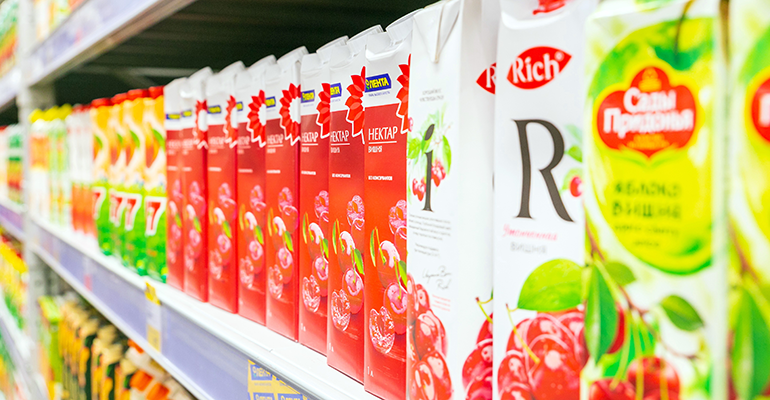
One of the current global drivers shaping the food and beverage industry is demand for sustainable packaging as a natural extension to the environmentally friendly food products they encase and protect.
To help drive the push for responsible aluminium sourcing, the Aluminium Stewardship Initiative (ASI) is working to establish a global standard.
It aims to drive responsible sourcing, processing, and production ensuring greater traceability in the aluminium supply chain.
In May of this year, packaging giant Tetra Pak revealed details of its fully renewable aseptic package that uses a fibre-based material substitute to replace the aluminium layer used in food carton packages.
Even though the layer is thinner than a human hair, it contributes to a third of the green-house gas emissions linked to base materials used by Tetra Pak.
Minimising waste and reducing the carbon footprint
“A first pilot batch of single serve packs featuring this material has been on shelf for a commercial consumer test since early 2022,” said Davide Braghiroli, product director packaging materials, alternative barriers, at Tetra Pak.
“Learnings from tests in the first part of the year have helped to increase the robustness of and confidence in our solutions.
“We have agreed with customers to dedicate more time to this learning phase and kick off the larger scale technology validation around packages with fibre-based barrier in 2023.”
Tetra Pak’s efforts are representative of what the packaging industry is trying to achieve in minimising waste and reducing its carbon footprint.
Its own annual sustainability report details a move towards a 90% collection rate and a 70% effective recycling rate in the European Union by 2030.
Industry endeavours to go aluminium-free
In Europe, Directive 94/62/EC outlines recycling and recovery targets, and recommends all EU member states and European Economic Area (EEA) countries – Iceland, Liechtenstein and Norway – countries achieve a target of 60% that includes energy recovery from packaging waste, other forms of recovery and total recycling.
Besides Tetra Pak, Elopak is another firm looking to provide sustainable packaging with its aseptic carton, the Pure-Pak eSense.
Launched in 2021, the packaging removes the aluminium layer, which the firm said reduces the carton’s carbon footprint by 30%, while facilitating full recyclability.
Meanwhile, SIG is another firm addressing its use of aluminium in its aseptic packaging solutions, with January’s launch of its SIGnature Evo, which extends its lower-carbon aluminium-free packaging range already available for plain white milk.
Like Tetra Pak’s latest innovation, the packaging is suitable for oxygen-sensitive products such as fruit juices, nectars, flavoured milk or plant-based beverages.
“Cartons with polymer-based barriers offer good performance when packaging juices and nectars,” explained Braghiroli.
“The one featuring a fibre-based layer is suitable for dairy and similar products, and early results suggest that the shelf life and food protection properties offered by the package are comparable to aseptic carton packages with aluminium.
“However, this needs to be assessed on a case-by-case basis, based on the product itself, the distribution conditions and customer assessment rating.”
 © AdobeStock/Ton Photographer4289
Changes needed in aluminium’s upstream & downstream processes
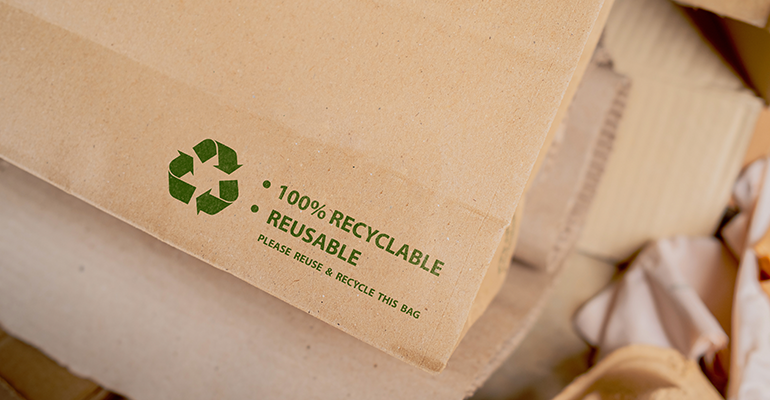
The aluminium component is especially pertinent from an environmental perspective. The recycling capacity of the aluminium component is also lacking on a large scale.
“Both upstream and downstream action is needed to accelerate a progressive change,” said Braghiroli. “Upstream, replacing the aluminium foil with more compatible materials can significantly help.
“Downstream, cross-border collaboration and co-investment with recyclers and industry players are key for expansion at scale.”
Tetra Pak has recently struck a series of partnerships with three European recyclers to address the lack of market demand for the Polymers and Aluminium (PolyAl) components that remain after pulping the fibre content.
“For carton recycling to reach its full potential, we need to expand the value of the recycled materials,” explained Braghiroli.
“The thin layer of polymers, which protects the product from moisture, and aluminium, which protects it from oxygen and light, can be separated and turned into new products, such as roofing tiles, crates, furniture and more.”
One partner, Dutch-based environmental start-up Recon Polymers, has co-developed a solution to convert the extracted plastic and aluminium mix into raw materials for applications in the plastic industry, with the aim to produce 15,000 tons of PolyAl a year.

Get more of our news on Google
Set Ingredients Network as a 'Preferred Source' to get quicker access to the news you value.
Related news

Kellogg accelerates work to remove artificial colours from all US cereals
3 Sep 2026
WK Kellogg has announced an accelerated timeline to eliminate all artificial colours and the chemical preservative, BHT, across its full US portfolio of cereals and cereal packaging.
Read more
Skimpflation: An ‘unfair’ and risky approach to keeping prices low
2 Sep 2026
Consumers see skimpflation – reducing the quality of ingredients due to rising costs – as more unfair than shrinkflation, making it a risky strategy according to recent research.
Read more
‘Urgent gaps’ in achieving 2030 food system goals
27 Aug 2026
Global food systems are failing to meet 2030 targets across indicators including health, environment, and resilience, according to a report co-authored by the Food and Agriculture Organisation (FAO).
Read more
Popular barbecue staples experience sharp price increases
19 Aug 2026
The typical cost of US shoppers’ barbecue baskets has risen by 12% over the past year – the fastest annual rise in a decade, figures from The Economist show.
Read more
Savoury protein snacks shake up the on-the-go market
10 Aug 2026
Sweet flavours have dominated the high-protein snack category but savoury snacks, such as cheese bars and meat sticks, can appeal to health-conscious consumers.
Read more
Digital twin technology gains ground in food manufacturing
6 Aug 2026
Food and beverage companies are increasingly turning to digital twins to optimise and automate manufacturing processes, but opportunities stretch far beyond this, say experts.
Read more
Nestlé invests in regeneratively farmed wheat for KitKat
5 Aug 2026
Nestlé will pay a premium for Wildfarmed’s regeneratively farmed wheat but the CPG remains reticent to promote the move on packs of its KitKat bars.
Read more
Codex sets global thresholds for ‘may contain’ labels
3 Aug 2026
Codex Alimentarius has adopted its first global guidance on when to use “may contain” allergen warnings, setting thresholds intended to stop the label being used as blanket legal cover.
Read more
EU sets maximum MOAH levels to protect human health
28 Jul 2026
The EU will adopt maximum levels for mineral oil aromatic hydrocarbons (MOAH) in food to protect human health. What do manufacturers need to know?
Read more
UK publishes guidance on SPS food trade agreement with EU
27 Jul 2026
The UK government has shared guidance on how food businesses can prepare for its upcoming Sanitary and Phytosanitary (SPS) agreement with the EU.
Read more